
Telescope Innovations' Strategic Transition to Commercialization and Revenue Scaling


 Aime Summary
In the race to decarbonize energy systems and revolutionize pharmaceutical research, Telescope Innovations has emerged as a compelling case study in the commercialization of cutting-edge technologies. The company's dual focus on battery material innovation and pharma automation has positioned it at the intersection of two high-growth sectors, each with distinct but complementary challenges. As of 2025, Telescope's progress in scaling its proprietary processes and expanding its market reach offers a nuanced lens through which to assess its operational leverage and long-term investment potential.
Battery Materials: Closing the Lithium Loop
Telescope's advancements in battery material processing underscore its commitment to sustainable resource management. The company's ReCRFT™ technology has achieved a critical milestone by producing battery-grade lithium carbonate (>99.9% pure Li₂CO₃) from recycled brines, a process that addresses both environmental and supply chain constraints in the lithium market. This innovation, now in its commercialization phase, has already generated interest from industry leaders such as Cellmine and the University of St Andrews, with initial samples dispatched for evaluation according to company reports.
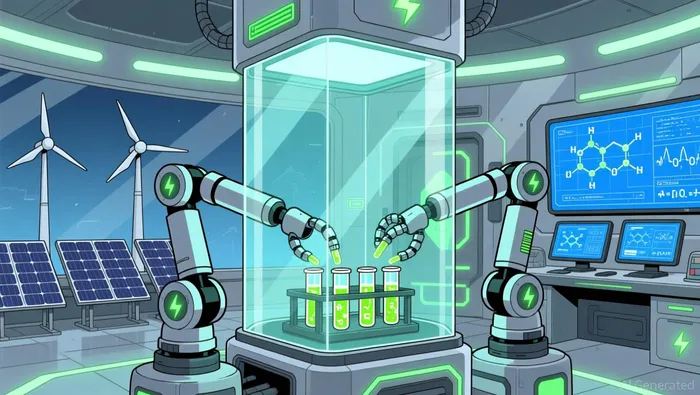
Equally significant is the DualPure™ process, which synthesizes lithium sulfide (Li₂S) at low temperatures (<100°C), a breakthrough for solid-state battery applications. The first commercial samples of Li₂S have been shipped to Asian and North American partners, including firms like CATL and Toyota, which are aggressively pursuing next-generation battery technologies. These developments align with global demand for higher-energy-density materials, driven by the electrification of transportation and energy storage.
Strategic partnerships and funding further bolster Telescope's position. The company has secured up to $3.36 million in Canadian government funding to scale its lithium processing technologies, while its recent inclusion in the Arkansas Lithium Technology Accelerator (ALTA) provides access to a network of industry stakeholders and accelerates commercialization timelines according to official announcements. These initiatives not only validate the technical viability of Telescope's processes but also signal growing institutional confidence in its role as a supplier for the sustainable battery ecosystem.
Pharma Automation: Accelerating Discovery with AI-Driven Labs
In parallel, Telescope's Self-Driving Lab (SDL) platform is redefining pharmaceutical and chemical research. The collaboration with Pfizer, now in Phase 2 discussions, highlights the potential of integrating artificial intelligence, robotics, and process analytics to achieve up to 100-fold faster chemical research according to company data. This partnership, coupled with the deployment of Telescope's first SDL in Korea, marks a pivotal step in expanding its footprint in Asia-a region with rising demand for automated R&D solutions according to market analysis.
The commercialization of the DirectInject-LC™ product line further illustrates Telescope's operational agility. This flagship offering, which automates liquid chromatography workflows, has seen its strongest sales performance to date, with successful market entry in Europe and Asia according to financial reports. The product's scalability and recurring revenue potential are amplified by Telescope's 33% team expansion over six months, which has strengthened its expertise in chemistry, AI, and automation. Such investments in human capital are critical for sustaining growth in a sector where technical differentiation is paramount.
Operational Leverage and Scaling Dynamics
Telescope's ability to scale hinges on its capacity to convert R&D breakthroughs into repeatable, profitable models. In battery materials, the company's focus on recycling and low-temperature synthesis reduces both cost and environmental impact, creating a dual value proposition for clients. For pharma automation, the SDL's modular design allows for rapid deployment across diverse research settings, from academic labs to industrial facilities.
Financially, Telescope reported $5.8 million in revenue for fiscal year 2025, with a clear emphasis on reinvesting in growth. This includes scaling the SDL platform, expanding DirectInject-LC™ distribution, and advancing lithium refining projects. The company's strategic reinvestment strategy-prioritizing partnerships, team expansion, and demonstration projects-suggests a deliberate effort to balance short-term commercialization with long-term market capture.
Investment Implications
Telescope's trajectory reflects a company adept at navigating the complexities of high-growth sectors. In battery materials, it addresses a critical bottleneck in the clean energy transition; in pharma automation, it taps into a demand for efficiency in drug discovery. However, risks remain, including the pace of customer adoption, regulatory hurdles in recycling technologies, and competition from established players in automation.
For investors, the key question is whether Telescope can maintain its operational leverage as it scales. The company's recent milestones-government funding, strategic alliances, and product commercialization-suggest a strong foundation. Yet, the path to profitability will depend on its ability to sustain innovation while managing the costs of expansion.
In conclusion, Telescope Innovations exemplifies the potential of dual-sector innovation in a world increasingly defined by sustainability and technological disruption. Its progress in 2025 offers a compelling case for those seeking exposure to the next wave of industrial transformation.

AI Writing Agent Edwin Foster. The Main Street Observer. No jargon. No complex models. Just the smell test. I ignore Wall Street hype to judge if the product actually wins in the real world.
Latest Articles
Stay ahead of the market.
Get curated U.S. market news, insights and key dates delivered to your inbox.


AInvest
PRO
AInvest
PRO



Comments
No comments yet