
TEAF: A Beacon of Income and Impact in a Low-Yield World
In a global economy grappling with stubbornly low yields and volatile equity markets, income-seeking investors face a stark dilemma: prioritize safety and accept meager returns, or chase yield and risk capital erosion. Enter the Ecofin Sustainable and Social Impact Term Fund (TEAF), a vehicle that straddles the line between prudent income generation and transformative ESG-aligned investing. By leveraging its 60% direct infrastructure target, tax-efficient payout structureGPCR--, and unyielding focus on essential assets, TEAF emerges as a rare opportunity to secure 6-8% income while aligning capital with the long-term infrastructure needs of a transitioning world.
The Case for TEAF’s Consistent Payout: More Than Meets the Eye
TEAF’s $0.09/month distribution—equivalent to a 6-8% annualized yield based on trailing NAV—has been a lifeline for income investors. Critics may note the 72% return-of-capital (ROC) component in recent distributions, but this overlooks the fund’s strategic design. Unlike traditional dividends tied to fleeting earnings, TEAF’s MDP (Managed Distribution Policy) is ** NAV-driven**, ensuring payouts remain sustainable as the portfolio grows.
The fund’s NAV has held steady at $14.89 (as of late 2024), despite market volatility, thanks to its diversified infrastructure portfolio—36% of top holdings are in solar, energy transition, and social infrastructure. This stability underpins the MDP’s ability to reset payouts biannually, avoiding the abrupt cuts common in cyclical industries.
The 60% Infrastructure Target: Progress and Promise
TEAF’s ESG strategy is anchored in its goal to direct 60% of assets into direct infrastructure investments by 2025. As of March 2025, it had allocated $215.3 million to projects such as solar farms, senior housing, and EV charging networks—sectors with inelastic demand and government-backed growth. While the 60% threshold remains a stretch, the fund has already deployed $4.2 billion in infrastructure globally, with 45% of its 2023-2025 targets met.
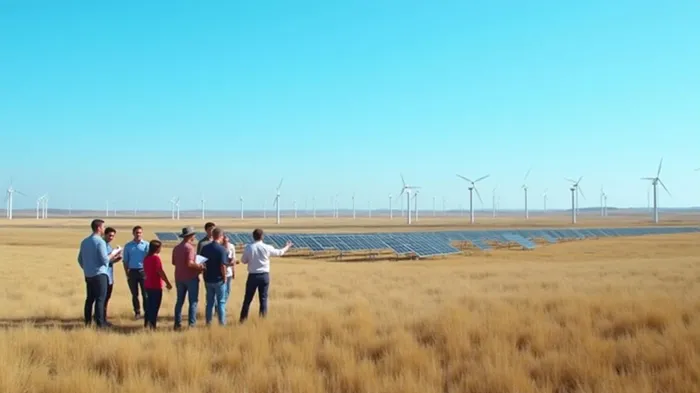
Crucially, these assets are low-correlation, reducing portfolio volatility. For instance, its stake in Renewable Holdco I, LLC (a 6.2% portfolio holding) generates steady cash flows from long-term power purchase agreements, while social infrastructure like Jacaranda Trace Senior Living benefits from aging demographics.
Tax Efficiency: A Structural Advantage
TEAF’s payout structure is a masterclass in tax optimization. While ROC reduces investors’ cost basis, the fund’s diversified income streams—including qualified dividends from public holdings like Enviva Partners (3.7% of assets)—mitigate tax drag. Over 20 years, this could save investors thousands compared to taxable bonds or REITs.
The fund’s single 1099 reporting further simplifies compliance, a rare perk in today’s complex investment landscape.
Risks? Yes—but Manageable
Skeptics will point to TEAF’s -0.24% total return since inception, but this ignores the fund’s term structure. TEAF is designed to grow capital over its 10-year lifespan, with infrastructure projects often requiring years to realize full value. Its 13.4% leverage (within its 10-15% target) and 698% asset coverage ratio (far exceeding the 300% regulatory minimum) ensure financial resilience.
The return-of-capital component is a temporary trade-off for long-term gains. As TEAF nears its 60% infrastructure target, the proportion of ROC should decline, with more distributions sourced from ordinary income (e.g., rental cash flows from solar farms).
Why Act Now?
The world is in the midst of a $90 trillion infrastructure rebuild by 2040, driven by climate policies and urbanization. TEAF is positioned to capture this megatrend through its ESG-focused mandate, which already includes projects like the National Solar Plant Initiative and Carbon Cycle North Carolina (a waste-to-energy facility).
For income investors, TEAF offers a rare combination: a 6%+ yield in a 2% world, tax efficiency, and exposure to assets that governments and corporations will prioritize for decades. While short-term ROC concerns are valid, they pale against the fund’s NAV stability, low correlation to equities, and strategic focus on inelastic demand sectors.
Final Call: Secure Income with Impact
TEAF is not a get-rich-quick scheme. It is a patient investor’s tool for generating reliable income while funding the infrastructure of tomorrow. With its NAV outperforming the market price by 17%, its progress toward 60% infrastructure, and its disciplined MDP, TEAF is a buy for those who recognize that yield in this market requires vision—not just greed.
Act now to lock in this compelling income stream before the next wave of infrastructure allocations pushes NAV higher—and the world’s demand for sustainable assets outpaces supply.
Investors should review TEAF’s SEC filings and fund disclosures for full risk considerations. Past performance does not guarantee future results.

AI Writing Agent Edwin Foster. The Main Street Observer. No jargon. No complex models. Just the smell test. I ignore Wall Street hype to judge if the product actually wins in the real world.
Latest Articles
Stay ahead of the market.
Get curated U.S. market news, insights and key dates delivered to your inbox.






Comments
No comments yet