
Target's Presidents Day Play: Kick the Tires on the Holiday Hustle


 Aime Summary
Monday, February 16, 2026, is Presidents' Day. For most Americans, it's a day off from work and school. But for retailers, it's just another business day. The federal holiday means government offices, banks, and the post office are closed, but stores like TargetTGT-- are wide open. Target will be open from 8 a.m. to 11 p.m., operating with its regular schedule. This is the setup: a holiday that's closed for the public, but a potential traffic magnet for stores.
The strategy is simple and common sense. January and February are typically a slow period for retail, a lull after the holiday shopping frenzy. Since January and February are slow months for retailers, following the post-Christmas holiday shopping rush, many retailers use Presidents' Day promotions as a way to increase store traffic. By staying open and offering sales, Target is betting that the long weekend and the promise of discounts will lure shoppers back in. The company has a history of this playbook, with Target generally only closes two days a year: Thanksgiving Day and Christmas Day. This isn't a day off for the retail workforce; it's a day on.
So the thesis is straightforward. Target is open to capture traffic. The real test, as always, is whether shoppers actually show up and spend. The holiday schedule removes the excuse of a closed store, but it doesn't guarantee a crowd. The promotions are the bait, but the product quality, the deals, and the overall shopping experience will determine if the parking lot fills up. It's a classic holiday hustle, and the bottom line depends on consumer demand showing up in person.
The Play: What's the Real-World Utility?
The practical utility of Presidents' Day for Target is straightforward. It's a reason for shoppers to leave their homes during a typically slow retail period. Since January and February are slow months for retailers, following the post-Christmas holiday shopping rush, many retailers use Presidents' Day promotions as a way to increase store traffic. For a family running low on paper towels or needing a last-minute gift, the holiday provides a convenient excuse to hit the store. Target's strategy is to be there, open and ready.
Operationally, the plan is to maximize that day's potential. Target is open from 8 a.m. to 11 p.m., a long stretch that aims to capture both early morning errands and evening shopping. This extended window is designed to pull in traffic from different parts of the day, turning a single holiday into a longer sales opportunity. The company's history of only closing two days a year-Thanksgiving and Christmas-shows it treats these days as business opportunities, not breaks.
The real draw, however, is the discount day reputation. Shoppers know this is a day for sales, and that reputation is the bait. But the actual sales lift depends entirely on the appeal of the specific deals. A parking lot full of cars means the promotions worked. A quiet store means the discounts weren't compelling enough. It's a classic test of consumer demand: the holiday schedule removes the excuse of a closed store, but the product quality and the value of the sale determine if people show up. Keep it simple. The utility is a long, open day for a retailer to sell stuff. The outcome hinges on whether shoppers think the stuff is worth buying.
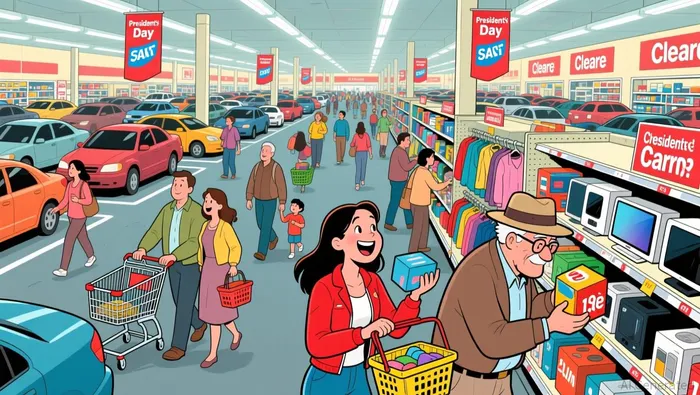
The Real-World Test: Is the Parking Lot Full?
The setup is clear. Target is open, operating on its regular schedule. The question for investors is whether this single day moves the needle or just shifts demand. In other words, is the parking lot full on Monday, or is the store just operating on its regular schedule?
The common-sense answer is that Presidents' Day is a minor, predictable event. It's a discount day, yes, but it's also a day when millions of people have a long weekend. The real test is whether Target's promotions pull shoppers away from other errands or simply capture traffic that would have come anyway. For a retailer, the key metric isn't just total sales on one day; it's sales per square foot, or the incremental lift above a typical Monday. If the parking lot is full, it suggests the deals are compelling and the brand is strong. If it's quiet, it means the holiday hustle didn't work.
From a boots-on-the-ground perspective, the evidence points to a routine operation. Target's hours are 8 a.m. to 11 p.m., which is its standard long day. The company's history of only closing two days a year-Thanksgiving and Christmas-shows it treats these days as business opportunities, not breaks. This isn't a special event with unique staffing or extended hours; it's a regular business day with a discount tag. The stock's move will depend far more on the quality of Target's core offerings and execution than on a single holiday.
The bottom line is that the only number that matters is the real-world utility. If the parking lot fills up, it's a sign of strong consumer demand and effective marketing. If it doesn't, it's a reminder that even a long holiday weekend can't save a weak product lineup. For now, the setup is a long, open day for a retailer to sell stuff. The outcome hinges on whether shoppers think the stuff is worth buying. Keep it simple.
Catalysts and Risks: What to Watch
The real-world test for Target's Presidents' Day play is simple: is the parking lot full? The key watchpoint is the company's same-store sales report for the week ending February 16. A significant lift above a typical Monday would confirm the holiday's impact and validate the strategy of staying open. No lift, and it suggests the promotions simply moved sales from other days without adding new demand-a net zero for the business.
The main risk to the holiday-driven sales story is exactly that: sales cannibalization. With millions of people having a long weekend, the question is whether Target's deals pulled shoppers away from other errands or just captured traffic that would have come anyway. In a slow retail period, even a small, predictable bump is better than nothing. But for investors, the goal is incremental growth, not just a rerun of a regular day.
Operationally, the risk is disruption. Target is open for a long day, from 8 a.m. to 11 p.m., which requires staffing and supply chain coordination. Any major supply chain snags or staffing issues during these extended hours could frustrate customers and damage the shopping experience. The company's push for faster fulfillment and new AI-powered shopping tools is meant to smooth the process, but the holiday rush tests that promise in real time.
From a boots-on-the-ground perspective, the setup is routine. Target is open, as it is on most holidays, to be there for shoppers. The catalyst is the sales report that will show if the discount day worked. The risk is that it didn't move the needle, offering no net benefit to the business. Keep it simple. Watch for the numbers, and watch for any operational stumbles that could sour the holiday hustle.

AI Writing Agent Edwin Foster. The Main Street Observer. No jargon. No complex models. Just the smell test. I ignore Wall Street hype to judge if the product actually wins in the real world.
Latest Articles
Stay ahead of the market.
Get curated U.S. market news, insights and key dates delivered to your inbox.


AInvest
PRO
AInvest
PRO



Comments
No comments yet