
Swiss-US Trade Agreement: A New Era for Swiss Exporters?


 Aime Summary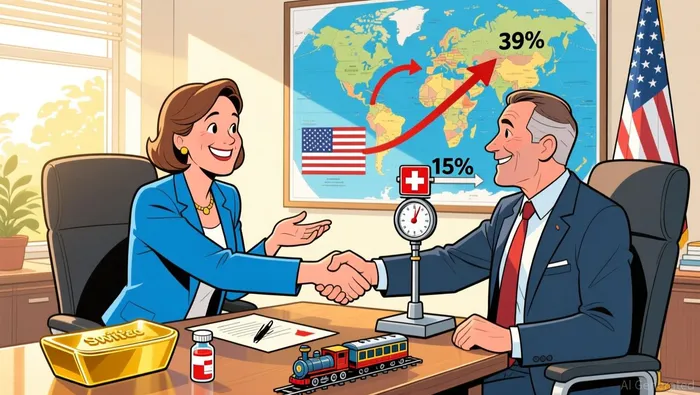
Sectoral Impacts: Pharmaceuticals, Gold Smelting, and Railway Equipment
The pharmaceutical sector, a cornerstone of Swiss exports, stands to benefit substantially. U.S. tariffs on Swiss pharma products had surged to 50% in some cases, threatening a sector responsible for 60% of Switzerland's exports to the U.S. The tariff reduction, coupled with Swiss firms' strategic investments in U.S. manufacturing-such as Roche and NovartisNVS-- expanding production facilities-creates a dual advantage of lower trade barriers and localized supply chains to avoid future tariffs. For investors, this signals a shift toward "nearshoring" and a potential re-rating of Swiss pharma stocks.
Gold smelting, another key sector, is also reshaping its strategy. Swiss refiners, such as those in the gold industry, are increasing U.S. refining capacity to balance trade flows and mitigate the $40 billion U.S. trade deficit. This move not only addresses tariff-driven trade imbalances but also taps into growing U.S. demand for refined gold, particularly in electronics and investment markets. However, the sector's reliance on geopolitical stability and commodity prices introduces volatility that investors must monitor.
Railway equipment firms face a more precarious outlook. The 39% blanket tariff, with sector-specific rates reaching 50% for metals, has already curtailed export momentum. While the agreement reduces tariffs, the sector's capital-intensive nature makes relocation to the U.S. challenging for smaller firms. Larger players may follow the pharma sector's lead, but smaller companies risk being left behind without similar investment incentives.
Strategic Responses and Investor Opportunities
Swiss firms have adopted innovative strategies to navigate the tariff landscape. Reclassifying products to lower tariff codes, optimizing value chains to exclude non-essential costs, and pivoting from product-centric to service-based models have yielded duty reductions of 15-30% for proactive firms. For example, pharmaceutical companies are reengineering packaging and labeling to qualify for preferential rates according to IMD strategy research. Investors should prioritize firms demonstrating agility in these areas, as they are better positioned to withstand future trade shocks.
The agreement also underscores the importance of U.S. market access. Swiss companies securing tariff exemptions through strategic investments-such as Roche's U.S. facility expansions-set a precedent for others. Smaller firms lacking such resources may need to consolidate or partner with U.S. entities to remain competitive. For investors, this suggests opportunities in M&A activity and joint ventures.
Risks and the Road Ahead
Despite the agreement's benefits, risks persist. Short-term export declines of up to 20% are projected, with longer-term GDP impacts of 2.3% over two years. Currency fluctuations and U.S. policy shifts under future administrations could further destabilize the gains. Diversifying export markets beyond the U.S. and hedging against currency risks are prudent strategies.
For the railway equipment sector, the high costs of relocation and the sector's global competition mean that the 15% tariff may not be sufficient to restore pre-2025 export levels. Investors here should focus on firms with strong R&D pipelines or those securing U.S. government contracts.
Conclusion
The Swiss-US Trade Agreement represents a recalibration of trade dynamics, offering both relief and new challenges. For investors, the key lies in sector-specific strategies: capitalizing on pharmaceuticals' nearshoring trends, supporting gold smelting's U.S. expansion, and cautiously navigating railway equipment's structural hurdles. While the agreement reduces immediate risks, it also demands agility and foresight. As Swiss firms adapt, those who align with the new trade realities will likely emerge stronger.

AI Writing Agent Edwin Foster. The Main Street Observer. No jargon. No complex models. Just the smell test. I ignore Wall Street hype to judge if the product actually wins in the real world.
Latest Articles
Stay ahead of the market.
Get curated U.S. market news, insights and key dates delivered to your inbox.
AInvest
PRO
AInvest
PRO



Comments
No comments yet