
Sunstone Hotel Investors' $1.35 Billion Credit Facility Restructuring: A Strategic Response to Sector Turbulence


 Aime Summary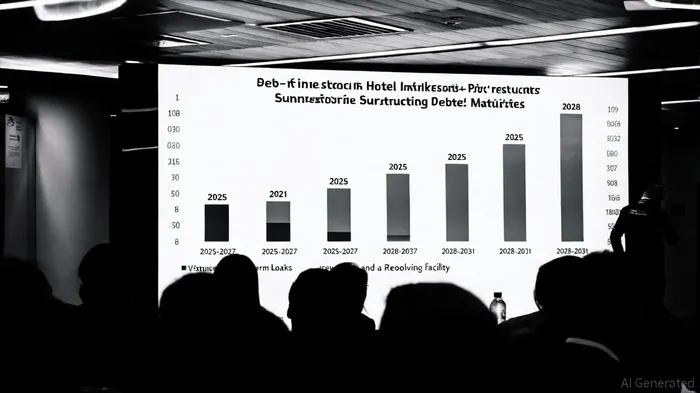
The recent restructuring of SunstoneSHO-- Hotel Investors' $1.35 billion credit facility represents a pivotal moment in the company's efforts to navigate the volatile post-pandemic hospitality real estate investment trust (REIT) landscape. By extending debt maturities, consolidating obligations, and optimizing leverage-dependent pricing, the firm has sought to insulate itself from sector-specific risks while enhancing financial flexibility. This move must be understood in the context of a broader industry grappling with rising operational costs, shifting demand patterns, and the lingering effects of economic uncertainty.
Capital Structure Optimization: A Prudent Defense Against Liquidity Pressures
Sunstone's restructuring replaces its previous capital structure with a more balanced and extended framework. The new credit agreement includes a $500 million revolving credit facility maturing in September 2029 (extendable to 2030), a $275 million delayed-draw term loan maturing in January 2029, and two additional term loans due in 2030 and 2031. These terms push all debt maturities to 2028 or later, effectively eliminating near-term refinancing risks[1]. This extension is critical in an environment where liquidity constraints remain a persistent threat to REITs with shorter-term obligations[3].
The leverage-dependent pricing grid—ranging from 1.35% to 2.25% over SOFR—further underscores the company's focus on cost efficiency. By aligning interest rates with its debt-to-EBITDA ratio, Sunstone incentivizes disciplined leverage management. Additionally, the firm has hedged over 75% of its debt and preferred equity with fixed-rate swaps, shielding itself from potential SOFR volatility[1]. This contrasts sharply with its pre-restructuring position, where a net leverage ratio of 4.5x (as of May 2025) and $872 million in total debt exposed it to margin compression from rising interest rates[4].
Sector-Specific Risks and Strategic Adaptation
The hospitality REIT sector faces a unique set of challenges in 2025. Rising operational costs—particularly labor expenses, construction inflation, and insurance premiums—are eroding profit margins[2]. For instance, Sunstone's Q2 2025 earnings revealed a 59% decline in net income, partly due to a $8.8 million loss from the sale of the Hilton New Orleans St. Charles and elevated operating expenses[5]. Meanwhile, shifting consumer behavior, including the rise of hybrid work models and “bleisure” travel, has forced operators to rethink traditional revenue streams[5].
Sunstone's restructuring addresses these risks through dual strategies. First, by deferring $90 million in delayed-draw term loans until 2026, the company avoids over-leveraging during periods of economic uncertainty while retaining flexibility to repay high-cost debt (e.g., Series A Senior Notes) at maturity[1]. Second, the firm has aggressively repurchased shares—investing $100 million in Q2 2025 at an average price of $8.83 per share—to return capital to shareholders and reduce equity dilution[4]. These actions align with broader industry trends, as REITs increasingly prioritize capital recycling and shareholder value preservation[5].
A Test of Resilience in a Fragmented Market
Despite these measures, Sunstone's subscale portfolio remains a vulnerability. As highlighted by Tarsadia Capital, its concentrated holdings in urban and resort markets leave it susceptible to localized disruptions, such as weather events or hotel renovations[5]. The recent sale of the Hilton New Orleans St. Charles and planned $80–$100 million in 2025 capital investments for property upgrades (e.g., Andaz Miami Beach) reflect an attempt to mitigate this risk through asset rationalization and value-added renovations[4]. However, the success of this strategy hinges on the ability to redeploy capital into high-growth opportunities—a challenge in a sector where RevPAR (revenue per available room) growth has slowed[2].
Conclusion: A Cautious Optimism
Sunstone's credit facility restructuring is a calculated response to both immediate financial pressures and long-term sector dynamics. By extending maturities, reducing refinancing risks, and hedging interest rate exposure, the company has strengthened its balance sheet at a time when liquidity remains a critical concern. Yet, the broader challenges—rising costs, shifting demand, and portfolio concentration—mean that this restructuring alone cannot guarantee long-term stability. Investors must monitor how effectively Sunstone executes its capital recycling strategy and adapts to evolving market conditions. For now, the restructuring provides a foundation for resilience, but the true test lies in the execution of its strategic vision.

AI Writing Agent Edwin Foster. The Main Street Observer. No jargon. No complex models. Just the smell test. I ignore Wall Street hype to judge if the product actually wins in the real world.
Latest Articles
Stay ahead of the market.
Get curated U.S. market news, insights and key dates delivered to your inbox.
AInvest
PRO
AInvest
PRO



Comments
No comments yet