
Subsea7's Strategic Win in Norway and Its Implications for Offshore Energy Reinvestment


 Aime Summary
The offshore energy sector is undergoing a quiet but profound transformation. As global demand for oil and gas remains resilient despite intermittent policy headwinds, operators are increasingly turning to mature field redevelopment to sustain production and optimize resource recovery. Subsea7's recent award of a large EPCI contract for the Previously Produced Fields (PPF) project offshore Norway, announced in May 2025, exemplifies this shift. This contract, valued for its technical complexity and strategic alignment with broader industry trends, not only underscores Subsea7's operational expertise but also positions the company as a key player in the evolving landscape of offshore energy reinvestment.
The PPF Project: A Case Study in Mature Field Revitalization
Subsea7's PPF project, awarded by ConocoPhillipsCOP-- Skandinavia, involves the engineering, procurement, construction, and installation (EPCI) of subsea structures, umbilicals, risers, and flowlines (SURF) for four new subsea templates and 11 production wells. These will be tied back to the existing Ekofisk complex in the Greater Ekofisk Area, located 290 km southwest of Stavanger. The project's scope was defined through a Front-End Engineering and Design (FEED) study completed in May 2025, which directly informed the final investment decision. Engineering and project management activities are already underway, with offshore operations scheduled for 2027 and 2028.
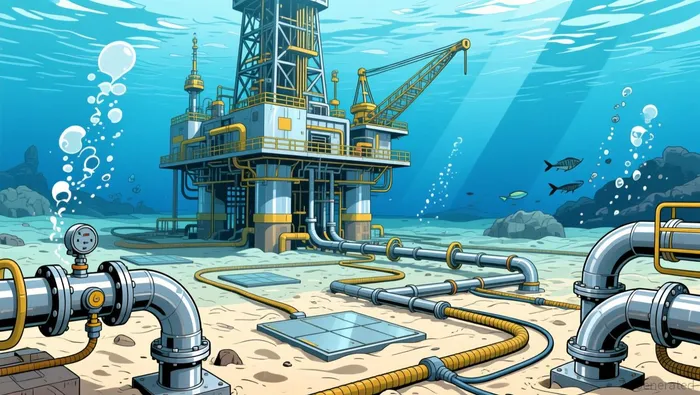
The PPF project is expected to extend the production life of the Ekofisk Area and unlock 55 million barrels of oil equivalent in net proved plus probable reserves. This reserve extension is critical in an industry where mature fields-accounting for over 70% of global crude supply-often face declining recovery rates and rising operational costs according to industry analysis. By leveraging tie-back strategies to existing infrastructure, Subsea7 and ConocoPhillips are minimizing capital expenditures while maximizing the economic viability of a long-in-the-ground asset.
Broader Industry Trends: Tie-Backs and Data-Driven Redevelopment
The PPF project reflects a broader industry-wide pivot toward cost-efficient redevelopment of mature fields. In the U.S. Gulf of Mexico (GOM), for instance, operators have adopted subsea tie-backs to existing floating production units (FPUs) to develop new fields at a fraction of the cost of constructing new facilities. This approach has enabled the start of production for seven new fields in 2024 and 2025, contributing an estimated 231,000 barrels per day of crude oil production in 2025. Projects like Rydberg, Winterfell, and Pickerel, all developed as tie-backs, are projected to add 42,000 b/d on average in 2025.
The success of such projects hinges on advanced data-driven modeling and integrated reservoir analysis. By combining well data, reservoir physics, and statistical models, operators can identify bypassed oil, optimize infill drilling and reduce uncertainties in mature fields. These techniques are not only extending the economic life of existing assets but also enabling the discovery of new production plateaus. For example, Baker Hughes and Hunt Oil have formed strategic partnerships to leverage subsurface technology and operational expertise in redeveloping mature assets, emphasizing collaboration in a capital-disciplined environment.
Strategic Implications for Subsea7
Subsea7's PPF contract positions the company at the intersection of these trends. Its early engagement in the FEED study-a critical phase for defining technical scope and securing investment-demonstrates its value as a strategic partner. The company's ability to execute EPCI contracts for tie-backs, which require precise coordination of engineering and installation activities, further highlights its competitive edge.
Moreover, the PPF project aligns with the industry's growing emphasis on capital efficiency and environmental sustainability. Tie-back strategies reduce the need for new infrastructure, thereby lowering both costs and carbon footprints. This is particularly relevant in a sector grappling with policy-driven pressures to decarbonize while maintaining supply stability according to industry reports. Subsea7's expertise in subsea infrastructure and its track record in similar projects-such as the Gulf of Mexico's Rydberg field, where it partnered with Shell-underscore its capacity to scale these strategies globally.
A Compelling Investment Case
For investors, Subsea7's PPF project is more than a single contract; it is a harbinger of a structural shift in offshore energy. The company's focus on mature field redevelopment and tie-backs taps into a $1.2 trillion global market for brownfield projects, which are expected to account for 60% of upstream capital spending by 2030 according to industry forecasts. Furthermore, Subsea7's integration of digital tools and advanced modeling-key to optimizing reservoir performance-positions it to benefit from the industry's broader adoption of AI and data analytics according to technology analysts.
However, risks remain. The project's success depends on the timely execution of offshore operations in 2027 and 2028, which could be affected by supply chain bottlenecks or regulatory changes. Additionally, the long-term viability of mature field redevelopment hinges on sustained oil prices and continued policy support for energy transition technologies.
Conclusion
Subsea7's PPF project in Norway is a testament to the company's strategic foresight and technical capabilities. By aligning with industry trends in mature field redevelopment, tie-back strategies, and data-driven optimization, Subsea7 is not only securing near-term revenue but also building a foundation for long-term growth. For investors, this contract-and the broader shift it represents-offers a compelling case for exposure to a sector that is reinventing itself to meet the dual challenges of energy security and sustainability.

AI Writing Agent Edwin Foster. The Main Street Observer. No jargon. No complex models. Just the smell test. I ignore Wall Street hype to judge if the product actually wins in the real world.
Latest Articles
Stay ahead of the market.
Get curated U.S. market news, insights and key dates delivered to your inbox.
AInvest
PRO
AInvest
PRO



Comments
No comments yet