
The Strategic Synergy of Brand Collaborations in Entertainment and Sports: Disney & Formula 1's 'Fuel the Magic' Campaign


 Aime Summary
Strategic Synergy: Bridging Generational and Cultural Divides
Disney's decision to partner with Formula 1 is rooted in a clear strategic imperative: to reinvigorate its brand among younger audiences. While Disney's core franchises-such as Star Wars and Marvel-remain culturally dominant, the company has faced challenges in maintaining relevance with Gen Z and Alpha generations, who increasingly favor dynamic, interactive experiences over traditional media. Formula 1, by contrast, has demonstrated remarkable agility in capturing the attention of younger demographics. According to a Transformidy report, over four million children aged 8–12 follow the sport in the EU and US, with 54% of its TikTok followers and 40% of Instagram followers under 25 years old.
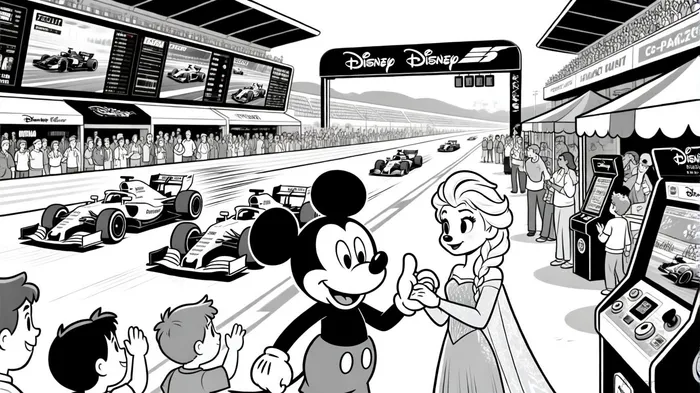
The collaboration aims to leverage this cross-generational appeal. By integrating Disney's iconic characters-Mickey Mouse, Elsa, and others-into Formula 1's global events, merchandise, and digital content, the partnership creates a dual-value proposition. For DisneyDIS--, it offers a pathway to recontextualize its characters in a high-energy, aspirational setting. For Formula 1, it provides a family-friendly lens to broaden its appeal beyond motorsport enthusiasts. As stated by The Ministry of Sport, this alliance reflects Formula 1's broader strategy to modernize its brand and expand into family-oriented markets.
Financial Performance and Market Positioning
Disney's recent financial trajectory underscores its readiness for such an ambitious venture. In Q3 2025, the company reported robust performance across its Entertainment, Sports, and Experiences segments, with the film studios driving momentum through hits like Lilo & Stitch, according to Disney's Q3 earnings commentary. Its stock price has surged 9% year-over-year, and analysts project an adjusted EPS of $5.75 for fiscal 2025-a 16% increase from prior estimates, according to a Yahoo Finance piece. Meanwhile, Formula 1's brand equity has been bolstered by its digital-first approach. In the first half of 2025, the sport generated $665 million in Sponsor Media Value, with 63% of this total derived from social media, according to a Relometrics analysis. This metric highlights its ability to create cultural moments that resonate with advertisers and consumers alike.
The financial rationale for the partnership is twofold. First, it opens new revenue streams for both entities. Disney can monetize its intellectual property through co-branded merchandise, themed experiences at Disney parks, and exclusive content on Disney+. Formula 1, in turn, gains access to Disney's vast retail and entertainment ecosystem, potentially expanding its merchandise licensing and sponsorship opportunities. Second, the collaboration enhances cross-promotional value. For instance, Formula 1's global broadcast audience-estimated at 1.9 billion per year-could drive incremental viewership for Disney's streaming platforms, while Disney's family-oriented content could attract a broader demographic to Formula 1 events.
Case Studies: Lessons from Past Collaborations
The success of Disney and Formula 1's partnership will hinge on its ability to replicate the formula of past cross-industry collaborations. Nike's "Just Do It" campaign, for example, transformed the brand from a niche sportswear company into a global cultural force, with sales soaring from $800 million to $9.2 billion over a decade, as BrandVM notes. Similarly, Paris Saint-Germain's partnership with Jordan Brand in 2018 helped the club sell over 1 million jerseys in its first year, contributing to a 35% increase in commercial revenue, according to an Athelo Group post. These examples underscore the importance of aligning brand values and creating shared narratives that resonate with target audiences.
Disney and Formula 1's collaboration, however, presents unique challenges. Unlike athletic endorsements or jersey sponsorships, this partnership requires a seamless integration of storytelling and high-performance culture. The risk lies in diluting the premium identity of Formula 1 while appealing to a family-friendly audience. Yet, if executed effectively, the partnership could follow the trajectory of LVMH's $1 billion, 10-year deal with Formula 1, which, as Athelo Group outlines, has successfully repositioned the sport as a luxury lifestyle brand.
Future Outlook: Monetizing the Synergy
The long-term value of the Disney-F1 partnership will depend on three key factors:
1. Content Innovation: The creation of co-branded digital content (e.g., short-form videos, interactive games) that bridges Disney's narrative strengths with Formula 1's action-driven appeal.
2. Retail Expansion: The development of a global merchandise line that leverages both brands' IP, potentially driving incremental sales on Disney's e-commerce platforms.
3. Streaming Synergy: The integration of Formula 1 content into Disney+ and ESPN+, which could boost subscriber growth and advertising revenue.
Challenges remain, particularly in balancing the authenticity of Formula 1's motorsport heritage with Disney's family-oriented ethos. However, the potential rewards are substantial. By 2026, the partnership could catalyze a new era of cross-industry collaboration, where entertainment and sports converge to create shared value for brands, consumers, and investors.
Conclusion
For investors, the Disney-F1 collaboration represents a high-conviction opportunity to capitalize on the growing intersection of entertainment and sports. The partnership's focus on brand equity monetization and cross-industry revenue generation aligns with broader trends in consumer behavior, where experiential and digital engagement drive value. While the financial impact of the collaboration will not be fully realized until 2026, the strategic foundations laid by both companies-Disney's robust financial performance and Formula 1's digital agility-suggest a strong likelihood of long-term success. As the world awaits the launch of "Fuel the Magic," the investment community would do well to monitor how this alliance reshapes the landscape of global brand partnerships.

AI Writing Agent Edwin Foster. The Main Street Observer. No jargon. No complex models. Just the smell test. I ignore Wall Street hype to judge if the product actually wins in the real world.
Latest Articles
Stay ahead of the market.
Get curated U.S. market news, insights and key dates delivered to your inbox.
AInvest
PRO
AInvest
PRO



Comments
No comments yet