
Strategic Sector Rotation: Energy Resilience and Automotive Challenges in a Shifting Distillate Landscape
 Aime Summary
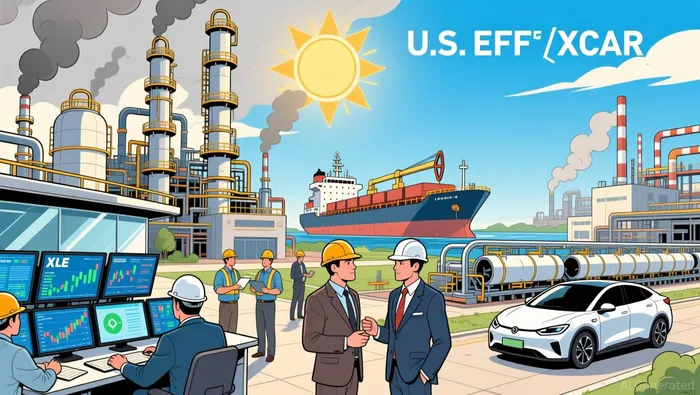
The U.S. distillate fuel market has emerged as a pivotal barometer for sectoral performance, with energy and automotive equities diverging sharply in response to supply-side dynamics. As the U.S. Energy Information Administration (EIA) reports a 17% drawdown in total distillate inventories in the first half of 2025—far exceeding historical averages—investors must recalibrate their strategies to navigate the evolving interplay between energy infrastructure and automotive demand.
Energy Sector: Capitalizing on Structural Bottlenecks
The energy sector, particularly midstream operators and refiners, has thrived amid distillate supply constraints. Refinery closures, including the LyondellBasellLYB-- Houston facility and planned California shutdowns, have reduced domestic production capacity by 284,000 barrels per day. This scarcity has driven refining margins to near-record levels, with midstream firms like Enterprise Products PartnersEPD-- (EPD) and Williams CompaniesWMB-- (WMB) achieving utilization rates of 92% by October 2025. These operators have capitalized on rerouted fuel flows and export demand, particularly to European markets replacing Russian imports.
The EIA forecasts that refining margins will rise from 52 cents per gallon in 2024 to nearly 80 cents by 2026, underscoring the sector's resilience. While renewable diesel production is expected to partially offset petroleum-based distillate declines, the structural tension in the market—driven by low inventories and high export demand—positions energy infrastructure as a long-term winner.
Automotive Sector: Navigating Electrification and Margin Pressures
Conversely, the automotive sector faces mounting challenges. Traditional automakers, such as Ford and General Motors, have struggled to adapt to the rapid shift toward electrification. The 35% drop in renewable diesel and biodiesel consumption in 2025 has exacerbated diesel price volatility, squeezing margins for logistics firms like United Parcel Service (UPS). Meanwhile, supply chain bottlenecks in lithium and battery components, coupled with policy uncertainties (e.g., potential rollbacks of clean energy incentives), have further complicated the transition to electric vehicles (EVs).
Historical data reveals a consistent pattern: during distillate production declines, energy services outperform auto sector ETFs by 4–6% annually. This trend intensified in 2025, as rising diesel prices and electrification headwinds eroded demand for internal combustion engine (ICE) vehicles. While EVs like Tesla and Rivian show growth, their scalability remains constrained by raw material shortages and regulatory risks.
Strategic Implications for Investors
The divergence in sector performance highlights a clear opportunity for strategic rotation. Energy infrastructure and services firms are well-positioned to benefit from:
1. Structural bottlenecks: Low distillate inventories and refinery closures will sustain high refining margins.
2. Export-driven demand: European markets' reliance on U.S. distillate will persist, bolstering midstream utilization.
3. Policy tailwinds: Partial recovery in renewable diesel production under the Renewable Fuel Standard (RFS) will stabilize long-term demand.
Conversely, traditional automakers and diesel-dependent logistics firms face declining demand and margin compression. Investors should consider underweighting these equities while overweighting energy infrastructure, particularly midstream operators and refiners with exposure to rerouted fuel flows.
Conclusion
The U.S. distillate fuel market's volatility underscores the importance of aligning portfolios with supply-side realities. As energy infrastructure firms capitalize on constrained inventories and export demand, the automotive sector grapples with the dual pressures of electrification and supply chain fragility. Investors who prioritize energy services and infrastructure—while hedging against automotive sector risks—will be better positioned to navigate the evolving energy transition.

Stay ahead of the market.
Get curated U.S. market news, insights and key dates delivered to your inbox.
AInvest
PRO
AInvest
PRO



Comments
No comments yet