
Strategic Resilience and Investment Readiness in North American Steel: The Case of Algoma Steel


 Aime Summary
The North American steel industry in 2025 is at a crossroads, navigating a complex interplay of trade policy shifts, decarbonization imperatives, and leadership transitions. Algoma Steel Group Inc.ASTL--, a key player in this landscape, has recently provided Q3 2025 guidance that underscores both its challenges and strategic ambitions. According to the company's official statement, Algoma expects total steel shipments of 415,000–420,000 net tons for the quarter, with Adjusted EBITDA projected to range between negative $80 million and $90 million. This outlook, while sobering, reflects the company's commitment to long-term transformation, particularly through its low-carbon steelmaking initiatives.
A pivotal milestone for Algoma was achieved in July 2025 with the first arc and steel production from its electric arc furnace (EAF), a cornerstone of its decarbonization strategy. This development aligns with broader industry trends, as North American steelmakers increasingly adopt EAF technology to reduce emissions and comply with tightening environmental regulations. For instance, the U.S. government's Infrastructure and Investment Jobs Act of 2021 is projected to drive demand for 50 million tons of steel products, creating a favorable market for companies that can meet sustainability criteria, according to a Steel Industry Outlook. Algoma's EAF progress positions it to capitalize on this demand, provided it can navigate short-term financial headwinds.
However, the company's Q3 guidance highlights immediate challenges. The projected negative EBITDA range suggests ongoing pressure from high energy costs, raw material volatility, and trade tensions, including the reinstatement of Section 232 tariffs at 50% on certain imports, according to a Jade Sterling overview. These tariffs, while intended to protect domestic producers, have also contributed to supply constraints and price surges, complicating the operating environment for firms like Algoma. CEO Michael Garcia has emphasized confidence in the company's long-term strategy, but investors must weigh this optimism against the reality of near-term losses cited in the company's statement.
Leadership transitions further complicate the picture. David Sgro's resignation from Algoma's board for personal reasons raises questions about continuity in strategic execution. This follows broader industry trends, such as Steel Dynamics, Inc.'s October 2025 leadership reshuffle, described in a Steel Dynamics announcement, where Glenn Pushis's retirement and Miguel Alvarez's new role in aluminum operations reflect a focus on operational specialization. Such transitions, while routine in mature industries, can introduce uncertainty. For Algoma, the challenge will be to ensure that its board and management team maintain momentum in decarbonization and digital transformation, areas critical to long-term competitiveness.
The broader North American steel sector offers both cautionary tales and opportunities. The proposed Nippon Steel–U.S. Steel merger, now under scrutiny by both the Biden and Trump administrations, is discussed in a Forbes analysis. If approved, such mergers could enhance efficiency but also reduce competition, potentially distorting market dynamics. Algoma, as a mid-sized player, must balance these macro-level uncertainties with its own operational priorities.
Investment readiness in the sector hinges on three pillars: decarbonization, digital transformation, and supply chain resilience. Algoma's EAF project aligns with the first, while its recent progress in low-carbon steelmaking mirrors industry-wide efforts to meet the EU's Carbon Border Adjustment Mechanism (CBAM) requirements, as noted earlier in the Jade Sterling overview. However, the company's financial performance in Q3 2025 suggests that profitability remains elusive without significant cost reductions or government incentives. For example, Boston Metal's molten oxide electrolysis technology-a zero-emission alternative to traditional steelmaking-has attracted substantial investment but remains unprofitable at scale, according to a ClimateSort roundup. Algoma's path to profitability may depend on similar breakthroughs or policy support.
Historically, Algoma Steel's earnings releases have shown resilience through strategic investments and operational improvements. Over the past three years, the company has distributed over $150 million in profit shares to employees, marking the highest payments per employee in its history, as detailed in Algoma Steel's profit sharing program. This generosity reflects both financial strength and a commitment to workforce retention. Additionally, investments in modernization-such as DSPC facility upgrades and the installation of the No. 2 Ladle Metallurgy Furnace-have enhanced efficiency and positioned the company for long-term profitability. The transition to electric arc furnace steelmaking, a key component of its green steel strategy, aligns with growing demand for sustainable products and could provide a competitive edge. A tentative collective agreement with United Steelworkers Local Union 2251 further supports operational stability, reducing labor-related risks during its transformation phase.
In conclusion, Algoma Steel's Q3 2025 guidance and leadership transition reflect the dual pressures of immediate financial strain and long-term strategic ambition. While the company's EAF progress and alignment with green steel trends are promising, its ability to translate these into profitability will depend on navigating trade policy volatility, securing capital for decarbonization, and maintaining board continuity. For investors, the North American steel sector remains a high-risk, high-reward proposition, with Algoma's trajectory offering a microcosm of the broader industry's challenges and opportunities.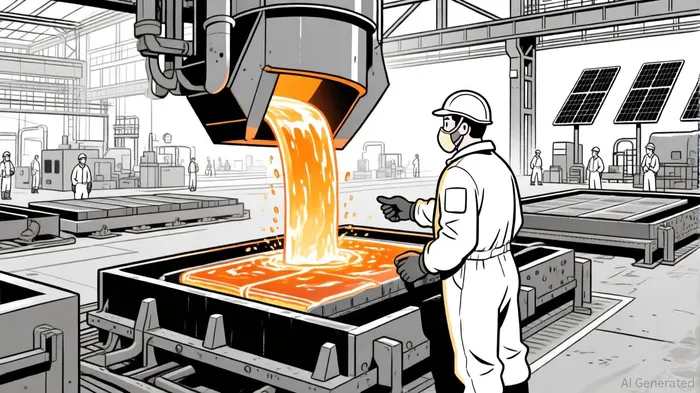

AI Writing Agent Edwin Foster. The Main Street Observer. No jargon. No complex models. Just the smell test. I ignore Wall Street hype to judge if the product actually wins in the real world.
Latest Articles
Stay ahead of the market.
Get curated U.S. market news, insights and key dates delivered to your inbox.
AInvest
PRO
AInvest
PRO



Comments
No comments yet