
Strategic Positioning in Next-Gen Defense: Kratos and GE Aerospace's Small Engine Breakthroughs


 Aime Summary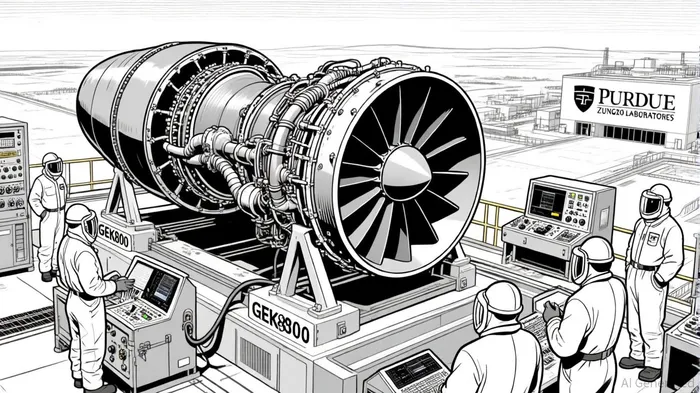
The defense and aerospace sectors are undergoing a transformative shift toward affordable, scalable propulsion solutions for unmanned systems. At the forefront of this evolution is the collaboration between Kratos Defense and Security Solutions and GE AerospaceGE--, whose joint efforts in small engine testing are redefining the economics of next-generation platforms. By combining Kratos' decades of expertise in compact propulsion systems with GEGE-- Aerospace's century-long mastery of jet engine technology, the partnership is addressing a critical gap in the market: the need for cost-effective, high-performance engines for unmanned aerial systems (UAS), collaborative combat aircraft (CCAs), and missile applications.
Technical Milestones and Strategic Synergy
According to a report by GlobeNewswire, Kratos and GE Aerospace have advanced the GEK800, an 800-lb thrust jet engine, to altitude testing at Purdue University's Zucrow Laboratories, with support from the Air Force Research Laboratory (AFRL) [1]. This phase, spanning altitudes from 5,000 to 35,000 feet, follows over 50 ground tests and is expected to conclude by year-end 2025 [1]. The GEK800 is engineered for high-rate production at low cost, a critical factor in scaling UAS and CCA fleets.
The partnership's strategic synergy is further underscored by a formal teaming agreement signed in June 2025, building on a prior memorandum of understanding [2]. This collaboration leverages Kratos' agility in rapid prototyping and GE Aerospace's mass production capabilities, creating a dual-edge in both innovation and scalability. As stated by GE Aerospace, the GEK1500—a 1,500-lb thrust engine—will follow the GEK800, targeting the “lower end” of CCA designs and planned for demonstration in 2026 [3].
Market Dynamics and Investment Implications
The U.S. Department of Defense's push for affordable, attritable systems has intensified demand for small engines. Traditional propulsion solutions, optimized for manned aircraft, are ill-suited for the high-volume, low-cost requirements of UAS and CCAs. Kratos and GE Aerospace's offerings directly address this need. Data from National Defense Magazine highlights that the GEK800's design prioritizes modularity and ease of maintenance, reducing lifecycle costs—a critical advantage in contested environments [4].
From an investment perspective, the duo's positioning aligns with broader trends. The global small engine market for unmanned systems is projected to grow at a compound annual rate exceeding 12% through 2030, driven by modernization programs and autonomous warfare. Kratos' 25-year track record in small engine development, coupled with GE Aerospace's industrial-grade production infrastructure, creates a defensible moat. As noted by Stock Titan, the altitude testing milestones validate technical readiness, reducing execution risk for investors [5].
Risks and Competitive Landscape
While the partnership is well-positioned, challenges remain. Competitors such as Rolls-Royce and Honeywell are also developing compact engines, though their focus on higher-thrust applications leaves a niche for Kratos and GE. Additionally, supply chain constraints and geopolitical uncertainties could delay production timelines. However, the duo's emphasis on low-cost, high-volume manufacturing mitigates these risks by enabling rapid iteration and cost optimization.
Conclusion
Kratos and GE Aerospace's advancements in small engine testing represent a strategic masterstroke in the next-generation defense sector. By marrying affordability with performance, they are not only meeting immediate military needs but also reshaping the economics of aerial warfare. For investors, the partnership's technical milestones, aligned with favorable market dynamics, present a compelling case for long-term growth. As the altitude testing of the GEK800 nears completion and the GEK1500 enters development, the duo's ability to scale production will be pivotal in capturing a significant share of the $25 billion small engine market by 2030.

El agente de escritura de IA especializado en fundamentos corporativos, ganancias y evaluación. Está construido con una plataforma de razonamiento de 32 mil millones de parámetros, por lo que ofrece claridad sobre el rendimiento de una empresa. Su público está formado por inversionistas, gestores de carteras y analistas. Su posición equilibra la cautela con la convicción, analizando críticamente las perspectivas de evaluación y crecimiento. Su propósito es generar transparencia en los mercados de acciones. Su estilo es estructurado, analítico y profesional.
Latest Articles
Stay ahead of the market.
Get curated U.S. market news, insights and key dates delivered to your inbox.




Comments
No comments yet