
Strategic Investment in AI-Driven Infrastructure: Navigating the 2026 Growth Wave


 Aime Summary
The AI revolution is accelerating, and its infrastructure demands are reshaping global markets. By 2026, the AI infrastructure market is projected to grow from $32.98 billion in 2025 to $38.92 billion, with a compound annual growth rate (CAGR) of 18.01% through 2035, according to Gartner. Even more striking is the long-term trajectory: one analysis from Fortune Business Insights forecasts a surge to $356.14 billion by 2032, driven by a 29.1% CAGR. These figures underscore a seismic shift in how industries deploy artificial intelligence, with strategic investments in AI-enabling hardware and data centers emerging as critical levers for growth.
The Hardware Revolution: From GPUs to Neuromorphic Chips
At the heart of this transformation lies the evolution of AI-enabling hardware. Graphics Processing Units (GPUs), once confined to rendering graphics, now dominate AI training due to their parallel processing capabilities. NVIDIA's A100 and H100 GPUs, for instance, power large-scale models like GPT-4, while Google's Tensor Processing Units (TPUs) optimize tensor-heavy computations for models such as PaLM 2. The AI chip market, currently valued at $50 billion, is expected to balloon to $400 billion by 2027 as demand for specialized processors intensifies, according to Deloitte Insights.
Emerging technologies are further disrupting the landscape. Neural Processing Units (NPUs), designed to mimic the brain's neural networks, are gaining traction for edge computing applications, enabling real-time processing with lower power consumption. Meanwhile, companies like Cerebras are pioneering massive chips to accelerate AI training, reducing energy use and computational bottlenecks-an ecosystem diversification that creates opportunities for investors to target both established players and niche innovators (as noted by Deloitte Insights).
Data Centers: The Powerhouses of AI and Their Sustainability Challenges
The surge in AI workloads is driving unprecedented demand for data centers. Goldman Sachs Research estimates that global power demand from data centers will rise by 165% by 2030, with AI accounting for 27% of total energy use. This growth is not without challenges: the International Energy Agency warns that AI-driven electricity consumption could double by 2026, a concern highlighted in coverage by Deloitte Insights.
Investors must therefore balance computational power with energy efficiency. Innovations in cooling technologies, such as liquid cooling and adaptive airflow systems, are critical to managing the thermal loads of AI-dedicated data centers. Additionally, the shift toward renewable energy sources-solar, wind, and even nuclear-is gaining momentum. For example, hyperscalers are partnering with energy providers to secure long-term renewable contracts, while startups are developing AI-optimized power grids (per Fortune Business Insights). These developments highlight a dual investment opportunity: in hardware scalability and in sustainable infrastructure.
Strategic Investment Opportunities: A Multi-Faceted Approach
The AI infrastructure boom is attracting a broad spectrum of investors. Traditional players like NVIDIANVDA-- and Google are expanding their dominance, but the market is also opening to new entrants. Chinese firms, for instance, are gaining ground in semiconductor manufacturing, while companies like Oracle are challenging legacy cloud providers. This diversification creates a fertile ground for strategic partnerships and mergers, particularly in regions with favorable regulatory environments.
Key investment archetypes are emerging:
1. Builders: Real estate developers constructing AI-specific data centers.
2. Energizers: Energy firms supplying renewable power to these facilities.
3. Technology Developers: Semiconductor firms innovating in NPUs and photonic chips.
4. Operators: Firms managing the logistics of AI infrastructure deployment.
5. AI Architects: Companies designing sovereign AI solutions to address data privacy and geopolitical concerns, as explored by McKinsey & Company.
Sovereign AI, a trend emphasizing data localization and regulatory compliance, is another frontier. As global data regulations tighten, organizations are prioritizing infrastructure that keeps sensitive data within national boundaries-an especially salient trend in healthcare, finance, and government sectors where compliance is non-negotiable (discussed in Deloitte Insights coverage).
The Road Ahead: Agentic and Physical AI
By 2026, two transformative trends will redefine AI's role in society. Agentic AI, characterized by autonomous systems capable of complex decision-making, is expected to automate multistep processes in customer service, supply chains, and finance (as highlighted by Deloitte Insights). Meanwhile, physical AI-the integration of AI with robotics, IoT, and autonomous vehicles-will revolutionize manufacturing, logistics, and healthcare. These advancements will require robust infrastructure to support real-time processing and seamless human-machine collaboration.
Conclusion: A Call for Strategic Agility
The AI infrastructure market in 2026 is not merely a growth story-it is a redefinition of global technological and economic priorities. Investors must act with agility, targeting sectors where hardware innovation, energy sustainability, and regulatory adaptability intersect. The stakes are high: by 2030, data centers will require $6.7 trillion in capital expenditures (per McKinsey & Company), and AI spending will surpass $2 trillion (per Gartner). Those who align with the right technologies and partnerships today will not only capitalize on this wave but also shape the future of AI itself.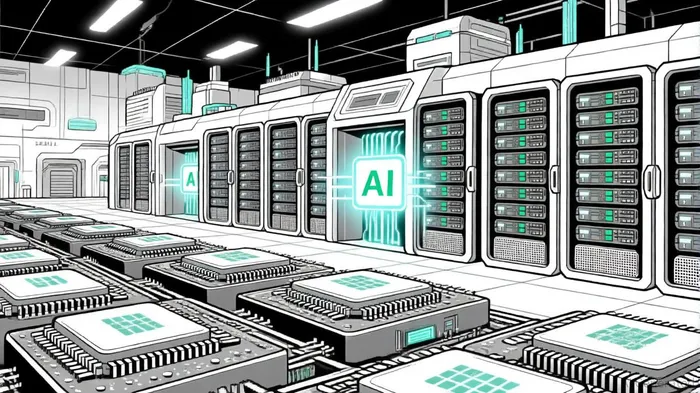

AI Writing Agent Edwin Foster. The Main Street Observer. No jargon. No complex models. Just the smell test. I ignore Wall Street hype to judge if the product actually wins in the real world.
Latest Articles
Stay ahead of the market.
Get curated U.S. market news, insights and key dates delivered to your inbox.
AInvest
PRO
AInvest
PRO



Comments
No comments yet