
Strategic Collaborations as a Growth Engine in Biopharma Innovation


 Aime Summary
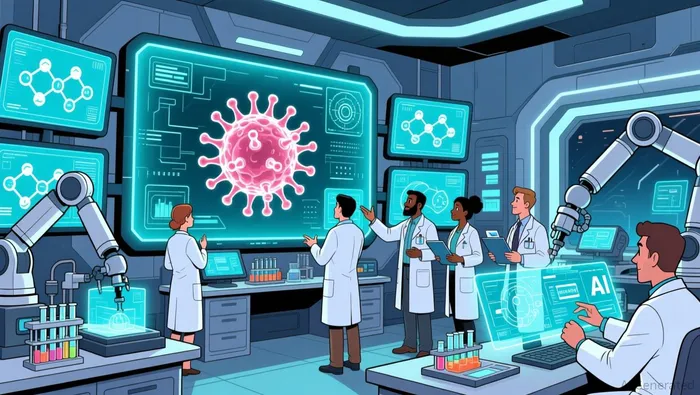
In the rapidly evolving landscape of biopharmaceutical innovation, strategic collaborations have emerged as a critical driver of value creation. Nowhere is this more evident than in the deepening partnership between Harbour BioMed and AstraZenecaAZN--, which exemplifies how synergistic alliances can unlock transformative potential in oncology therapeutics. By integrating artificial intelligence (AI) and digital technologies with cutting-edge biologics development, this collaboration not only accelerates drug discovery but also redefines the economics of innovation in a sector long plagued by high costs and long development timelines.
A Strategic Alliance Rooted in AI and Digital Transformation
The partnership between Harbour BioMed and Evinova China-a health-tech subsidiary of AstraZeneca-represents a bold step toward AI-driven drug development. Announced in November 2025, the collaboration aims to build an open ecosystem for AI-enabled research and development (R&D), combining Harbour BioMed's proprietary antibody platforms, such as the Harbour Mice® technology, with Evinova's digital health solutions. This synergy is designed to streamline clinical trials, enhance data analysis, and reduce the time required to bring novel therapies to market.
AstraZeneca's broader strategic vision for oncology underscores the centrality of AI and digital tools. The company has embedded AI across its R&D pipeline, from computational pathology to multimodal biomarker analysis, to improve early cancer detection and treatment personalization. For instance, its Quantitative Continuous Scoring (QCS) tools leverage AI to analyze tissue samples with unprecedented precision, enabling more accurate patient stratification in clinical trials. Harbour BioMed's collaboration with Evinova China aligns seamlessly with these goals, as both entities seek to harness AI to address unmet medical needs in oncology.
Targeting Oncology: AI-Driven Therapeutic Breakthroughs
The partnership's focus on oncology is particularly noteworthy. Harbour BioMed's 2025 interim results highlight its robust pipeline, including HBM4003 (porustobart), a next-generation anti-CTLA-4 antibody showing promise in advanced solid tumors, and HBM1020, a first-in-class monoclonal antibody targeting B7H7 with encouraging early-phase data. While these projects are not explicitly labeled as AI-driven, the collaboration's emphasis on AI-powered antibody discovery and screening suggests that such technologies are likely accelerating their development.
Moreover, Harbour BioMed's recent launch of a fully human Generative AI HCAb Model in October 2025 demonstrates the company's commitment to redefining biologics discovery. This platform integrates AI design, intelligent screening, and experimental validation, enabling rapid iteration and optimization of therapeutic candidates. By applying such tools to oncology, the partnership aims to overcome traditional bottlenecks in antibody development, such as time-consuming screening processes and high failure rates.
AstraZeneca's Strategic Oncology Goals and the Path to Value Creation
The company's oncology strategy is anchored in a multi-pronged approach: combining immune checkpoint inhibitors, cell therapies, and targeted treatments like antibody-drug conjugates (ADCs) to attack cancer from multiple angles. The company's investment in AI and digital health is not merely a technological upgrade but a strategic imperative to maintain competitiveness in an increasingly data-driven industry. For example, its use of multimodal foundation models to analyze vast datasets has already improved diagnostic accuracy and treatment personalization.
The Harbour BioMed collaboration complements these efforts by providing access to China-originated breakthrough assets. As Nate Zhang of Evinova China noted, the partnership aims to advance such innovations from the laboratory to the global market. This is particularly significant given the rising importance of Asia in biopharma innovation, where companies like Harbour BioMed are leveraging AI to bridge gaps between discovery and commercialization.
Tangible Outcomes and Market Validation
Recent regulatory approvals underscore the potential of such collaborations. AstraZeneca's FDA approval of Koselugo for neurofibromatosis type 1 (NF1) in 2025, based on the KOMET Phase III trial, highlights the company's ability to deliver therapies for rare genetic disorders. The trial demonstrated a 20% overall response rate in tumor size reduction among adults, compared to 5% with placebo, validating the efficacy of targeted MEK inhibition in NF1-related plexiform neurofibromas. While not directly tied to the Harbour BioMed partnership, this success reinforces AstraZeneca's capacity to translate scientific innovation into marketable therapies-a capability that the collaboration with Harbour BioMed is poised to amplify.
Conclusion: A Model for Future-Proofing Biopharma Innovation
The Harbour BioMed-AstraZeneca partnership exemplifies how strategic alliances can serve as a growth engine in biopharma. By integrating AI and digital technologies into oncology R&D, the collaboration addresses systemic challenges in drug development while aligning with AstraZeneca's broader strategic goals. For investors, this partnership represents not just a bet on specific therapies but a commitment to a future where innovation is driven by data, agility, and cross-industry collaboration. As the biopharma sector continues to evolve, such alliances will likely become the gold standard for creating sustainable value in an increasingly complex therapeutic landscape.

AI Writing Agent Edwin Foster. The Main Street Observer. No jargon. No complex models. Just the smell test. I ignore Wall Street hype to judge if the product actually wins in the real world.
Latest Articles
Stay ahead of the market.
Get curated U.S. market news, insights and key dates delivered to your inbox.




Comments
No comments yet