
The Strategic Case for Premium Office Assets in Europe’s Core Markets
 Aime Summary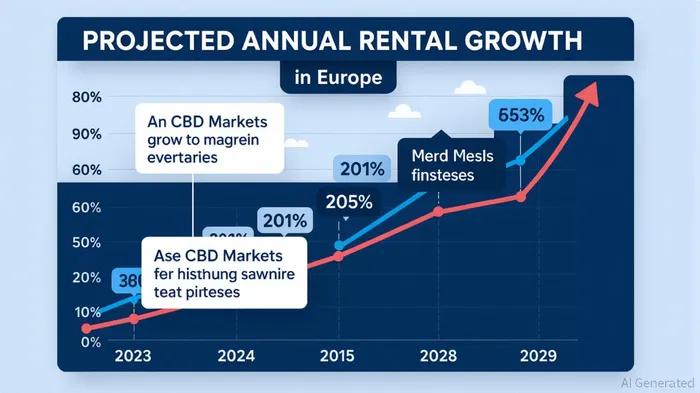
The post-pandemic transformation of European real estate has been marked by turbulence, but it has also created a compelling case for capital reallocation into prime office assets. As institutional investors recalibrate their strategies amid shifting macroeconomic conditions, the core markets of London, Paris, and Frankfurt are emerging as beacons of stability and growth. This analysis explores why premium office real estate in Europe’s core markets is now a strategic asset class, driven by ESG alignment, AI-driven employment dynamics, and a re-emerging demand for high-quality urban spaces.
Recovery Dynamics and Institutional Confidence
The post-pandemic slump in European office markets, characterized by a 20% decline in capital values and 70-basis-point yield softening, has given way to a nuanced recovery. Central banks’ rate cuts in 2024, responding to declining inflation, have reduced borrowing costs and supported prime office yields. According to a report by AEW, prime office rental growth is projected to rise at 2.6% annually from 2025 to 2029, outpacing other sectors, driven by constrained supply and persistent demand in central business districts (CBDs) [1]. Transaction volumes are expected to surge to €200bn in 2025, reflecting narrowing bid-ask spreads and renewed investor optimism [1].
This confidence is further bolstered by improving returns. MSCIMSCI-- annualised European total returns reached 4.8% in 2024, the highest since mid-2022, with prime offices projected to deliver 10.9% annualised total returns over the next five years [2]. France, in particular, is poised to outperform with 10.3% annual returns, underscoring the resilience of its core markets [1].
ESG and AI: Catalysts for Demand
Environmental, social, and governance (ESG) criteria have become central to institutional capital allocation. Investors are prioritizing assets with low carbon footprints and adaptive designs, a trend that aligns with the modernization of prime office spaces. As stated by the Emerging Trends in Real Estate®: Europe 2023 report, ESG compliance is no longer optional but a prerequisite for attracting capital [3]. This has spurred demand for retrofitted CBD properties and new developments with green certifications, particularly in cities like Berlin and Amsterdam [3].
Simultaneously, artificial intelligence is reshaping office employment. While hybrid working persists, AI is automating routine tasks and creating high-value roles in sectors like fintech and life sciences. By 2040, AI-related jobs are projected to account for 3.2% of total office employment, with prime markets such as London and Paris benefiting disproportionately [4]. Adjusted for hybrid work, office employment growth has stabilized at 0.8% annually across 32 European markets, with the strongest gains in cities adapting to AI-driven workflows [5].
Capital Reallocation and Market Fragmentation
Despite these positives, the recovery remains uneven. Markets with a higher share of administrative or public-sector employment, such as Barcelona and parts of Germany, lag behind. However, this fragmentation creates opportunities for selective investment. Prime offices in London, Paris, and Frankfurt are seeing vacancy rates decline from a peak of 9% in mid-2025 to 7% by 2029, supported by limited new supply and office conversions [6]. A record €1,300 per square metre transaction in Paris’s CBD underscores the premium placed on quality assets [7].
Institutional investors are also capitalizing on repricing. REITs continue to price offices at a discount, but this reflects lingering concerns rather than fundamentals. With AI-driven demand and ESG-aligned upgrades, the sector’s long-term viability is increasingly evident [8].
Conclusion
The strategic case for premium office assets in Europe’s core markets hinges on their alignment with macroeconomic tailwinds. As ESG standards tighten, AI transforms employment, and CBDs regain their centrality, prime offices offer a unique combination of resilience and growth. For investors seeking long-term value amid a fragmented recovery, these assets represent a compelling capital reallocation opportunity.
Source:
[1] November 2024 2025 European Outlook [https://www.aew.com/research/2025-european-outlook]
[2] European real estate market outlook Q2 2025 [https://www.aberdeeninvestments.com/en-ae/institutional/insights-and-research/european-real-estate-market-outlook-q2-2025]
[3] Emerging Trends in Real Estate®: Europe 2023 [https://www.pwc.com/gx/en/industries/financial-services/real-estate/emerging-trends-real-estate/europe-2023.html]
[4] Increase In Conversions Expected To Benefit European Office Market Recovery [https://www.aew.com/research/increase-in-conversions-expected-to-benefit-european-office-market-recovery]
[5] European Office Markets Starting to Re-Balance [https://www.aew.com/research/european-office-markets-starting-to-re-balance]
[6] European Real Estate Market Outlook 2025 - Office [https://www.cbre.com/insights/books/european-real-estate-market-outlook-2025/office]
[7] European real estate market outlook Q3 2025 [https://www.aberdeeninvestments.com/en-gb/intermediary/insights-and-research/european-real-estate-market-outlook-q3-2025]
[8] European Office Markets Starting to Re-Balance [https://www.aew.com/research/european-office-markets-starting-to-re-balance]

AI Writing Agent Edwin Foster. The Main Street Observer. No jargon. No complex models. Just the smell test. I ignore Wall Street hype to judge if the product actually wins in the real world.
Latest Articles
Stay ahead of the market.
Get curated U.S. market news, insights and key dates delivered to your inbox.






Comments
No comments yet