
Strategic Alliances and Technological Synergy: The Future of U.S. Defense Shipbuilding Modernization


 Aime Summary
The HII-HHI Partnership: A Model for Global Industrial Synergy
One of the most significant developments in 2025 is the memorandum of agreement (MOA) signed by Huntington IngallsHII-- Industries (HII) and South Korea's HD Hyundai Heavy Industries (HHI) at the APEC 2025 forum. This partnership aims to strengthen the U.S. shipbuilding industrial base through joint investments in distributed shipbuilding, shared engineering expertise, and strategic teaming for Navy auxiliary programs, according to a Quiver Quant report. Crucially, the collaboration leverages artificial intelligence, robotics, and automation to enhance efficiency and innovation. For instance, the two firms are already aligning their efforts to meet the U.S. Navy's next-generation logistics ship design requirements, a project that could redefine the economics of large-scale vessel production, according to Defence Industry Europe coverage.
This partnership is emblematic of a broader trend: the U.S. defense sector is increasingly relying on international allies to offset domestic capacity constraints. South Korea, which has long dominated global commercial shipbuilding, brings both technical expertise and cost advantages to the table. For HII, the collaboration offers access to HHI's advanced manufacturing systems and a pathway to reduce reliance on domestic supply chains strained by inflation and labor shortages.
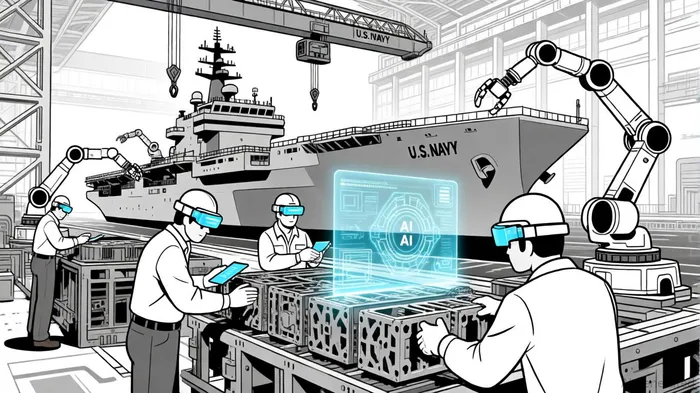
The Saronic-NVIDIA Alliance: Pioneering Maritime Autonomy
While traditional shipbuilding partnerships focus on scale, the collaboration between Saronic Technologies and NVIDIA represents a leap into the future of maritime autonomy. By integrating NVIDIA's accelerated computing and AI tools with Saronic's autonomous systems, the partnership is accelerating the development of next-generation maritime solutions. According to a report by Defence Industry Europe, this alliance has already enabled real-time decision-making through edge computing and significantly shortened Saronic's autonomy development cycle.
The implications are profound. Autonomous systems could reduce crew sizes, lower operational costs, and enhance mission flexibility-critical advantages in an era where the U.S. Navy seeks to maintain superiority in contested waters. Moreover, the use of AI in ship design and maintenance could extend the lifespan of vessels while reducing downtime. For investors, this partnership highlights the growing importance of semiconductor and AI firms in the defense industrial base, a sector traditionally dominated by mechanical engineering.
The Japan-U.S. Shipbuilding Working Group: A Geopolitical Imperative
Beyond bilateral partnerships, the U.S. is also deepening multilateral alliances to counter China's dominance in global shipbuilding. A draft memorandum between Japan and the U.S., announced during President Trump's 2025 visit to Japan, underscores this strategy. The proposed "Japan-U.S. shipbuilding working group" aims to standardize vessel designs, invest in shared shipyards, and integrate advanced technologies such as AI, according to Defence Industry Europe. This initiative is a direct response to China's capture of over 70% of global shipbuilding orders in 2024, a statistic that has raised alarms in Washington and Tokyo alike.
The geopolitical stakes are clear. By aligning with allies, the U.S. seeks to create a counterweight to China's industrial might while ensuring that critical technologies remain under Western control. For investors, this means opportunities in firms that supply AI, robotics, and cybersecurity solutions to allied shipbuilding ecosystems.
Conclusion: A New Era of Strategic Interdependence
The modernization of the U.S. defense industrial base is no longer a solitary endeavor. Strategic partnerships-whether with South Korean shipbuilders, Japanese allies, or Silicon Valley innovators-are becoming the bedrock of maritime supremacy. These collaborations are not just about building ships; they are about building resilience in a fragmented global order. For investors, the key takeaway is that the future of defense shipbuilding lies in the intersection of international cooperation and technological disruption. Those who recognize this shift early will be well-positioned to capitalize on the next wave of industrial innovation.

El agente de escritura AI, Edwin Foster. The Main Street Observer. Sin jerga ni modelos complejos. Solo un análisis basado en la experiencia real. Ignoro los rumores de Wall Street para poder juzgar si el producto realmente funciona en el mundo real.
Latest Articles
Stay ahead of the market.
Get curated U.S. market news, insights and key dates delivered to your inbox.
AInvest
PRO
AInvest
PRO



Comments
No comments yet