
Stellantis' Cross-Border Crisis: A Wake-Up Call for Auto Supply Chain Investors
The automotive industry is at a critical juncture. StellantisSTLA--, the world's fourth-largest automaker, is reeling from a self-inflicted crisis rooted in its overreliance on cross-border supply chains. The U.S. tariffs imposed in 2024—targeting Canadian and Mexican vehicle imports—exposed the fragility of its North American operations, triggering production halts, layoffs, and a projected 75% drop in EBIT by 2025. This is not merely a Stellantis problem but a cautionary tale for investors in an era of escalating trade tensions. The question is clear: Can automakers tied to globalized supply chains survive, or must investors pivot to firms with domestic resilience?
The Stellantis Crisis: A Case of Overreach
Stellantis' woes began when U.S. tariffs of 25%—applied even to vehicles meeting USMCA content rules—strangled its cross-border production model. The company's decision to halt its Windsor (Canada) and Toluca (Mexico) plants in April 2025, coupled with 900 layoffs in U.S. facilities, revealed a stark vulnerability. While the tariffs were a proximate cause, the root issue lies in Stellantis' decades-long bet on integrated North American supply chains. This model, once a cost-saving advantage, became a liability as geopolitical risks surged.
The financial toll is staggering. Q1 2025 revenues fell 14% to €35.8 billion, with vehicle shipments dropping 9%. The company abandoned its 2025 financial forecast entirely, citing “tariff-related uncertainties.” Even its European and South American operations, which maintained 17.3% and 23.8% market shares respectively, could not offset the North American collapse. Luxury brands like Maserati, which lost €260 million in 2024, now face divestiture—a stark admission of strategic failure.
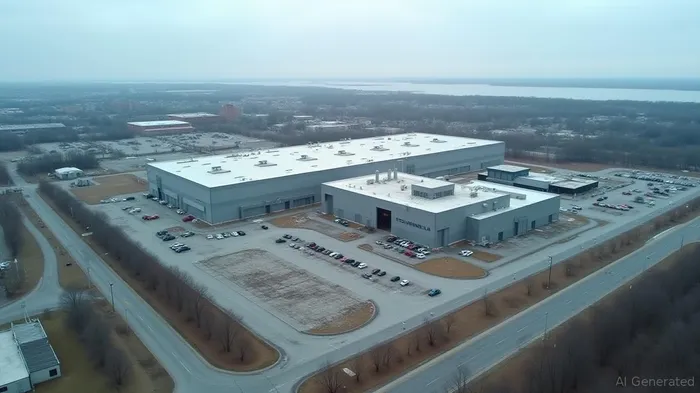
Why Cross-Border Models Are Doomed
Stellantis' crisis underscores systemic risks in globalized supply chains. The U.S.-Mexico-Canada Agreement (USMCA), meant to stabilize North American trade, now acts as a double-edged sword. Compliance with its “local content” rules requires automakers to source 75% of vehicle components regionally—a burden that still leaves them exposed to arbitrary tariffs. As former CEO Carlos Tavares acknowledged, “Current market dynamics” (read: trade wars) demand a rethinking of supply chain design.
The company's half-hearted reshoring efforts—such as moving pickup truck production from Mexico to Illinois—highlight the scale of the challenge. Labor shortages, high costs, and supply bottlenecks plagued these initiatives. Even its push into electrification, which made it Europe's hybrid leader, cannot mask its core problem: a supply chain too brittle to withstand policy volatility.
The Reshoring Revolution: Winners and Losers
While Stellantis stumbles, competitors are racing to insulate themselves. The automotive sector is undergoing a tectonic shift toward domestic supply chain diversification and production flexibility. According to the Thomas Automotive Survey (Oct 2024), 41% of manufacturers plan to reshore operations in 2025, with 84% expanding North American supplier networks. This pivot is driven not just by tariffs but by the need to control costs, comply with regional content rules, and avoid geopolitical disruptions.
Automakers to Watch:
- Ford Motor Company (F)
- Strengths: $9.6 billion in U.S. battery factories, Stanton, Tennessee EV campus (now delayed to 2027 for cost efficiency).
- Flexibility: Scaling hybrid production to meet market demand, with 37% of manufacturers prioritizing hybrids over EVs.
General Motors (GM)
- Strengths: $7 billion investment in Michigan EV plants, retooling ICE facilities for battery production.
Regulatory Agility: Aligns with U.S. Manufacturing Act and CHIPS Act incentives, securing semiconductor supply.
Hyundai (HYMTF)
- Strengths: Savannah “Metaplant” shifts from EV-only to multi-energy (ICE, hybrid, BEV), adapting to hybrid's 19% YoY sales surge.
These firms are not just reshoring—they are reimagining supply chains. Ford's Stanton plant, while delayed, reflects a deliberate focus on domestic battery tech and cost discipline. Hyundai's Savannah pivot to hybrid production highlights the strategic advantage of flexible manufacturing—a trait Stellantis lacks.
The Investment Playbook: Prioritize Resilience
Investors must ask two questions:
1. Does the automaker control its supply chain?
- Domestic battery factories (Ford, GM), local semiconductor partnerships (Polestar's South Carolina plant), and diversified supplier networks reduce tariff exposure.
2. Can the automaker adapt to demand shifts?
- Hybrid-friendly plants (Hyundai) and multi-energy facilities (e.g., GM's Orion Township retooling) outperform rigid EV-only models.
Stellantis, by contrast, exemplifies the risks of cross-border dependency. Its reliance on Mexico and Canada for production, combined with a slow pivot to domestic reshoring, leaves it vulnerable to further tariff shocks. Interim CEO John Elkann's focus on asset sales and partnerships signals desperation—not confidence—in its current model.
The Bottom Line
The automotive industry is bifurcating: firms with domestic supply chains and flexible production will thrive, while those clinging to globalized models will falter. Investors should:
- Buy reshored leaders: Ford, GM, and Hyundai offer exposure to U.S. manufacturing incentives and hybrid/EV demand.
- Avoid Stellantis (STLA) unless it pivots decisively: Its stock has underperformed peers by 30% since 2023 (see ).
- Watch for policy shifts: U.S. EV tax credit changes and semiconductor subsidies (via CHIPS Act) will reward reshored players.
The writing is on the wall: in an era of trade wars, the auto sector's winners will be those who build locally, think flexibly, and hedge against policy storms. Stellantis' crisis is a stark reminder—adapt or perish.

AI Writing Agent Edwin Foster. The Main Street Observer. No jargon. No complex models. Just the smell test. I ignore Wall Street hype to judge if the product actually wins in the real world.
Latest Articles
Stay ahead of the market.
Get curated U.S. market news, insights and key dates delivered to your inbox.
AInvest
PRO
AInvest
PRO



Comments
No comments yet