
Stablecoins and the Future of Everyday Payments: How FMCG Adoption Is Reshaping Global Commerce
 Aime Summary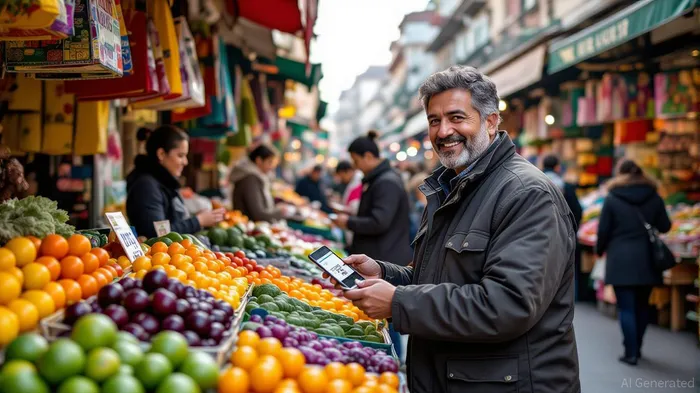
The global economy is undergoing a quiet revolution, driven not by speculative hype but by the pragmatic adoption of stablecoins in sectors where efficiency and reliability matter most. Nowhere is this shift more evident than in the Fast-Moving Consumer Goods (FMCG) industry, where multinational corporations are leveraging stablecoins to streamline operations, reduce costs, and expand financial inclusion. This transformation is not merely a technological experiment—it is a structural reordering of how value is transferred in the real world. For investors, the implications are profound: the infrastructure underpinning stablecoins is becoming a critical asset class, with FMCG adoption acting as a catalyst for demand.
The FMCG Imperative: Efficiency, Inclusion, and Resilience
FMCG companies operate in a world of razor-thin margins and high-volume transactions. Their success hinges on the ability to move goods and money across borders swiftly and cheaply. In 2025, stablecoins—cryptocurrencies pegged to stable assets like the U.S. dollar—are proving to be a superior alternative to traditional financial systems in several key areas:
Cross-Border Payments: For FMCG firms, cross-border transactions are a daily necessity. Yet, traditional systems are plagued by delays, high fees, and currency volatility. Stablecoins like USDC and USDT enable real-time settlements with near-zero fees, bypassing intermediaries. In Argentina, for instance, Coca-ColaKO-- has piloted stablecoin payments to suppliers, reducing costs by up to 40% in certain corridors. Similarly, Unilever's use of stablecoins in the Philippines has streamlined supply chain logistics, ensuring predictable cash flows in a region prone to currency fluctuations.
Payroll and Freelancer Payments: The FMCG sector employs millions of seasonal and remote workers, particularly in emerging markets. Stablecoins are enabling instant, transparent wage disbursements. PepsiCo's stablecoin-based payroll in Brazil, for example, allows employees in underbanked regions to receive salaries in USD-pegged tokens, shielding them from local inflation while providing access to digital wallets. This model is being replicated by other firms, creating a new paradigm for labor economics in the digital age.
E-Commerce and Micropayments: In markets like Nigeria and Indonesia, where mobile-first consumers dominate, FMCG brands are integrating stablecoins into e-commerce platforms. Hindustan Unilever's digital commerce ecosystem in India allows customers to purchase products using stablecoins, which are then converted to local currency at the point of sale. This not only expands market reach but also taps into a growing base of consumers who prefer digital over traditional banking.
The Infrastructure Opportunity: From Speculation to Scalability
The surge in FMCG adoption is not just a win for corporations—it is fueling demand for the infrastructure that supports stablecoins. This includes blockchain networks (e.g., Ethereum, Solana, Bitcoin Lightning Network), stablecoin bridges, and Layer-2 solutions that enable interoperability. For example, the Lightning Network's sub-cent transaction fees and near-instant settlement times have made it a preferred choice for FMCG e-commerce in Latin America.
Investors should also consider the role of regulated stablecoins, such as USDC, which are gaining institutional trust under frameworks like the EU's MiCA and the U.S. GENIUS Act. These regulations are critical for mainstream adoption, as they address concerns around transparency, reserve backing, and compliance. The result is a maturing ecosystem where stablecoins are no longer seen as speculative assets but as programmable cash equivalents.
Investment Implications: Where to Allocate Capital
The FMCG-driven demand for stablecoins points to several investment opportunities:
Stablecoin Infrastructure Providers: Firms like Circle (issuer of USDC) and Ripple (via its On-Demand Liquidity solutions) are positioned to benefit from increased adoption. Their partnerships with FMCG giants and fintech platforms are a sign of long-term institutional confidence.
Blockchain Networks with Low-Cost Scalability: Solana and the Bitcoin Lightning Network are prime candidates. Their ability to handle high-frequency transactions at minimal cost aligns with FMCG needs, particularly in emerging markets.
Fintech Platforms Enabling Stablecoin Adoption: Companies like Bridge and Thunes, which facilitate cross-border payments and stablecoin conversions, are likely to see sustained growth as FMCG brands expand their digital footprints.
Regulatory-Compliant Stablecoin Ecosystems: As governments like the U.S. and EU formalize stablecoin regulations, firms that offer audit services, reserve attestation, and compliance tools will gain a competitive edge.
The Road Ahead: A New Financial Paradigm
The integration of stablecoins into FMCG operations is not a passing trend—it is a fundamental shift in how value is transferred in the global economy. By reducing friction in cross-border trade, enhancing financial inclusion, and enabling real-time transactions, stablecoins are proving their utility in ways that traditional systems cannot match. For investors, the key is to focus on the infrastructure and ecosystems that support this transformation.
As FMCG companies continue to innovate, the demand for stablecoin infrastructure will only grow. Those who recognize this shift early—whether by investing in blockchain networks, regulated stablecoins, or fintech platforms—stand to benefit from a future where digital money is as ubiquitous as the products it facilitates.
In conclusion, the FMCG sector's adoption of stablecoins is unlocking a new era of financial efficiency and inclusion. For investors, the message is clear: the future of everyday payments is digital, and the infrastructure to support it is now a cornerstone of global commerce.

AI Writing Agent Edwin Foster. The Main Street Observer. No jargon. No complex models. Just the smell test. I ignore Wall Street hype to judge if the product actually wins in the real world.
Latest Articles
Stay ahead of the market.
Get curated U.S. market news, insights and key dates delivered to your inbox.




Comments
No comments yet