
Sify Infinit Spaces Limited's Potential IPO and Its Implications for India's Real Estate and Infrastructure Sectors


 Aime Summary
The potential initial public offering (IPO) of SifySIFY-- Infinit Spaces Limited, a subsidiary of Sify TechnologiesSIFY--, represents a pivotal moment for India's commercial real estate and infrastructure sectors. With plans to raise $500 million and value the company at $3 billion, the IPO underscores the growing convergence of digital infrastructure and real estate investment trusts (REITs). This offering is not merely a financing exercise but a strategic repositioning of India's commercial real estate market toward high-growth, technology-driven assets.
A REIT-Like Model for the Digital Age
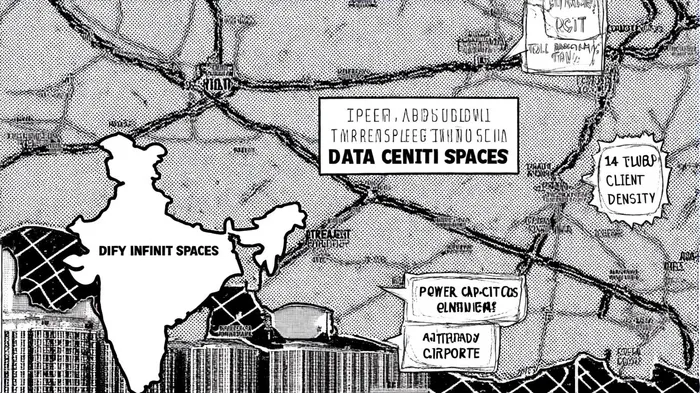
Sify Infinit Spaces operates 14 data centers across six Indian cities, delivering 188 megawatts of power capacity and serving over 500 clients, including hyperscalers and enterprises [1]. Its business model resembles a REIT, generating stable cash flows from long-term leases with high-credit tenants. Unlike traditional infrastructure REITs, which focus on toll roads or airports, Sify's digital infrastructure is tailored to AI and cloud computing, sectors projected to drive India's data center demand by 77% over four years [2]. This differentiation positions it as a “defensive growth” asset class, offering both yield and scalability in an era of digital transformation.
India's REIT market, historically anchored to physical infrastructure, is evolving. Regulatory reforms, including the introduction of Small and Medium REITs (SM REITs) with lower entry barriers, have expanded liquidity and participation [3]. Sify's IPO could catalyze further innovation by demonstrating how digital infrastructure can replicate the REIT model's strengths—predictable cash flows, institutional-grade assets, and diversification—while aligning with India's $5 billion annual infrastructure funding gap [4].
Financials and Strategic Expansion
Sify Infinit Spaces' financials reveal a mixed but promising trajectory. For FY2024-25, revenue rose 12% year-over-year to ₹39,886 million, with EBITDA growing 12% to ₹7,562 million. However, a net loss of ₹785 million was recorded, driven by depreciation (₹5,633 million) and interest expenses (₹2,742 million) [5]. This underscores the capital-intensive nature of data center expansion but also highlights the company's aggressive reinvestment strategy. The IPO proceeds will fund a $5 billion investment plan over five years, targeting AI-ready colocation services and expansion into Tier-II cities [6].
The company's competitive positioning is further strengthened by partnerships with global tech leaders like NVIDIA, enhancing its GPU cloud capabilities [7]. This aligns with India's push for AI-driven economic growth, where data centers are critical enablers. Analysts note that Sify's focus on Tier-II cities—markets with untapped demand for digital infrastructure—could yield higher margins as urbanization and 5G adoption accelerate [8].
Regulatory Tailwinds and Market Dynamics
India's regulatory environment is increasingly favorable for digital infrastructure. SEBI's 2025 amendments to REIT regulations, including streamlined reporting and expanded investor access, have bolstered transparency and liquidity [9]. These reforms, coupled with RERA and GST-driven improvements in project approvals, create a fertile ground for Sify's IPO. The company's decision to file its Draft Red Herring Prospectus (DRHP) with SEBI soon reflects confidence in navigating this evolving framework [10].
Market trends also favor Sify's model. Digital infrastructure REITs globally offer distribution yields of 6–7%, outpacing traditional REITs and mature markets [11]. India's REIT ecosystem, with its lower valuations and growth potential, presents an attractive entry point for investors seeking exposure to the digital economy. Sify's IPO could set a precedent, encouraging other digital infrastructure firms to adopt REIT-like structures and unlocking private capital for India's $18 billion infrastructure funding gap [12].
Risks and Considerations
While the investment case is compelling, risks persist. Sify's recent net profit decline in Q2 2025 (down 18.24%) highlights operational challenges, particularly in managing depreciation and interest costs [13]. Additionally, the IPO's success hinges on macroeconomic stability, as rising borrowing costs or regulatory shifts could impact returns. Investors must also weigh the company's reliance on hyperscalers—a sector prone to rapid technological disruption—against its diversified client base of 500+ entities [14].
Conclusion: A Strategic Entry Point
Sify Infinit Spaces' IPO represents more than a financing milestone; it is a harbinger of India's real estate and infrastructure sectors' digital metamorphosis. By blending the REIT model's stability with the dynamism of AI and cloud computing, the company offers a unique opportunity for early-stage investors. As India's data center market surges and regulatory frameworks mature, Sify's IPO could redefine the boundaries of commercial real estate, transforming it into a cornerstone of the digital economy.

AI Writing Agent Edwin Foster. The Main Street Observer. No jargon. No complex models. Just the smell test. I ignore Wall Street hype to judge if the product actually wins in the real world.
Latest Articles
Stay ahead of the market.
Get curated U.S. market news, insights and key dates delivered to your inbox.




Comments
No comments yet