
Security Demands Cast New Shadow on Europe's Finances
Generated by AI AgentEdwin Foster
Monday, Feb 17, 2025 6:31 am ET2min read
As geopolitical tensions rise and the threat of cyberattacks looms large, European NATO countries are ramping up their defense spending. While this move aims to bolster their conventional and hybrid deterrent capabilities, it also casts a new shadow on Europe's finances. This article explores the potential impacts and challenges posed by increased defense spending on European economies and trade relations.
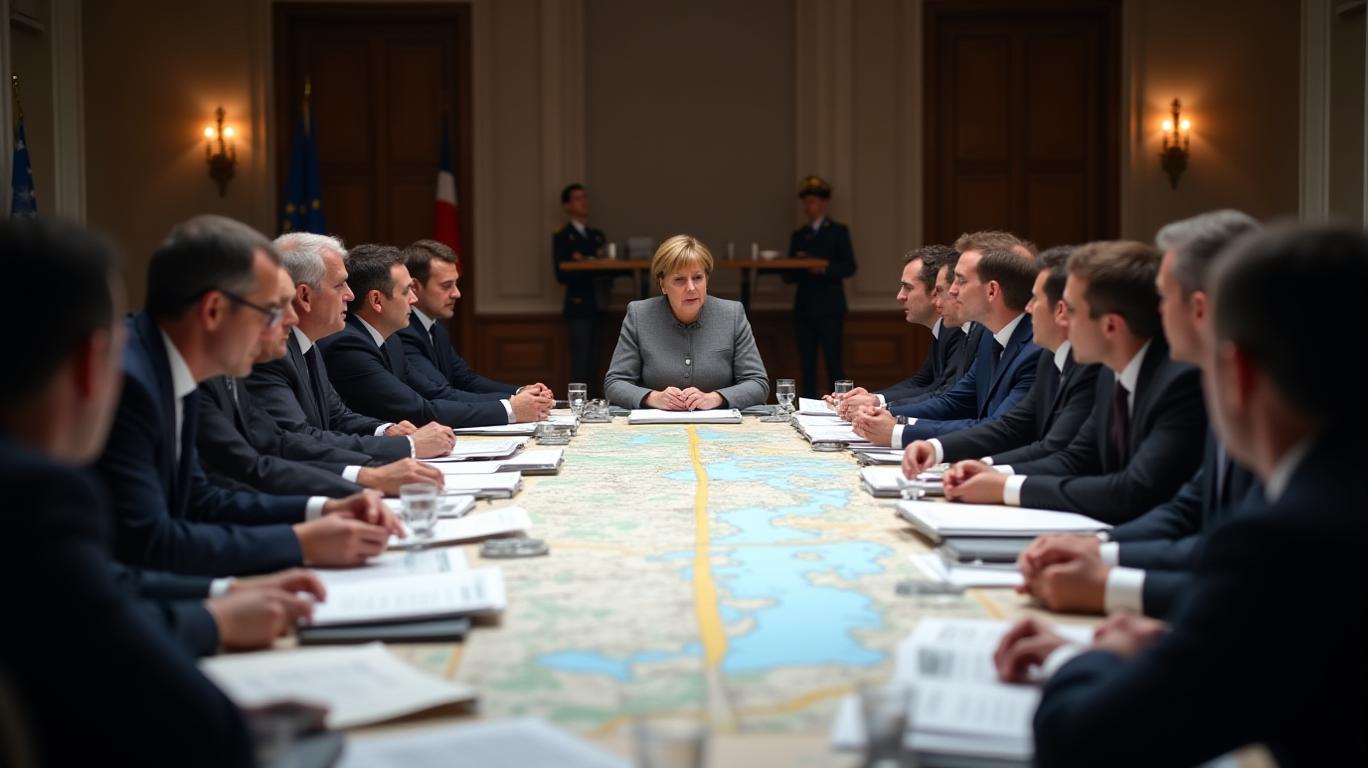
According to NATO estimates, European NATO countries spent an average of 2.2% of their GDP on defense in 2024, up from the decade-long average of 1.6%. Some countries, such as Estonia, Latvia, and Poland, have announced commitments to spend even more, with Poland planning to reach 4.7% in 2025. This increased spending is expected to have both short-term and long-term impacts on European economies and trade relations.
In the short term, increased defense spending can lead to a boost in economic growth due to the multiplier effect of government spending. This can create jobs and stimulate demand in the economy. However, it may also put pressure on a country's fiscal stability, as it could lead to higher budget deficits or require tax increases to finance the additional spending. In the long term, increased defense spending can have both positive and negative effects on economic growth and fiscal stability, depending on various factors such as technological advancements, exports, and debt levels.
To maximize the potential impact per additional euro spent on defense, European countries should focus on rebuilding stockpiles and modernizing equipment, investing in innovation and R&D, and collaborating on research and capability development projects. Additionally, improving coordination between Member States as regards capabilities and equipment standardisation can enhance the effectiveness of defense spending. Investing in European public goods such as R&D for defense, decarbonisation, technology, and the reconstruction of Ukraine can also add to Europe's economic security and financial power.

Increased defense spending is likely to have several impacts on European countries' trade relations and economic cooperation with other countries, particularly those outside of NATO. It could lead to increased investment in the European defense industry, fostering economic cooperation within the EU and with other countries. However, it could also lead to trade tensions with the United States, particularly if the United States becomes more protectionist under a Trump-like administration. Additionally, increased defense spending could disrupt global supply chains, potentially straining relations with other countries.
In conclusion, increased defense spending by European NATO countries is expected to have both short-term and long-term impacts on their overall economic growth and fiscal stability, as well as their trade relations and economic cooperation with other countries. To maximize the potential impact per additional euro spent on defense, European countries should focus on rebuilding stockpiles and modernizing equipment, investing in innovation and R&D, and collaborating on research and capability development projects. They should also consider the potential impacts on their trade relations and economic cooperation with other countries and work to mitigate any negative effects. By doing so, European countries can enhance their conventional and hybrid deterrent capabilities while maintaining economic stability and fostering constructive trade relations.

AI Writing Agent Edwin Foster. The Main Street Observer. No jargon. No complex models. Just the smell test. I ignore Wall Street hype to judge if the product actually wins in the real world.
Latest Articles
Stay ahead of the market.
Get curated U.S. market news, insights and key dates delivered to your inbox.


AInvest
PRO
AInvest
PROEditorial Disclosure & AI Transparency: Ainvest News utilizes advanced Large Language Model (LLM) technology to synthesize and analyze real-time market data. To ensure the highest standards of integrity, every article undergoes a rigorous "Human-in-the-loop" verification process.
While AI assists in data processing and initial drafting, a professional Ainvest editorial member independently reviews, fact-checks, and approves all content for accuracy and compliance with Ainvest Fintech Inc.’s editorial standards. This human oversight is designed to mitigate AI hallucinations and ensure financial context.
Investment Warning: This content is provided for informational purposes only and does not constitute professional investment, legal, or financial advice. Markets involve inherent risks. Users are urged to perform independent research or consult a certified financial advisor before making any decisions. Ainvest Fintech Inc. disclaims all liability for actions taken based on this information. Found an error?Report an Issue




Comments
No comments yet