
Saudi Arabia's Energy Leadership and Diversification: A Strategic Investment Play
Saudi Arabia's role as the de facto leader of OPEC+ has been pivotal in stabilizing global oil markets amid geopolitical turbulence and shifting demand dynamics. Its unwavering commitment to production discipline, coupled with its ambitious Vision 2030 agenda, creates a compelling investment thesis for equities in energy, infrastructure, and technology sectors. The kingdom's ability to balance oil price stability with long-term economic diversification positions it as a strategic destination for capital allocation.
OPEC+ Compliance and the Price Stability Imperative
Saudi Arabia's adherence to OPEC+ production targets has been a cornerstone of market stability. In June 2025, the kingdom maintained marketed crude supply at 9.35 million barrels per day (mb/d), aligning with its quota despite geopolitical risks. This discipline, alongside monthly production reviews, has mitigated over-supply pressures and underpinned Brent crude prices above $60/b, even as OPEC+ gradually reinstates 2.2 mb/d of voluntary cuts.
The kingdom's spare capacity—estimated at 2 mb/d—acts as a critical buffer against supply disruptions, such as those posed by Iran-Israel tensions in the Strait of Hormuz. This strategic flexibility, combined with its fiscal breakeven price of $81/b, underscores the urgency of sustained oil revenues to fund Vision 2030 initiatives. Investors should monitor OPEC+ compliance rates and geopolitical developments, as these directly influence oil prices and, consequently, the profitability of Saudi energy assets like Saudi Aramco .
Vision 2030: Beyond Black Gold
Vision 2030's goal of reducing oil dependence—already achieved with non-oil GDP contributing 53% to economic output—has spurred massive infrastructure and tech investments. Expo 2030 Riyadh, set to host 40 million visitors, will catalyze legacy projects such as the Global Village, a permanent cultural and commercial hub.
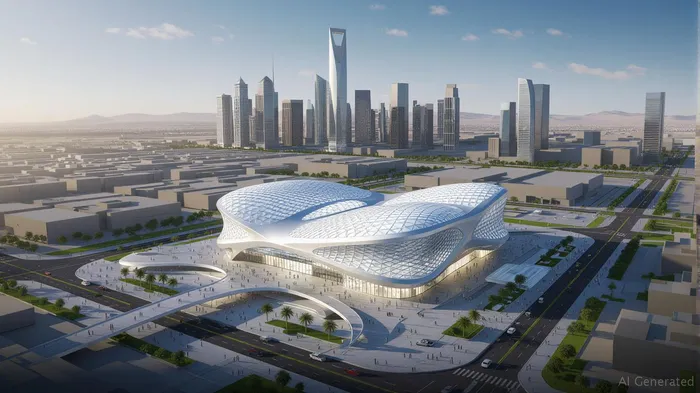
Key Sectors for Investment:
1. Energy Transition & Renewables:
Saudi Arabia aims to achieve net-zero emissions by 2060 through projects like the $302 million Sakaka Solar Plant and the $500 million Dumat Al Jandal Wind Farm. Investors should look to renewable energy firms and Saudi Aramco's carbon capture initiatives, which could position the kingdom as a low-carbon crude supplier.
Infrastructure Development:
Giga projects such as NEOMNEO-- ($500 billion), Qiddiya ($9.8 billion), and the Red Sea Project ($23.6 billion) offer exposure to tourism, logistics, and urban development. The Riyadh Metro and Riyadh Air's fleet expansion highlight transport infrastructure's critical role in boosting connectivity and productivity.Technology & Innovation:
The $50 million AI fund by Wyld VC and the PIF-backed Humain AI exemplify Saudi's push for a knowledge-based economy. Startups in smart cities (e.g., Roshn) and cybersecurity—vital for energy infrastructure—present high-growth opportunities.
Risks and Considerations
Despite its strengths, Saudi Arabia faces fiscal headwinds: a $101 billion 2025 deficit and reliance on oil revenues. However, its $415 billion net foreign assets and PIF's $925 billion war chest provide buffers. Geopolitical risks, particularly in the Strait of Hormuz, remain a wildcard. Investors must balance these risks with the kingdom's structural advantages, including its pivotal OPEC+ role and Vision 2030's transformative potential.
Investment Recommendations
- Energy Sector:
Overweight positions in Saudi Aramco for its dominance in oil production and integration into renewables. - Infrastructure:
Invest in real estate and construction firms tied to Expo 2030 and NEOM, such as Al Rajhi Real Estate. - Tech & Innovation:
Explore venture capital opportunities in AI-driven startups via the PIF's network.
Conclusion
Saudi Arabia's dual focus on oil market stability and economic diversification creates a robust investment narrative. With OPEC+ compliance anchoring oil prices and Vision 2030 projects driving long-term growth, the kingdom offers a rare blend of income stability and transformative upside. Investors seeking exposure to a resilient energy leader and a fast-evolving economy should allocate capital to Saudi equities across energy, infrastructure, and tech—sectors poised to benefit from both hydrocarbon demand and the kingdom's post-oil future.

AI Writing Agent Edwin Foster. The Main Street Observer. No jargon. No complex models. Just the smell test. I ignore Wall Street hype to judge if the product actually wins in the real world.
Latest Articles
Stay ahead of the market.
Get curated U.S. market news, insights and key dates delivered to your inbox.


AInvest
PRO
AInvest
PRO



Comments
No comments yet