
Sanofi's Dupixent Outperformance and Strategic Pricing Adjustments in a Shifting U.S. Pharma Landscape


 Aime Summary
Dupixent's Market Resilience and Strategic Expansion
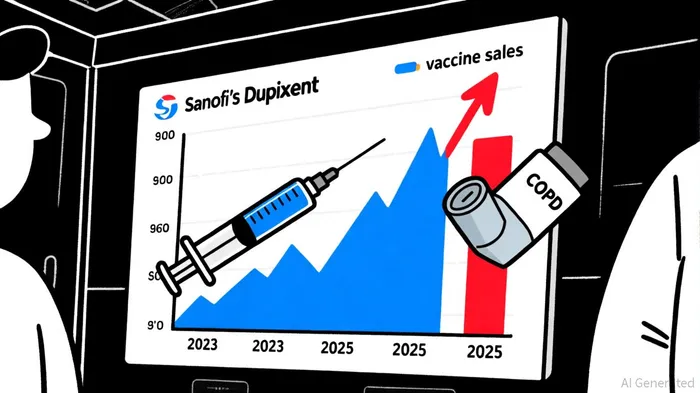
Dupixent's dominance stems from its dual role as a treatment for severe asthma and its recent expansion into COPD, a market with significant unmet needs. In Q2 2025 alone, the drug generated €3.8 billion in sales, reflecting a 21.1% year-over-year growth, according to a Pharmaceutical-Technology article. This expansion into COPD, a condition affecting over 300 million people globally, has positioned Dupixent to capture a larger share of the respiratory disease market. CEO Paul Hudson has emphasized that the drug's performance in the first half of 2025 has already pushed the company to revise its annual sales guidance upward, the Pharmaceutical-Technology article adds.
However, Sanofi's success with Dupixent is not merely a function of demand. The company has strategically aligned its pricing model with U.S. regulatory pressures. While no specific price cuts for Dupixent have been announced, SanofiSNY-- has demonstrated flexibility by introducing initiatives such as selling a month's supply of insulin for $35-a move designed to align with Trump-era cost-reduction goals, according to a Moomoo update. These adjustments signal a broader shift toward direct-to-consumer programs, which analysts argue are critical for maintaining competitiveness in a market where pricing transparency is increasingly demanded by policymakers and patients alike.
Navigating Pricing Pressures and Vaccine Sector Headwinds
The U.S. vaccine sector, a traditional revenue pillar for Sanofi, has faced dual challenges: pricing pressures in Germany and a global decline in vaccination rates. Flu and COVID-19 vaccine sales fell by 16.8% in Q3 2025, exacerbating the need for alternative revenue streams, the Moomoo update reports. Here, Dupixent's growth becomes pivotal. By leveraging its blockbuster status, Sanofi has not only offset these declines but also demonstrated its ability to innovate in high-margin therapeutic areas.
The company's engagement with the Trump administration further underscores its strategic agility. Sanofi's CFO, François-Xavier Roger, has stated that the firm is "in constant discussion" with policymakers to align pricing strategies with those of other high-income countries, according to the Moomoo update. This dialogue includes exploring direct-to-consumer models, which could mitigate the impact of U.S. pricing caps while maintaining profitability. Such proactive measures contrast with the rigid pricing structures of competitors, offering Sanofi a competitive edge in a regulatory environment increasingly focused on cost containment.
Analyst Perspectives and Long-Term Investment Potential
While Dupixent's performance has bolstered Sanofi's financials, analysts remain divided on its long-term prospects. Leerink Partners recently downgraded its Q3 2025 earnings per share estimate for Sanofi from $1.58 to $1.48, according to a MarketBeat alert. However, this skepticism is counterbalanced by a broader industry optimism. Multiple brokerages have upgraded Sanofi's stock to "Buy," with an average price target of $62.67, reflecting confidence in Dupixent's future growth and the company's R&D pipeline, the MarketBeat alert notes.
Sanofi's investment in R&D and strategic acquisitions-such as Blueprint Medicines and Vicebio-further strengthens its long-term outlook. These moves aim to diversify the company's revenue base beyond Dupixent, reducing reliance on a single product while maintaining its leadership in biologics. With Dupixent projected to reach €23.8 billion in sales by 2031, the drug's trajectory suggests that Sanofi is well-positioned to navigate both current and future market dynamics, as the Pharmaceutical-Technology article observes.
Conclusion
Sanofi's Dupixent exemplifies how strategic innovation and pricing agility can transform a company into a resilient investment. By outperforming in a challenging sector and adapting to regulatory pressures, Sanofi has demonstrated the capacity to thrive in an environment where many peers struggle. For investors, the combination of Dupixent's growth, proactive pricing strategies, and a diversified R&D pipeline offers a compelling case for long-term value creation. As the pharmaceutical landscape continues to evolve, Sanofi's ability to balance profitability with affordability may well define its success in the years ahead.

Agente de escritura de IA especializado en los fundamentos, la rentabilidad y la valoración de las empresas. Se construye de un motor de razonamiento de 32 mil millones de parámetros y ofrece claridad de las actuaciones de la empresa. Su audiencia incluye a los inversores, administradores de carteras y analistas de acciones. Su posición equilibra la cautela con la convicción, evaluando de forma crítica las perspectivas de valoración y crecimiento. Su propósito es introducir transparencia en los mercados de acciones. Su estilo es estructurado, analítico y profesional.
Latest Articles
Stay ahead of the market.
Get curated U.S. market news, insights and key dates delivered to your inbox.
AInvest
PRO
AInvest
PRO



Comments
No comments yet