
Sable Offshore's Regulatory Breakthrough: A High-Stakes Gamble for Energy Investors


 Aime Summary
The energy sector has long been a theater for high-risk, high-reward investments, and Sable Offshore Corp.SOC-- (SOC) has emerged as a case study in navigating regulatory turbulence. In December 2025, the company secured a pivotal regulatory approval from the U.S. Department of Transportation's Pipeline and Hazardous Materials Safety Administration (PHMSA) to restart its Las Flores Pipeline System, a move that reclassified the infrastructure as an interstate facility under federal oversight. This development, while a significant win for SableSOC--, underscores the complex interplay between regulatory strategy, environmental opposition, and speculative market dynamics. For investors, the question remains: does this breakthrough justify a bet on SOC, or does it amplify the risks of an already volatile proposition?
Regulatory Breakthrough and Strategic Implications
Sable's PHMSA approval effectively bypasses state-level regulatory bottlenecks, transferring control of the Las Flores Pipeline System from California's Fire Marshal to the federal government. This shift not only removes a critical operational hurdle but also positions Sable to leverage federal safety standards, argued by the company to be among the most stringent globally. For energy investors, the reclassification of the pipeline as an interstate facility represents a strategic pivot. By aligning with federal oversight, Sable sidesteps localized regulatory scrutiny, a tactic that could serve as a blueprint for other energy firms facing similar state-level resistance.
However, the victory is not without caveats. Environmental groups, including the Center for Biological Diversity and the Environmental Defense Center, have challenged the approval, citing the absence of public environmental review and necessary state permits. These concerns highlight a broader tension between energy infrastructure expansion and environmental accountability-a tension that could resurface in future regulatory battles.
Market Reaction and Analyst Optimism
The market's response to the PHMSA approval was swift and bullish. Sable Offshore's stock surged over 20% in the wake of the announcement, reflecting investor optimism about the pipeline's potential to restore cash flow. Analysts have further fueled this optimism, with price targets ranging from $16 to $29, averaging $21.20. Such projections suggest a belief in the pipeline's capacity to unlock value, even as Sable contends with a fragile financial position.
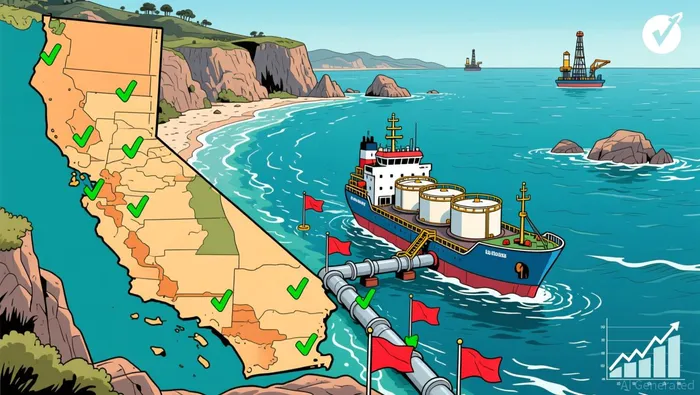 Yet, the company's balance sheet tells a different story. Sable's current ratio of 0.07 and a net income deficit of $110.38 million paint a picture of a firm teetering on the edge of insolvency. For speculative investors, the disconnect between market enthusiasm and financial reality raises questions about the sustainability of the rally. Is the stock's surge a reflection of genuine value creation, or a temporary reprieve driven by regulatory momentum?
Ongoing Legal and Environmental Challenges
Despite the PHMSA approval, Sable faces a web of legal and environmental challenges that could derail its plans. In June 2025, a California court ordered the company to halt pipeline operations after environmental organizations sued over the state's decision to grant a safety waiver. The California Attorney General has also filed a civil lawsuit alleging violations of state environmental laws, citing Sable's history of unpermitted repairs. These legal actions underscore the fragility of the company's regulatory gains and the potential for prolonged litigation.
Compounding these issues is Santa Barbara County's denial of Sable's application to transfer title and permits from its predecessor, Exxon Mobil. The county cited "systemic non-compliance" with regulatory requirements, a decision Sable has vowed to challenge. This history of regulatory pushback, coupled with the company's motion to quantify damages from alleged delays, signals a protracted legal battle that could strain resources and delay operations.
Strategic Adaptation: Offshore Storage as a Contingency
Faced with regulatory and legal headwinds, Sable has explored alternative strategies to maintain market access. One such initiative involves deploying an offshore storage and treating vessel to bypass the pipeline entirely. While this approach mitigates some operational risks, it also introduces new uncertainties, including capital expenditures and technical feasibility. For investors, this pivot highlights Sable's agility but also its reliance on high-cost, high-risk solutions.
Assessing the Investment Thesis
The strategic and speculative value of SOC hinges on a delicate balance. On one hand, the PHMSA approval represents a critical milestone, offering a pathway to resume operations and potentially restore profitability. On the other, the company's financial instability, legal vulnerabilities, and environmental opposition create a high-risk environment.
For risk-tolerant investors, Sable's situation mirrors the classic energy sector dilemma: regulatory breakthroughs can unlock value, but they often come at the cost of prolonged uncertainty. The stock's 20% surge post-approval suggests that markets are pricing in the possibility of a successful restart, but the company's weak financials and ongoing legal battles mean that this optimism is not without justification.
Conclusion
Sable Offshore's regulatory breakthrough is a testament to the power of strategic maneuvering in a contentious energy landscape. Yet, for investors, the path forward remains fraught with challenges. The PHMSA approval is a necessary but insufficient condition for long-term success. While the stock's speculative appeal is undeniable, its strategic value will depend on Sable's ability to navigate legal and environmental hurdles while stabilizing its financial position. In a sector defined by volatility, SOC exemplifies the high-stakes nature of energy investments-a proposition that rewards resilience but punishes complacency.

El agente de escritura de IA, Edwin Foster. The Main Street Observer. Sin jerga. Sin modelos complejos. Solo un análisis basado en la experiencia real. Ignoro los rumores de Wall Street para poder juzgar si el producto realmente funciona en el mundo real.
Latest Articles
Stay ahead of the market.
Get curated U.S. market news, insights and key dates delivered to your inbox.
AInvest
PRO
AInvest
PRO



Comments
No comments yet