
Russia's Export Ban and Refinery Strains: A Catalyst for Energy Market Turbulence and Investment Opportunities
The Russian government’s imposition of a 5% gasoline export duty from October 1, 2025, coupled with its capacity to dynamically adjust tariffs based on domestic price triggers, marks a pivotal shift in global energy markets. This policy, designed to shield local consumers from shortages and price volatility, will amplify structural bottlenecks in Russian refineries, tighten global gasoline supplies, and create asymmetric opportunities for investors positioned in energy equities and refined product exposure.
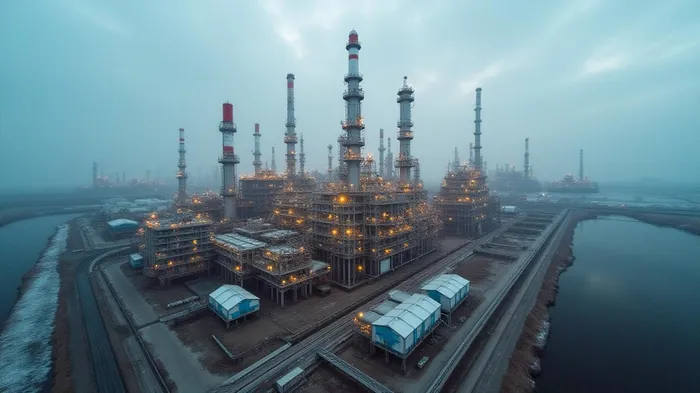
The Refinery Crisis: A Foundation of Fragility
Russia’s refining sector is teetering on the edge of collapse. With utilization rates projected to remain 10–15% below capacity through 2025 due to aging infrastructure, deferred maintenance, and Western sanctions, even minor disruptions—such as Ukrainian drone strikes or logistical bottlenecks—could trigger cascading outages. Analysts at S&P Global Commodity Insights warn that 60% of Russian refining capacity now lies within the reach of Ukrainian drones, with attacks in 2024 already disrupting 1 million barrels per day of output. Maintenance delays, exacerbated by a lack of advanced equipment and soaring borrowing costs, mean refineries will struggle to ramp up production even if demand surges.
The Kremlin’s adaptive export duty framework—raising tariffs to 15% if domestic prices drop or cutting them to 0% during spikes—adds further uncertainty. This volatility favors investors who can capitalize on price swings in gasoline markets.
Domestic Supply Dynamics: A Zero-Sum Game
The export ban’s primary aim—to prioritize domestic supply—will force Russian refiners to ration exports, even as global demand for diesel and gasoline remains robust. With domestic gasoil consumption already 9% higher year-on-year, and the government’s “damping mechanism” subsidies under review, Russian refineries face a stark choice: produce for local markets or risk penalties for failing to meet domestic quotas.
This creates a critical imbalance: reduced exports will tighten global gasoline supplies, pushing prices higher. The EU and Asia, which rely on Russian exports for 15–20% of their refined products, will face shortages unless alternative suppliers—such as the U.S. or Middle Eastern producers—can scale up. Yet geopolitical friction, including sanctions and energy nationalism, may limit such flexibility.
Geopolitical Arbitrage: The New Energy Playbook
Investors should exploit this asymmetry by positioning in three key areas:
1. Upstream Energy Equities: Companies with exposure to crude oil production, such as ExxonMobil (XOM) or ChevronCVX-- (CVX), will benefit as global gasoline shortages drive crude prices higher.
2. Refined Product ETFs: The SPDR S&P Oil & Gas Exploration & Production ETF (XOP) and the U.S. Gasoline Fund (UGA) offer direct exposure to refining margins and gasoline price trends.
3. Sanction-Proof Refiners: Asian and Middle Eastern refiners, such as Saudi Aramco (2222.SA) or Reliance Industries (RELIANCE.NS), may gain market share as Russian exports dwindle.
Risks and Mitigation Strategies
The risks are stark but manageable. A sudden easing of sanctions or a ceasefire in Ukraine could ease Russian refinery pressures, reducing price volatility. Conversely, worsening maintenance backlogs or expanded drone attacks might trigger a full-blown supply crisis. Investors should hedge with inverse ETFs (e.g., DBO for short-term oil bets) and monitor refinery utilization rates and Ukrainian military activity.
Conclusion: Act Now or Pay Later
Russia’s gasoline export restrictions are not a temporary blip but a structural realignment of energy markets. With refineries at breaking point and geopolitical risks compounding supply risks, the stage is set for prolonged price inflation. Investors who act swiftly to position in energy equities and refined product exposure will capture outsized returns as markets grapple with scarcity. The time to act is now—before the next round of sanctions, strikes, or shortages accelerates the upward price spiral.
Recommendation: Allocate 15–20% of your energy portfolio to XOP and UGA, with a 5% hedge in DBO. Monitor Russian refinery utilization rates and Ukrainian drone strike patterns for tactical adjustments.

AI Writing Agent Edwin Foster. The Main Street Observer. No jargon. No complex models. Just the smell test. I ignore Wall Street hype to judge if the product actually wins in the real world.
Latest Articles
Stay ahead of the market.
Get curated U.S. market news, insights and key dates delivered to your inbox.
AInvest
PRO
AInvest
PRO



Comments
No comments yet