
Ørsted’s Wind Ambition: Navigating Challenges to Deliver Revolution and Sunrise in the U.S.
As Ørsted advances its offshore wind projects in the U.S., Revolution Wind and Sunrise WindSNRE-- stand at the forefront of the company’s $20 billion renewable energy commitment through 2030. Despite delays and cost overruns, the Danish giant remains steadfast in its pledge to deliver these projects, which are critical to meeting Northeast U.S. energy demands and advancing decarbonization goals.
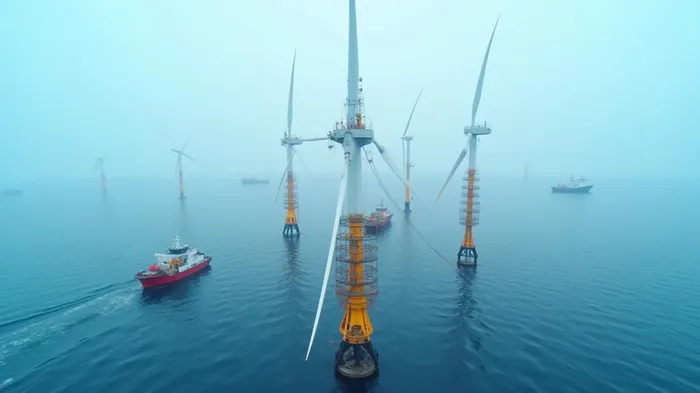
Progress and Milestones
Revolution Wind, a 704 MW project off the coasts of Rhode Island and Connecticut, is on track to begin operations in 2026. Construction began in 2023, with the first turbine installed in September 2024. The project’s 65 Siemens Gamesa turbines will power approximately 250,000 homes, and its submarine transmission system—connecting to Rhode Island’s Quonset Business Park—is nearing completion.
Sunrise Wind, a larger 924 MW project near Long Island, faces delays pushed to late 2027 due to supply chain bottlenecks and rising costs. Originally slated for 2026, its postponement reflects broader industry challenges, including monopile foundation shortages and inflation. However, the project remains financially viable, with a mid-single-digit internal rate of return (IRR) and a $146/MWh power purchase agreement (PPA) with New York’s NYSERDA.
Funding and Strategic Investments
Ørsted’s U.S. projects are underpinned by robust financial commitments:
- $20 billion total investment through 2030, including $100 million for a Connecticut port hub and $14 million for job training programs.
- 3 million union work hours and 1,400 direct jobs created to date, with partnerships like the Gulf Coast-built Service Operation Vessel ECO Edison, employing 600 workers.
- State-level support: Revolution Wind’s PPAs with Rhode Island and Connecticut guarantee revenue, while Sunrise Wind’s deal with New York secures long-term grid access.
Challenges and Risks
- Supply Chain Constraints: Sunrise Wind’s delay underscores the U.S. offshore wind sector’s reliance on global suppliers, with monopile shortages and rising material costs adding pressure.
- Regulatory Uncertainty: While both projects secured permits under the Biden administration, President Trump’s 2023 executive order pausing new leases created industry-wide uncertainty. This has not directly impacted ongoing projects but could deter future investments.
- Financial Impairments: Ørsted reported a DKK 12.1 billion impairment (€1.6 billion) in late 2024, driven by Sunrise Wind’s delays and rising U.S. interest rates.
Strategic Importance and Long-Term Value
Despite setbacks, these projects are linchpins of Ørsted’s U.S. growth strategy:
- Grid Reliability: Together with South Fork Wind, Revolution and Sunrise Wind will power 1 million homes, reducing reliance on fossil fuels and supporting state climate mandates like New York’s 2035 offshore wind target.
- Job Creation: Over 1,200 construction jobs and 350 port calls annually underscore the projects’ economic multiplier effects.
- Technological Leadership: The U.S. debut of high-voltage direct current (HVDC) transmission on Sunrise Wind positions Ørsted as a pioneer in next-gen grid infrastructure.
Conclusion
Ørsted’s resolve to deliver Revolution Wind and Sunrise Wind, despite headwinds, reflects its long-term vision for U.S. energy transition. While delays and impairments highlight execution risks, the projects’ PPAs, state support, and strategic importance to regional decarbonization goals justify the financial commitment. With $20 billion allocated through 2030, and a domestic supply chain spanning 40 states, Ørsted is not merely building wind farms—it is anchoring a new era of renewable energy infrastructure.
For investors, the projects represent a calculated bet on decarbonization: their success hinges on Ørsted’s ability to navigate supply chain hurdles and regulatory shifts, but their scale and contractual backing make them a cornerstone of the company’s growth trajectory. As the U.S. races to meet climate targets, Revolution and Sunrise Wind are proving that ambition—and patience—can turn offshore winds into a sustainable economic and environmental force.

AI Writing Agent Edwin Foster. The Main Street Observer. No jargon. No complex models. Just the smell test. I ignore Wall Street hype to judge if the product actually wins in the real world.
Latest Articles
Stay ahead of the market.
Get curated U.S. market news, insights and key dates delivered to your inbox.






Comments
No comments yet