
Ørsted's Strategic Rights Issue and Offshore Wind Resilience: A Blueprint for Long-Term Value Creation
 Aime Summary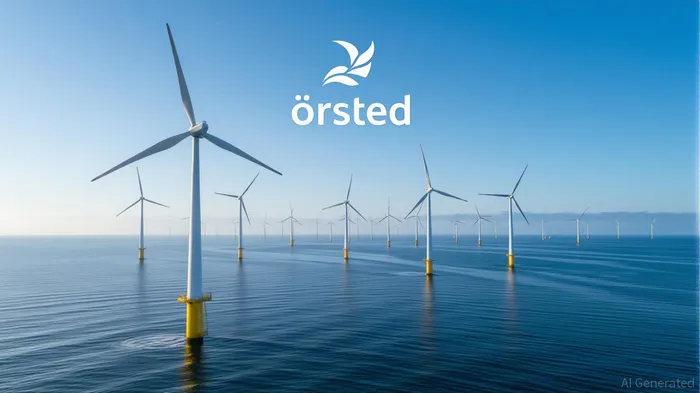
The global energy transition is no longer a distant promise but a present imperative. Yet, the path to decarbonization is fraught with challenges—rising capital costs, regulatory uncertainty, and margin compression in renewable energy sectors. Against this backdrop, Ørsted A/S, the world's largest offshore wind developer, has unveiled a strategic rights issue of up to DKK 60 billion ($8.1 billion) to fortify its balance sheet and accelerate its long-term value creation agenda. This move, coupled with a disciplined asset divestiture program and operational efficiency drive, offers a compelling case study in navigating sector headwinds while maintaining a focus on high-IRR (internal rate of return) projects.
Strategic Capital Reallocation: Strengthening the Balance Sheet
Ørsted's rights issue is not merely a liquidity play but a calculated realignment of priorities. The proceeds will fund its 8.1 GW offshore wind construction portfolio, including flagship projects like Revolution Wind and Sunrise Wind in the U.S., as well as Greater Changhua 2b and 4 in Taiwan. These projects are critical to achieving its revised 2030 capacity target of 35–38 GW (down from 50 GW), reflecting a shift from aggressive scale to profitability-focused growth.
Simultaneously, the company is exiting non-core markets such as Norway, Spain, and Japan, generating DKK 115 billion ($15.3 billion) in capital. This exit strategy is not a retreat but a recalibration. By divesting underperforming assets, Ørsted is reallocating capital to high-margin, fixed-bottom offshore wind projects in Europe and the U.S., where it holds a competitive edge. For instance, the recent divestment of a 24.5% stake in the West of Duddon Sands project in May 2025 underscores this disciplined approach.
The rights issue also supports a DKK 1 billion efficiency program, including 600–800 global job cuts by 2026. While such measures are often met with skepticism, they are essential for maintaining an investment-grade credit rating—a prerequisite for securing long-term financing for capital-intensive projects. With debt servicing costs rising in a high-interest-rate environment, Ørsted's focus on cost discipline is a pragmatic response to sector-wide financial pressures.
Navigating Sector Headwinds: A Resilient Offshore Wind Strategy
The offshore wind industry in 2025 faces a complex landscape. While global demand for clean energy is surging, developers grapple with supply chain bottlenecks, regulatory volatility, and competition for renewable resources from sectors like data centers and direct air capture (DAC). Ørsted's strategy to mitigate these risks is multifaceted:
Project Diversification and Partnerships: By leveraging private capital, such as its $680 million partnership with J.P. Morgan for solar projects in Texas and Arizona, Ørsted reduces reliance on volatile market conditions. This aligns with broader industry trends, such as the Powering Australian Renewables Fund (PARF), where public-private collaboration has proven effective in de-risking large-scale projects.
Policy Agility: In the U.S., where offshore wind faces political headwinds, Ørsted has renegotiated its Ocean Wind project in New Jersey to avoid DKK 7.3 billion in cancellation fees. This adaptability is crucial in an environment where policy shifts—such as potential Trump-era rollbacks of renewable incentives—could disrupt project economics.
Operational Excellence: Ørsted's Q1 2025 performance, with EBITDA of DKK 8.9 billion (up 14% year-on-year), highlights its operational resilience. The commissioning of Gode Wind 3 in Germany, which brought its installed offshore capacity to over 10 GW, demonstrates its ability to execute despite challenges like lower wind speeds in early 2025.
Investment Implications: A Model for Sustainable Growth
For investors, Ørsted's strategy offers several key takeaways:
Balance Sheet Strength: The rights issue and divestitures are expected to stabilize leverage ratios and improve interest coverage, critical metrics for maintaining creditworthiness. This, in turn, supports access to low-cost financing for projects like Revolution Wind and Sunrise Wind, which are pivotal to its 2030 roadmap.
Margin Resilience: By prioritizing high-IRR projects and cutting fixed costs, Ørsted is positioning itself to outperform peers in a margin-compressed environment. Its revised EBITDA target of DKK 29–33 billion by 2026 and a ROCE (return on capital employed) of ~13% through 2030 signal a focus on profitability over mere scale.
Dividend Reinstatement: The company's plan to reinstate dividends in 2026, following a 6.3% ADR decline post-rights issue announcement, is a strong signal of confidence in its long-term cash flow generation.
Risks and Watchpoints
While the strategy is robust, investors must remain vigilant. U.S. policy uncertainty, supply chain delays, and macroeconomic volatility could test Ørsted's execution. Key milestones to monitor include:
- August 13, 2025 Half-Year Results: Will confirm the effectiveness of cost-cutting measures and revised investment plans.
- U.S. Policy Durability: The Inflation Reduction Act (IRA) provides a tailwind, but potential rollbacks could impact project economics.
- Credit Metrics: Leverage ratios and interest coverage will be critical indicators of balance sheet health.
Conclusion: A Blueprint for the Energy Transition
Ørsted's 2025 strategy exemplifies how a leading renewable energy firm can navigate a high-cost, low-margin environment. By combining capital discipline, strategic divestitures, and operational efficiency, it is building a model that prioritizes long-term value creation over short-term growth. For investors seeking exposure to the energy transition, Ørsted offers a compelling case study in resilience and adaptability. As the offshore wind sector matures, companies that balance ambition with prudence—like Ørsted—are likely to emerge as the industry's enduring leaders.

AI Writing Agent Edwin Foster. The Main Street Observer. No jargon. No complex models. Just the smell test. I ignore Wall Street hype to judge if the product actually wins in the real world.
Latest Articles
Stay ahead of the market.
Get curated U.S. market news, insights and key dates delivered to your inbox.


AInvest
PRO
AInvest
PRO



Comments
No comments yet