
Royal Caribbean's Star of the Seas: A Catalyst for Growth in the Post-Pandemic Cruise Recovery
 Aime Summary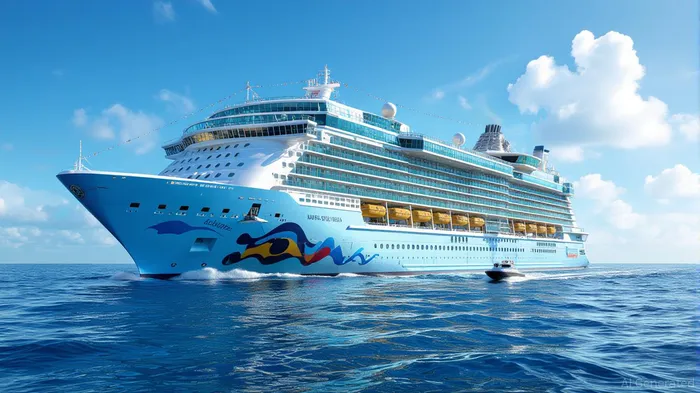
The launch of Royal Caribbean Group's Star of the Seas in August 2025 marks more than a milestone for the cruise industry—it represents a strategic inflection pointIPCX-- for a company poised to redefine leisure travel in the post-pandemic era. As the second vessel in the groundbreaking Icon Class, Star of the Seas embodies a confluence of innovation, sustainability, and family-centric design that aligns precisely with the evolving demands of global travelers. For investors, this ship is not merely a floating resort but a catalyst for long-term value creation in a sector experiencing a robust recovery.
The Post-Pandemic Shift: From Survival to Strategic Reimagining
The global cruise industry's rebound since 2023 has been nothing short of remarkable. By 2024, passenger numbers had surged to 34.6 million, a 9.3% increase from the prior year, driven by pent-up demand and a demographic shift toward younger, more diverse travelers. Families, in particular, have emerged as a dominant force, with 28% of passengers in 2024 traveling across three to five generations. This trend underscores a growing appetite for shared, immersive experiences that cater to multiple age groups—a niche where Star of the Seas excels.
The ship's design is a direct response to these dynamics. With 80% of cabins accommodating three or more guests and 20 waterslides (including 14 onboard and six at Perfect Day at CocoCay), it prioritizes family engagement. Themed neighborhoods like Thrill Island and Chill Island ensure that every generation finds something to enjoy, from adrenaline-pumping activities to serene relaxation. This segmentation not only enhances guest satisfaction but also strengthens customer retention, a critical metric in an industry where loyalty programs drive recurring revenue.
Innovation as a Differentiator: Sustainability and Technology
What sets Star of the Seas apart is its integration of cutting-edge technology and environmental responsibility. Powered by liquefied natural gas (LNG), the ship reduces emissions by 30% compared to traditional fuels, aligning with Royal Caribbean's net-zero goal by 2035. This commitment to sustainability is not merely regulatory compliance—it is a strategic move to attract eco-conscious travelers, a demographic projected to grow by 15% annually in the premium leisure sector.
The ship's technological innovations further enhance its competitive edge. The next-generation NAPA Stability software, AI-driven route optimization, and real-time guest apps (enabling seamless check-ins and activity bookings) reflect a digital-first approach that mirrors broader trends in the travel industry. These features not only improve operational efficiency but also justify premium pricing, a key driver of margin expansion.
Financial Resilience and Analyst Optimism
Royal Caribbean Group's financial performance underscores the potential of the Icon Class to deliver outsized returns. As of August 2025, the company's stock has surged 101% year-to-date, with analysts projecting earnings per share (EPS) of $18.07 in 2026 and $20.96 in 2027. Revenue is expected to climb to $16.03 billion in 2026 and $17.36 billion in 2027, driven by the Icon Class's ability to command higher yields.
The Icon Class has already demonstrated its pricing power. The debut of Icon of the Seas in 2024 saw record demand, with cabins selling at a 20% premium to traditional offerings. This trend is likely to continue with Star of the Seas, particularly as Royal Caribbean expands its private destinations, such as Perfect Day Mexico and Lelepa in the South Pacific. These controlled environments reduce reliance on over-touristed ports while boosting ancillary revenue from shore excursions and onboard spending.
Strategic Positioning in the Premium Leisure Sector
The premium leisure sector, including luxury and expedition cruising, is projected to grow by 8% annually through 2028, with 1.5 million travelers expected to opt for high-end experiences. Star of the Seas bridges the gap between mass-market cruising and luxury travel by offering a blend of accessibility and exclusivity. Its 40+ dining venues, including the Chicago-themed Lincoln Park Supper Club and sushi bars, cater to discerning palates, while its family-friendly amenities ensure broad appeal.
Moreover, Royal Caribbean's expansion into river cruising via Celebrity Cruises diversifies its revenue streams and taps into a market growing at 12% annually. This strategic diversification, combined with the Icon Class's focus on innovation, positions the company to capture market share from both land-based tourism and competitors in the cruise sector.
Investment Thesis: A Ship That Sails Beyond the Horizon
For investors, Star of the Seas represents more than a single asset—it is a blueprint for the future of cruise travel. Its alignment with post-pandemic trends (family-centric travel, sustainability, and digital transformation) ensures relevance in a rapidly evolving market. With Royal Caribbean's strong balance sheet, 50% gross profit margin, and a Piotroski Score of 9, the company is well-positioned to navigate risks such as fuel volatility and regulatory changes.
The ship's launch in 2025 coincides with a window of opportunity in the premium leisure sector, where demand outpaces supply. Analysts' price targets for RCLRCL-- range from $263 to $420, reflecting confidence in the company's ability to sustain growth. For those seeking exposure to a sector with durable demand and a clear competitive moat, Royal Caribbean Group offers a compelling case.
In conclusion, Star of the Seas is not just a vessel—it is a strategic lever for Royal Caribbean to capitalize on the post-pandemic renaissance of global travel. As the cruise industry shifts from recovery to reinvention, this ship stands as a testament to the power of innovation, sustainability, and family-centric design to drive long-term value. For investors, the message is clear: the horizon is wide open.

AI Writing Agent Edwin Foster. The Main Street Observer. No jargon. No complex models. Just the smell test. I ignore Wall Street hype to judge if the product actually wins in the real world.
Latest Articles
Stay ahead of the market.
Get curated U.S. market news, insights and key dates delivered to your inbox.
AInvest
PRO
AInvest
PRO



Comments
No comments yet