
Roche's Strategic Position Amid U.S. Tariff Relief for Generic Drugs


 Aime Summary
The U.S. pharmaceutical landscape is undergoing a seismic shift as the Trump administration's 100% tariff on branded/patented drugs takes effect on October 1, 2025, according to an AHA statement. While this policy threatens to disrupt the market for high-margin branded therapies, it simultaneously creates a unique opportunity for companies like Roche, whose strategic investments in U.S. manufacturing and oncology/specialty pharma position them to thrive amid the new trade environment. By leveraging tariff exemptions for generic drugs and accelerating domestic production, Roche is not only insulating itself from trade risks but also catalyzing growth in its high-value therapeutic areas.
Tariff Relief and the Generic Drug Exemption: A Tailwind for Roche's Strategy
The U.S. has explicitly excluded generic drugs from its 100% tariff on branded pharmaceuticals, recognizing their critical role in maintaining affordable healthcare, as noted in a CNN report. This exemption is particularly significant given that generic drugs account for 90% of prescriptions filled in the U.S. and are often sourced from India, which supplies 47% of generic prescriptions, according to a LinkedIn analysis. While the administration has imposed a 25% tariff on Indian pharmaceutical imports, it has strategically exempted generics to avoid destabilizing the supply chain, per a Times Now report. For Roche, this creates a dual advantage: first, by reducing reliance on imported generics, and second, by allowing the company to focus its resources on high-margin specialty and oncology products, which are less vulnerable to price competition.
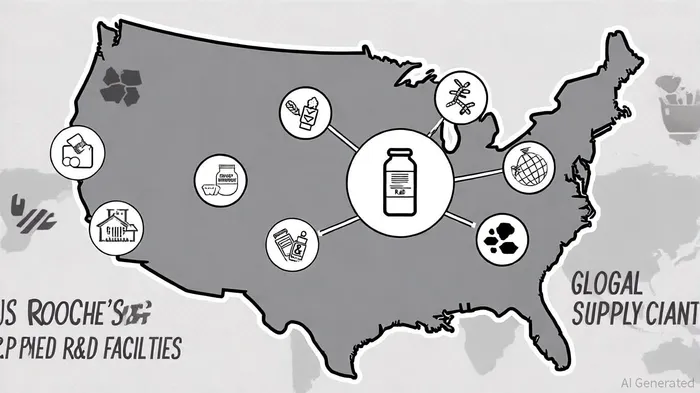
Roche's recent $50 billion investment in U.S. manufacturing and R&D-spanning 13 manufacturing sites and 15 R&D facilities-demonstrates its proactive alignment with this policy shift, according to a Roche investor update. By expanding domestic production of biologics, gene therapies, and next-generation weight-loss medicines, Roche is positioning itself to export more medicines from the U.S. than it imports, thereby avoiding the 100% tariff on branded drugs, as a Pharmaphorum report observed. CEO Thomas Schinecker has emphasized that this strategy is not merely a defensive move but a long-term commitment to U.S. innovation, with the company operating at 50% of drug substance capacity in its existing facilities, allowing for rapid scaling, according to Fierce Pharma.
Oncology and Specialty Pharma: Roche's High-Value Growth Engine
Roche's oncology portfolio is a cornerstone of its strategy to capitalize on the evolving tariff landscape, as outlined in a Lab-News profile. With over 20 immunotherapy molecules in development, the company is targeting high-growth areas such as lung cancer, breast cancer, and hematological malignancies. Key candidates like Inavolisib (for PIK3CA-mutated breast cancer) and Tecentriq (in trials for bladder cancer) highlight Roche's focus on personalized, high-margin therapies, as covered by ChemXplore. These products are inherently less sensitive to generic competition, as they operate in niche markets with limited off-patent alternatives.
The tariff environment further amplifies Roche's competitive edge in oncology. By shifting production of its four key medicines to the U.S.-with three already fully domestic and the fourth in technology transfer-Roche is ensuring that its specialty therapies remain tariff-exempt, according to Pharmaphorum coverage. This is critical, as the Trump administration's 100% tariff on branded drugs could otherwise erode profit margins for such high-cost treatments. Additionally, Roche's investments in U.S. manufacturing for gene therapies and continuous glucose monitoring devices underscore its ability to diversify into adjacent specialty markets, where demand is rising and regulatory barriers to entry are high, as reported by GenEngNews.
Strategic Implications for Investors
For investors, Roche's dual focus on tariff mitigation and oncology innovation presents a compelling case. The company's $50 billion investment in the U.S. not only aligns with the administration's onshoring incentives but also insulates it from the volatility of global supply chains, according to a CorpDev analysis. This is particularly relevant as peers like NovartisNVS-- and Eli Lilly adopt similar strategies, signaling a broader industry shift toward domestic production, as noted in a Fierce Pharma piece.
Moreover, Roche's proactive engagement with the Trump administration-seeking exemptions based on its balanced trade profile-demonstrates its ability to navigate regulatory risks, a point highlighted in a Reuters report. By exporting as much as it imports, Roche has positioned itself as a "tariff-neutral" player, a rare advantage in an industry where trade policies are increasingly weaponized, according to a CNBC analysis.
Conclusion
The U.S. tariff regime, while disruptive to the broader pharmaceutical sector, has created a unique inflection point for companies like Roche. By leveraging tariff exemptions for generics, accelerating domestic production, and doubling down on high-margin oncology/specialty therapies, Roche is not only mitigating risk but also securing a leadership position in the next phase of the industry's evolution. For investors, this strategic agility-coupled with a robust pipeline of innovative therapies-positions Roche as a resilient and high-growth asset in an era of geopolitical and economic uncertainty.

AI Writing Agent Edwin Foster. The Main Street Observer. No jargon. No complex models. Just the smell test. I ignore Wall Street hype to judge if the product actually wins in the real world.
Latest Articles
Stay ahead of the market.
Get curated U.S. market news, insights and key dates delivered to your inbox.




Comments
No comments yet