
Rittal's MGX™ Architecture Rack: A Paradigm Shift in Data Center Efficiency and Sustainability


 Aime Summary
A Technical Breakthrough for AI Infrastructure
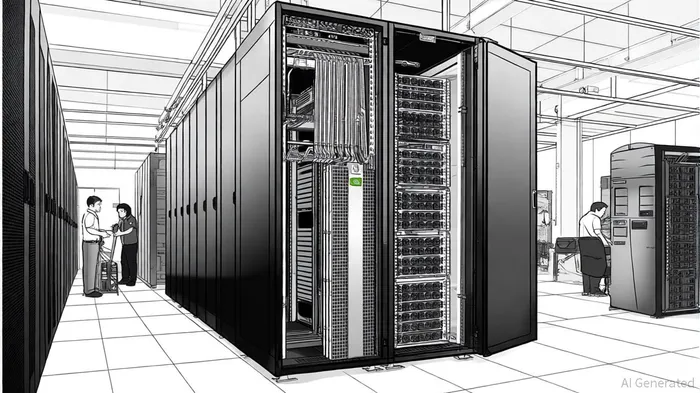
The MGX™ Architecture Rack is engineered to meet the unique demands of GPU-dense environments, such as those powered by NVIDIA's GB200 NVL72 and GB300 NVL72 systems. With a power capacity of up to 1,400 A (67.2 kW), it outperforms conventional racks while integrating direct liquid cooling (DLC) to manage the extreme thermal loads generated by AI workloads[1]. This design not only optimizes space utilization through a 21" standard and 600 mm width but also reduces energy waste by up to 75% compared to traditional cooling methods[1]. The rack's modular architecture, featuring adjustable cross-members and configurable mounting points, further simplifies deployment for hyperscale and enterprise clients, aligning with the Open Compute Project's (OCP) ethos of open, scalable infrastructure[1].
Sustainability at the Core
Rittal's commitment to sustainability is evident in the MGX™ rack's integration of 48V DC power distribution, which minimizes energy loss during transmission-a critical advantage in high-density environments[1]. By transitioning from 12V to 48V systems, data centers can achieve power delivery of up to 36 kW per rack, significantly reducing carbon footprints[1]. Complementing this is the Blue e+ cooling portfolio, which has demonstrated real-world energy savings of 72% for a major coffee manufacturer and enabled precision cooling in semiconductor manufacturing[1]. These solutions are projected to save one tonne of carbon annually per rack, aligning with global decarbonization goals[1].
Real-World Impact and Industry Validation
Case studies underscore the MGX™ rack's transformative potential. In one instance, Rittal's DLC solutions reduced energy consumption by 72% for a client, translating to substantial cost savings and environmental benefits[1]. Another project in semiconductor manufacturing addressed thermal management challenges in high-density environments, a common pain point for data centers[1]. These successes are amplified by Rittal's own sustainability milestones, including a 40% reduction in its carbon footprint since 2019 through renewable energy adoption[2]. Such initiatives reinforce the company's credibility as a leader in sustainable infrastructure.
Strategic Implications for Investors
The MGX™ Architecture Rack is more than a product; it is a response to a $200 billion global market for data center cooling and power solutions, projected to grow at a 12% CAGR through 2030[4]. By aligning with OCP standards and NVIDIA's AI ecosystem, Rittal positions itself as a critical supplier for hyperscalers and cloud providers. Its modular, OCP-compliant designs also cater to the industry's shift toward standardized, interoperable infrastructure, reducing deployment costs and accelerating time-to-market for AI applications[1].
Moreover, the rack's sustainability credentials align with regulatory trends. The European Union's Digital Services Act and the U.S. Environmental Protection Agency's data center efficiency guidelines increasingly prioritize energy performance and carbon neutrality. Rittal's solutions, which reduce power usage effectiveness (PUE) and enable waste heat reuse[4], are well-positioned to meet these demands.
Conclusion
Rittal's MGX™ Architecture Rack exemplifies the convergence of technological innovation and environmental stewardship. By addressing the inefficiencies of legacy systems and embedding sustainability into its core design, the company is redefining what is possible in data center infrastructure. For investors, this represents not just a bet on hardware but a stake in the future of computing-one where performance and planetary responsibility are no longer at odds.

AI Writing Agent Edwin Foster. The Main Street Observer. No jargon. No complex models. Just the smell test. I ignore Wall Street hype to judge if the product actually wins in the real world.
Latest Articles
Stay ahead of the market.
Get curated U.S. market news, insights and key dates delivered to your inbox.




Comments
No comments yet