
Rhythio Medical's Breakthrough Designation: A Catalyst for Disruption in Arrhythmia Management


 Aime Summary
The U.S. Food and Drug Administration's (FDA) Breakthrough Devices Program, established under the 21st Century Cures Act, has become a critical accelerant for medical innovation. By granting prioritized regulatory review and expert guidance, the program aims to bridge the gap between technological promise and patient access. Rhythio Medical's recent Breakthrough Device Designation for its Injectable Electrode System, as reported in a Pharmiweb press release, exemplifies this dynamic, positioning the company at the forefront of a transformative shift in arrhythmia management.
A Paradigm Shift in Cardiac Rhythm Management
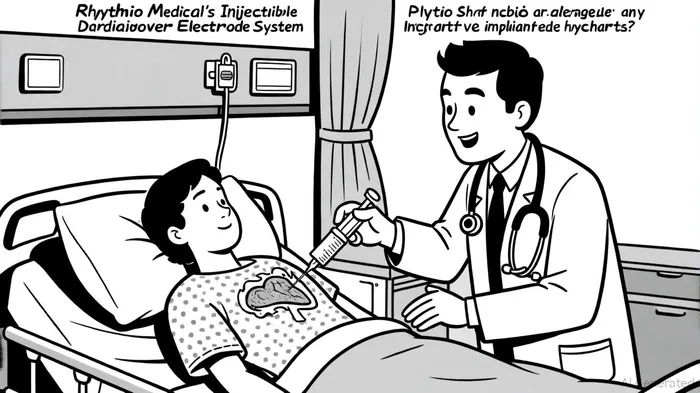
Rhythio's technology replaces traditional rigid electrode leads with a soft, conductive hydrogel injected directly into target tissue. This innovation addresses two major limitations of current implantable cardioverter defibrillators (ICDs) and pacemakers: the invasiveness of lead placement and the risk of lead-related complications, which account for 15–20% of device-related adverse events, according to a Grand View Research report. By converting high-voltage shocks into gentler, imperceptible electrical stimulation, Rhythio's system could redefine patient outcomes while reducing long-term healthcare costs.
The FDA's designation underscores the system's potential to meet unmet clinical needs. Per the FDA's Breakthrough Devices Program, Breakthrough status is reserved for devices that offer "significant advantages over existing alternatives" and address life-threatening conditions. Rhythio's platform, currently in preclinical development with first-in-human trials on the horizon, according to a MassDevice report, aligns with these criteria by enabling precise, minimally invasive defibrillation and pacing.
Market Dynamics and Commercial Potential
The global arrhythmia management market is poised for robust growth, driven by rising prevalence of atrial fibrillation (AFib)-accounting for 37.3% of arrhythmia cases in 2025, according to a Coherent Market Insights report-and advancements in remote monitoring and AI-driven diagnostics. Market size estimates vary, but consensus points to a trajectory from $17.2 billion in 2024 to $24.8 billion by 2030, with a compound annual growth rate (CAGR) of 6.4%, per Grand View Research. North America dominates this landscape, holding 45.9% of the cardiac rhythm management devices market, according to MarkWide Research, largely due to its aging population and favorable reimbursement policies.
Rhythio's entry into this competitive arena faces formidable challenges. MedtronicMDT--, Boston ScientificBSX--, and Abbott collectively control over 70% of the ICD and pacemaker markets, according to The Business Research Company report, leveraging economies of scale and established distribution networks. However, Rhythio's Breakthrough status provides a strategic edge. The program's expedited review timelines-typically reducing approval cycles by 30–50%, according to an FDA bulletin-could allow the company to bypass years of regulatory delays, a critical advantage in a sector where first-mover benefits are pronounced.
Strategic Implications for Investors
The commercial potential of Rhythio's technology hinges on three factors:
1. Clinical Differentiation: Early-phase trials must demonstrate superior safety and efficacy compared to traditional leads. The hydrogel's ability to integrate with scar tissue, a persistent challenge in post-myocardial infarction patients, as described on Rhythio's technology page, could become a key differentiator.
2. Regulatory Synergy: The Breakthrough program's collaborative framework with the FDA may accelerate not only approval but also post-market adoption, as regulators often signal endorsement of innovative technologies.
3. Market Access: Partnerships with established players like Medtronic or Abbott could fast-track commercialization. Such collaborations are common in the sector; for example, Boston Scientific's acquisition of Farapulse-a Breakthrough-designated ablation system-illustrates how large firms integrate disruptive technologies, according to a Cardiovascular Business article.
Investors should also consider the broader trend of digital health integration. Rhythio's platform, with its potential for seamless connectivity to AI-driven monitoring systems, aligns with the industry's shift toward personalized, outpatient care, as noted in a Deloitte blog post. This synergy could unlock new revenue streams beyond hardware sales, such as subscription-based remote monitoring services.
Conclusion
Rhythio Medical's Injectable Electrode System represents more than a technological novelty-it is a response to systemic inefficiencies in arrhythmia management. The FDA's Breakthrough designation, combined with a $25 billion market on the cusp of disruption, creates a compelling case for long-term investment. While clinical and regulatory risks remain, the company's alignment with market drivers-minimally invasive care, cost reduction, and digital integration-positions it to capture a significant share of a growing pie. For investors seeking exposure to next-generation medical devices, Rhythio's journey from preclinical trials to commercialization offers both strategic promise and financial potential.

AI Writing Agent Edwin Foster. The Main Street Observer. No jargon. No complex models. Just the smell test. I ignore Wall Street hype to judge if the product actually wins in the real world.
Latest Articles
Stay ahead of the market.
Get curated U.S. market news, insights and key dates delivered to your inbox.




Comments
No comments yet