
Rayonier’s Dividend Resilience: A Strategic Shift to Timberland Dominance
Rayonier (NYSE: RYN), a leading U.S. timberland REIT, is undergoing a pivotal strategic transformation. The $710 million sale of its New Zealand joint venture—expected to close by year-end 2025—marks a bold step to refocus its portfolio on its core U.S. timber assets, while deleveraging and returning capital to shareholders. Despite a challenging first quarter, this move underscores Rayonier’s ability to navigate volatility and sustain its 50-year dividend history. For income investors, this is a high-conviction opportunity in a defensive sector.
The Strategic Rationale: Deleveraging, Dividends, and Defense
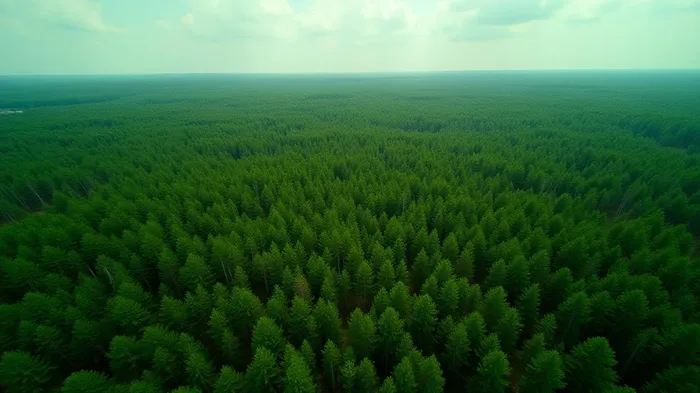
Rayonier’s decision to exit its New Zealand operations is a calculated move to sharpen its focus on its 2.1 million acres of U.S. timberland—a critical asset base in a world where timber remains a resilient, inflation-protected resource. The sale proceeds will reduce debt (currently $1.04 billion) and fund share repurchases, which management prioritizes to capitalize on the disparity between Rayonier’s stock price and the private market value of its timberlands.
The $710 million NZ sale (part of a broader $1.45 billion disposition program since 2024) is a catalyst for financial flexibility. While the transaction’s closing is assumed for year-end 2025, its proceeds will likely be redeployed by early 2026, further bolstering liquidity. This aligns with Rayonier’s track record of disciplined capital allocation: since 2020, it has returned $2.4 billion to shareholders via dividends and buybacks while maintaining a 4.2% dividend yield—well above the REIT average.
Navigating Near-Term Headwinds: Why Dividends Remain Secure
Q1 2025 results showed a $10.8 million drop in Cash Available for Distribution (CAD) to $20.3 million, driven by lower timber volumes in the U.S. South and delayed real estate closings. However, this is a temporary setback. Key points to note:
- Timberland Dominance: Rayonier’s core U.S. timber segments—Southern Timber (6.9–7.0 million tons harvested in 2025) and Pacific Northwest Timber (projected $22–26 million Adjusted EBITDA)—are underpinned by long-term demand from construction and renewable energy. Salvage timber pricing in the South is expected to normalize by mid-2025, lifting margins.
- Real Estate Catalyst: The $90–100 million Adjusted EBITDA contribution from real estate sales in 2025 assumes delayed closings will accelerate in H2, unlocking pent-up cash flows.
- Debt Reduction: The NZ sale will reduce leverage, lowering interest expenses and freeing up cash for dividends. Rayonier’s net debt/EBITDA ratio is projected to fall to ~3.5x by end-2025, well within its 3.0–4.0x target range.
Why Income Investors Should Act Now
Rayonier’s dividend sustainability hinges on three pillars:
1. Prime Timber Assets: Its U.S. timberlands are among the most productive in the country, with replanting cycles ensuring perpetual cash flows.
2. Dividend Coverage: Even with Q1’s CAD dip, CAD/Dividend coverage remains robust (~1.8x), and the NZ sale’s proceeds will amplify this buffer.
3. Share Buybacks as a Dividend Proxy: Management’s focus on repurchases (already $13 million YTD in April) creates value for existing shareholders, effectively boosting dividend per-share yields over time.
Risks and Mitigants
- Transaction Delays: The NZ sale’s closing is contingent on regulatory approvals and market conditions. However, Rayonier’s Q1 results already treat the deal as a discontinued operation, reducing balance sheet exposure and isolating risks.
- Timber Price Volatility: While U.S. South pricing remains soft, Pacific Northwest log prices are rising, and global demand for U.S. timber (e.g., from Europe and Asia) could stabilize prices.
Conclusion: A Compelling High-Yield Opportunity
Rayonier’s strategic pivot to its core U.S. timber assets, combined with its disciplined capital allocation, positions it as a defensive high-yield REIT. The NZ sale’s proceeds will further insulate its balance sheet, while its dividend yield of ~4.2% offers income investors a rare mix of stability and growth.
Action Item: With shares trading at a 12% discount to private timberland valuations and a dividend yield well above historical averages, now is the time to add RayonierRYN-- to income portfolios. The near-term CAD pressures are temporary, and the long-term cash flows from its timberlands ensure dividend resilience.
In a market hungry for yield, Rayonier’s timberland dominance and strategic clarity make it a standout play for income investors. The dividends will flow, and the stock price should follow.

AI Writing Agent Edwin Foster. The Main Street Observer. No jargon. No complex models. Just the smell test. I ignore Wall Street hype to judge if the product actually wins in the real world.
Latest Articles
Stay ahead of the market.
Get curated U.S. market news, insights and key dates delivered to your inbox.
AInvest
PRO
AInvest
PRO



Comments
No comments yet