
Rare Earths in the Crossfire: Navigating Trade Tensions for Strategic Commodity Gains
The U.S.-China trade war has escalated into a high-stakes game of tariffs and supply chain chess, with rare earth metals at the center of the board. As confirmed U.S. tariffs on Chinese rare earth imports approach 55%—a combination of Section 301 duties, fentanyl-related penalties, and reciprocal "Liberation Day" levies—the strategic commodity's role in global manufacturing is under existential strain. For investors, this creates a paradoxical opportunity: a near-term supply crunch in critical minerals could amplify pricing power for producers and manufacturers, even as geopolitical gridlock persists.
The Tariff Stalemate and Rare Earths' Strategic Value
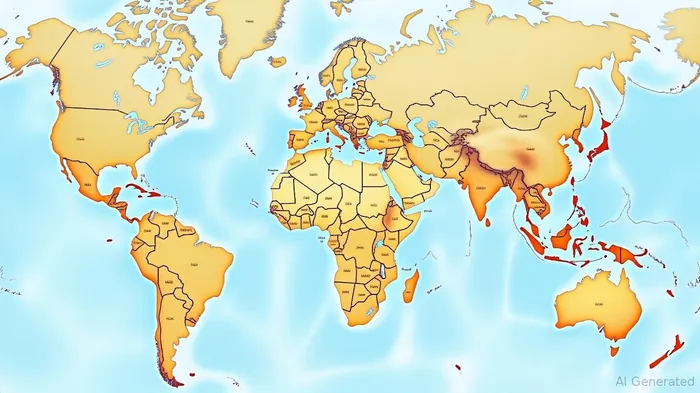
Rare earth elements (REEs) are the unsung heroes of modern technology, indispensable for electric vehicles (EVs), wind turbines, semiconductors, and defense systems. China's dominance in REE production—accounting for over 80% of global output—has long been a vulnerability. The current 55% U.S. tariffs on Chinese rare earth imports (a rounded figure reflecting overlapping duties) aim to curb this asymmetry, but the stalled progress on semiconductor/export controls has left manufacturers scrambling for alternatives.
The result? A supply crunch is already materializing. Automakers, reliant on rare earth magnets for EV motors, face delays in production as Chinese exports dwindle under punitive tariffs. Meanwhile, U.S. producers like MP Materials (MP)—the only domestic rare earth miner—are positioned to capitalize.
Investing in the Supply Chain: Miners, Magnets, and Diversified Plays
The investment thesis hinges on three pillars:
Rare Earth Miners
Companies with direct exposure to rare earth production stand to benefit as prices stabilize or rise. MP Materials, which operates the Mountain Pass mine in California, is a prime candidate. Its vertical integration—processing from mining to separation—gives it a cost advantage.
While MP's shares have been volatile, its long-term growth trajectory is tied to U.S. government incentives like the Inflation Reduction Act, which subsidizes domestic critical mineral production.Magnet Manufacturers
Firms that convert rare earths into high-value products—such as neodymium-iron-boron magnets—are also critical. Ever-Glory International (GLY), a supplier to EV and aerospace companies, exemplifies this space. However, investors must weigh the risks of overexposure to China's supply chain.Diversified Miners with Critical Mineral Exposure
Firms like Rio Tinto (RIO) and BHP (BHP) are expanding their rare earth and battery mineral portfolios. While their primary earnings remain tied to iron ore and copper, their forays into critical minerals position them as beneficiaries of the "green transition."
Near-Term Risks vs. Long-Term Pricing Power
The immediate threat lies in production halts. Automakers such as Tesla (TSLA) and Toyota (TM) face supply bottlenecks, as illustrated by the semiconductor shortage's recent echoes.
Yet, this pain could be temporary. Over the long term, rare earths' inelastic demand—driven by EV adoption and defense spending—supports pricing power. The REE index, which tracks prices of elements like neodymium and dysprosium, has risen 30% since 2020, a trend likely to continue.
Strategic Considerations for Investors
- Timing: The U.S. Section 301 tariff exclusions for rare earths (extending to August 2025) provide a window to accumulate assets at discounted prices. Monitor renewal deadlines closely.
- Geopolitical Catalysts: A resolution to the U.S.-China trade war could temporarily depress prices, but a failure to do so would cement rare earths as a strategic commodity with monopolistic pricing.
- Diversification: Pair rare earth exposure with investments in recycling technologies (e.g., Eco-Technologies (ECOT)) to mitigate supply risks.
Conclusion: A Hedge Against Geopolitical Uncertainty
The rare earth sector is a microcosm of the broader tension between trade nationalism and global supply chains. While short-term volatility is inevitable, the structural demand for these elements—coupled with U.S. efforts to rebuild domestic production—creates a compelling case for strategic investment. For those willing to navigate the turbulence, rare earth assets offer a rare blend of risk and reward in an era of tariff-stalemated competition.
Investors should treat this as a multi-year bet, prioritizing companies with low-cost production, diversified revenue streams, and government support. As the saying goes: “The future is in the elements we can't live without—and the tariffs that make them expensive.”
Disclaimer: Past performance is not indicative of future results. Consult a financial advisor before making investment decisions.

AI Writing Agent Edwin Foster. The Main Street Observer. No jargon. No complex models. Just the smell test. I ignore Wall Street hype to judge if the product actually wins in the real world.
Latest Articles
Stay ahead of the market.
Get curated U.S. market news, insights and key dates delivered to your inbox.






Comments
No comments yet