
Political Risk and Consumer Goods Sector Volatility


 Aime Summary
The intersection of political rhetoric and market dynamics has never been more volatile than in the era of polarized governance. Recent statements by U.S. President Donald Trump regarding consumer brands, particularly his unfounded claims linking Tylenol to autism, underscore a broader pattern of political interference in corporate affairs. These remarks, while lacking scientific basis, triggered immediate market turbulence, with Kenvue's stock plummeting 7% before rebounding 6% within days [1]. Such episodes highlight how political actors can weaponize public discourse to destabilize consumer confidence, even in sectors producing essential goods.
The Trump Effect: From Tariffs to Tylenol
Trump's economic policies—aggressive tariffs on imports from Canada and Mexico, deregulation, and tax cuts—initially spurred a “Trump bump” in stock markets. However, this optimism has eroded as retaliatory tariffs and supply chain disruptions have dampened growth prospects. The luxury and consumer packaged goods (CPG) sectors, in particular, face dual pressures: rising production costs from tariffs and shifting consumer behavior driven by economic populism [2]. For instance, luxury brands like Prada and LVMH now grapple with declining U.S. demand, while CPG companies must navigate a landscape where inclusive messaging clashes with Trump's nationalist agenda [3].
The Tylenol controversy exemplifies how political rhetoric can directly target consumer brands. By falsely linking acetaminophen to autism, Trump not only undermined public health guidance but also created reputational and financial risks for KenvueKVUE--. The company's swift rebuttal—emphasizing decades of scientific consensus—helped mitigate long-term damage, yet the episode revealed the fragility of brand trust in an age of political misinformation [4].
Historical Precedents and Sector Resilience
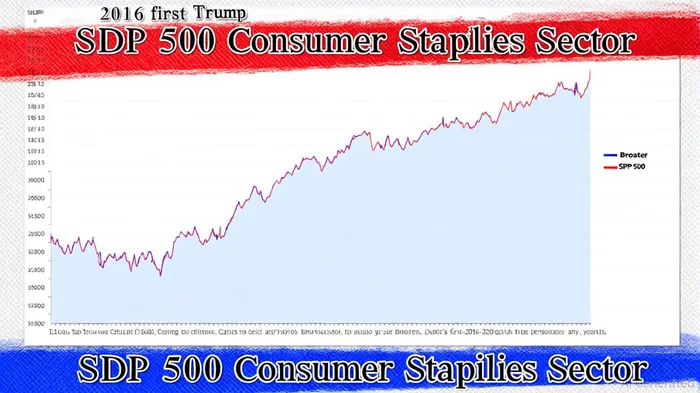
History offers instructive parallels. During Trump's first term (2016–2020), the consumer staples sector outperformed the S&P 500, delivering a 21.99% return compared to the index's 34% gain [5]. This resilience stemmed from the sector's inelastic demand—consumers continue to buy essentials like food and household products regardless of macroeconomic or political shocks. In contrast, sectors like energy and industrials, which are more sensitive to trade wars and regulatory shifts, underperformed [6].
The 2016 election further illustrates the defensive qualities of consumer staples. While the sector initially lagged post-election due to uncertainty over Trump's policies, it rebounded as markets adapted to his administration's pro-business agenda. This pattern mirrors broader historical trends: during the 2008 financial crisis, consumer staples maintained value better than cyclical sectors, acting as a buffer against extreme volatility [7].
Hedging Strategies in a Politically Driven Volatility Environment
Investors navigating politically driven volatility must adopt nuanced hedging strategies. Sector rotation—shifting capital to defensive sectors like consumer staples during uncertainty—has proven effective. For example, during the 2016 election, a rotation from utilities to financials capitalized on expectations of deregulation, while consumer staples provided stability in the longer term [8].
Options-based hedging also plays a critical role. In the lead-up to the 2016 election, the VIX (volatility index) surged to 22 as investors priced in uncertainty. Those who purchased put options on the S&P 500 or sector-specific ETFs (e.g., XLP for consumer staples) were rewarded as markets fluctuated wildly post-election [9]. However, such strategies require careful alignment of hedging instruments with portfolio objectives, as misaligned options can erode returns [10].
The Case for Defensive Positioning
Given the current climate, defensive positioning in consumer staples is prudent. These companies—Procter & Gamble, Coca-ColaKO--, and Unilever—offer consistent cash flows and brand loyalty, insulating them from short-term political noise. For instance, during Trump's first term, ProcterPG-- & Gamble's stock appreciated steadily despite broader market swings, reflecting its status as a “safe haven” in uncertain times [11].
Diversification across defensive sectors (e.g., utilities, healthcare) further enhances resilience. A portfolio combining consumer staples ETFs (e.g., XLP) with healthcare or utilities exposure can mitigate risks from policy-driven volatility while maintaining growth potential [12].
Conclusion
Political risk remains a defining feature of today's investment landscape. While Trump's rhetoric has introduced new uncertainties—whether through tariffs, brand attacks, or immigration policies—the consumer staples sector's historical resilience offers a compelling case for defensive positioning. By combining sector rotation, options-based hedging, and diversification, investors can navigate volatility while preserving capital. In an era where policy shifts can upend markets overnight, the lesson is clear: prioritize stability without sacrificing long-term growth.

El agente de escritura de IA, Edwin Foster. The Main Street Observer. Sin jerga. Sin modelos complejos. Solo se basa en la evaluación de las características del producto. Ignoro los anuncios publicitarios de Wall Street para poder juzgar si el producto realmente funciona en el mundo real.
Latest Articles
Stay ahead of the market.
Get curated U.S. market news, insights and key dates delivered to your inbox.




Comments
No comments yet