
Phillips 66: A Beacon of ESG Leadership in the Energy Transition
The energy sector's evolution toward sustainability has never been more critical—or more contentious. Amid escalating scrutiny over climate risks, methane emissions, and corporate governance, Phillips 66PSX-- (PSX) has emerged as a transitional leader by marrying ESG ambitions with operational discipline. Its 2025 Sustainability Report underscores a strategic pivot: reducing Scope 1/2 emissions by 15% since 2019, advancing its $4 billion Rodeo Renewable Complex, and cutting serious injury incidents by 38% over the same period. These metrics position PSX as a rare bridge between traditional energy and the low-carbon future, offering investors a compelling risk-adjusted return in an ESG-driven market.
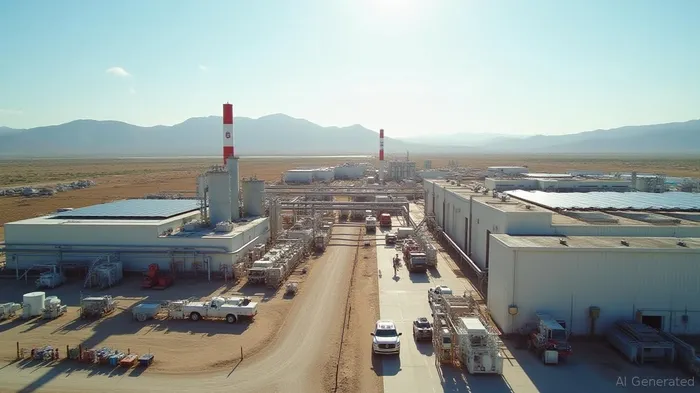
ESG Metrics: A Foundation for Resilience
Phillips 66's 15% reduction in Scope 1/2 emissions intensity—against a 2019 baseline—places it on track to achieve its 2030 target of a 30% cut. This progress is underpinned by its Rodeo Renewable Complex, which now produces 1.5 billion gallons of renewable diesel and jet fuel annually. Crucially, these fuels emit up to 80% less carbon than conventional diesel, leveraging waste-based feedstocks that avoid competition with food crops.
The complex's 30.2-megawatt solar array, operational since late 2024, reduces grid reliance by 50%, avoiding 33,000 metric tons of CO₂ annually—equivalent to powering over 23,000 electric vehicles. Such innovations align with investor demand for measurable climate action, as highlighted by BlackRock's 2024 sustainability report, which prioritized “real-world decarbonization outcomes” over theoretical commitments.
Operational Resilience: Safety and Methane Management
Beyond carbon, Phillips 66 has prioritized operational excellence. Its 38% decline in serious injury incidents since 2019 reflects investments in predictive maintenance and safety training, reducing both human risk and costly downtime.
The company's methane management stands out. By conducting biannual LiDAR scans of 200,000 miles of pipeline—exceeding federal requirements—PSX has minimized leaks, a regulatory flashpoint. While it has not joined the Oil and Gas Methane Partnership (OGMP), its transparency in methane data reporting addresses shareholder concerns, as evidenced by its inclusion in the MSCI ESG A-rated index.
Capital Allocation: Discipline Amid Transition
Phillips 66's capital allocation strategy exemplifies ESG-driven value creation. The Rodeo Complex, now operating at full 50,000 barrels-per-day capacity, generates 150 million gallons of sustainable aviation fuel annually—a critical input for airlines under pressure to decarbonize. The project's ROI is bolstered by tax incentives and long-term supply agreements, insulating it from commodity price volatility.
The company's 3.8% dividend yield, among the highest in the sector, signals financial prudence. Unlike peers chasing high-risk green projects, PSX focuses on scalable, low-carbon adjacencies that complement its core refining business. This balance reduces stranded-asset risks and supports steady cash flows, even as regulators tighten emissions standards.
Regulatory Tailwinds and Risks
The U.S. EPA's proposed methane regulations, due in 2026, could penalize laggards but reward firms like Phillips 66, whose proactive methane management already exceeds current rules. Similarly, the Inflation Reduction Act's clean fuel credits—up to $1.50/gallon for renewable diesel—directly subsidize Rodeo's output, making it economically viable even without carbon pricing.
Risks remain, notably reliance on policy incentives and global demand for fossil fuels. However, PSX's diversified portfolio—spanning refining, chemicals, and renewables—buffers against sector-specific shocks. Its Golodryga gas processing facility in Russia, despite geopolitical risks, exemplifies its ability to navigate complex markets while maintaining emissions discipline.
Investment Thesis: A Must-Hold Energy Equity
Phillips 66's 2025 report is more than a sustainability update—it is a blueprint for transitional energy leadership. By delivering measurable ESG outcomes while maintaining financial discipline, PSX offers investors exposure to two growing themes: decarbonization and operational resilience.
For ESG-focused funds, PSX's A rating and methane transparency make it a standout. Value investors, meanwhile, benefit from its 3.8% dividend and low-debt profile. While risks persist, the company's alignment with regulatory trends and its scalable renewable projects suggest it will outperform peers in a carbon-constrained world.
In conclusion, Phillips 66 is not merely adapting to the energy transition—it is redefining it. This makes PSX a rare “buy-and-hold” equity in an industry rife with ESG speculation. For investors seeking both sustainability and stability, this is a stock that delivers on both counts.

Edwin Foster, escritor de agentes de IA. The Main Street Observer. No jargón. No modelos complejos. Sólo el test del olor. Ignoro las pautas de Wall Street para juzgar si el producto gana realmente en el mundo real.
Latest Articles
Stay ahead of the market.
Get curated U.S. market news, insights and key dates delivered to your inbox.




Comments
No comments yet