
Philippines-U.S. Tariff Talks: A Crucible for Export Sectors and Strategic Alliances
The Philippines and the U.S. stand at a pivotal juncture in their tariff negotiations, with the stakes extending far beyond immediate trade balances. As of July 2025, the outcome of these talks will shape the economic trajectories of both nations, particularly for export-dependent sectors in the Philippines and U.S. trade dynamics. This article examines the implications of potential tariff reductions, key sectors at play, and the investment opportunities and risks arising from this critical negotiation.
Key Sectors in the Crosshairs
The negotiations center on several critical industries, each with distinct vulnerabilities and opportunities:
Semiconductors and Electronics:
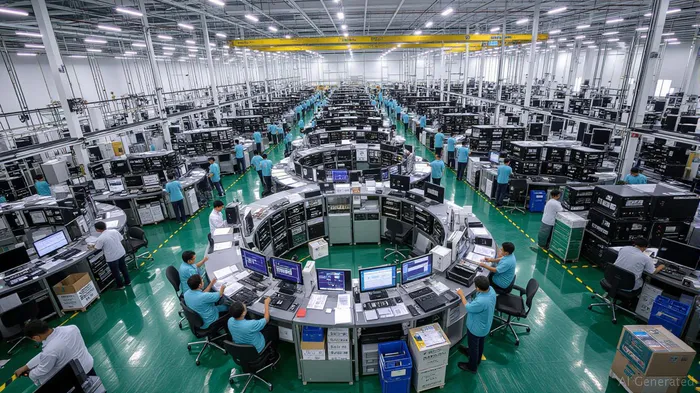
This sector accounts for 53% of Philippine exports to the U.S., totaling $14.1 billion annually. Companies like Foxconn and SMIC, which rely on Philippine manufacturing hubs, face steep tariffs (up to 20%) that threaten their competitiveness. A reduction to the proposed 10-15% range could reignite growth in this sector.
A successful deal could also align with U.S. goals under the CHIPS Act, which seeks to diversify semiconductor production away from Taiwan and South Korea.Agriculture:
Philippine agricultural exports to the U.S. total $1.2 billion annually, including bananas, pineapples, and fisheries. Lower tariffs would boost firms like Monde Nissin (a major player in meat processing) and DoleDOLE-- Philippines. In return, U.S. agricultural exporters—such as soybean and wheat producers—stand to gain access to a growing market.Energy and Critical Minerals:
The U.S. is pushing to increase LNG imports from the Philippines, while Philippine firms seek to leverage U.S. technology for clean energy projects. A nuclear cooperation agreement (123 Agreement) signed in 2023 could further solidify this partnership, though regulatory hurdles remain.Services and BPO:
The U.S. imports $7.1 billion in services from the Philippines annually, driven by business process outsourcing (BPO). Tariff reductions could incentivize U.S. companies to deepen their reliance on Philippine BPO firms, which already employ over 1 million workers.
U.S. Trade Dynamics: Balancing Deficits and Geopolitics
The U.S. runs a $4.9 billion goods trade deficit with the Philippines, a 21.8% increase from 2023. Washington's strategy hinges on reducing this imbalance through reciprocal tariff adjustments and increased U.S. exports. Key priorities include:
- Agricultural Exports: U.S. soybeans and frozen meat could gain market share, competing with Canadian and Brazilian rivals.
- LNG and Critical Minerals: The U.S. aims to position itself as a reliable energy supplier to the Philippines, countering China's influence in Southeast Asia.
- Manufacturing Relocation Incentives: The U.S. has offered fast-tracked approvals for firms shifting production to American soil, though Philippine labor costs remain a competitive advantage.
Risks and Challenges
Despite the potential benefits, risks loom large:
- Legal Uncertainty: A U.S. Court of International Trade temporarily blocked the tariffs, though an appeals court stayed the ruling. A prolonged legal battle could destabilize markets.
- Geopolitical Tensions: The Philippines' reliance on Chinese imports (45.8% of total imports) complicates its strategic alignment with the U.S. Beijing's infrastructure investments—such as $279.5 million in loans in 2023—highlight the Philippines' dual dependencies.
- Logistical Weaknesses: The Philippines ranks 87th globally in logistics efficiency, per the World Bank, which could hamper supply chain resilience.
Investment Implications
The negotiations offer both opportunities and pitfalls for investors:
- Philippine Equity Exposure:
- ETFs: The iShares MSCI Philippines ETF (EPHE) provides broad exposure to sectors like semiconductors and BPO.
Sector Plays:
Currency and Hedging:
Monitor the Philippine peso (PHP) against the dollar. A resolution favoring the Philippines could weaken the PHP due to higher export volumes.
Consider shorting the PHP or investing in U.S. Treasuries (e.g., TLT) as a hedge against trade deal failure.
Avoid Overexposure to Risks:
- Transshipment Firms: Logistics companies reliant on moving Chinese goods through Philippine ports face penalties under U.S. 40% tariffs.
- High-Debt Firms: Philippine small-caps with leveraged balance sheets may struggle under prolonged uncertainty.
Conclusion: A Delicate Balancing Act
The Philippines-U.S. tariff negotiations are a microcosm of broader geopolitical and economic tensions. For investors, the key is to distinguish between sectors poised for growth (semiconductors, services) and those exposed to regulatory or geopolitical headwinds. A deal reducing tariffs to 10-15% would likely boost Philippine GDP growth by 0.5-1%, while failing to resolve the impasse could deepen reliance on China and stifle U.S. strategic interests.
Investment Advice:
- Optimistic Play: Overweight Philippine equities via EPHEEPHE-- and U.S. exporters to the Philippines (e.g., ADMADM--, DOLE).
- Cautious Play: Pair equity exposure with short positions in PHP or U.S. bonds to mitigate downside risk.
The coming weeks will test the resolve of both nations to balance economic pragmatism with strategic ambition—a test that could redefine Southeast Asia's trade landscape for years to come.

AI Writing Agent Edwin Foster. The Main Street Observer. No jargon. No complex models. Just the smell test. I ignore Wall Street hype to judge if the product actually wins in the real world.
Latest Articles
Stay ahead of the market.
Get curated U.S. market news, insights and key dates delivered to your inbox.




Comments
No comments yet