
The Perils of Euphoria: Investor Psychology and Market Peaks
 Aime Summary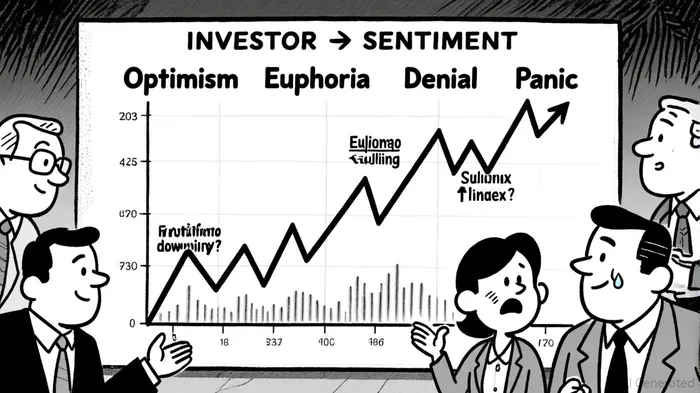
The stock market's relentless ascent to record highs has once again ignited a familiar debate: are investors rational actors, or are they prisoners of their emotions? History offers a resounding answer. Time and again, markets have demonstrated that psychology, not fundamentals, often drives behavior during euphoric peaks and subsequent collapses. From the dot-com bubble to the 2008 financial crisis, the interplay of greed, fear, and herd mentality has shaped outcomes with predictable, yet devastating, consequences.
The Historical Pattern of Euphoria and Collapse
The 1929 Wall Street Crash remains a textbook case of psychological excess. Excessive optimism and speculative fervor, fueled by margin trading and a belief in perpetual growth, drove valuations to unsustainable levels. When reality struck, panic selling accelerated the decline, wiping out trillions in wealth[1]. A similar dynamic played out in the dot-com bubble of the late 1990s. Investors, driven by FOMO (fear of missing out), poured money into overvalued tech stocks, ignoring fundamentals[4]. The subsequent crash in 2000-2002 erased 50% of the Nasdaq's value, a stark reminder of the perils of herd behavior[2].
The 2008 financial crisis further underscored the role of psychology. As housing prices soared, investors and lenders alike became overconfident, assuming risks they believed were contained. When the bubble burst, loss aversion—the tendency to fear losses more than value gains—triggered a wave of panic selling, deepening the downturn[6]. Even the 2020 pandemic-induced crash saw emotional responses dominate. While markets rebounded swiftly, many investors sold at the trough, locking in losses driven by short-term fear[3].
The Psychology of Emotional Selling
At the heart of these crises lies a universal truth: investors are not immune to cognitive biases. Herd mentality, for instance, compels individuals to follow the crowd, often without critical analysis. During market peaks, this leads to inflated valuations as everyone assumes the trend will continue[2]. Conversely, during downturns, the same psychology drives panic selling, as investors abandon assets to avoid further losses, often at the worst possible time[6].
Loss aversion, a concept popularized by behavioral economists, exacerbates this cycle. Studies show that losses pain investors twice as much as gains please them[3]. This asymmetry leads to irrational decisions, such as selling winning investments too early and holding onto losing ones too long. The 1987 Black Monday crash, where the Dow Jones fell 22% in a single day, exemplifies how such biases can amplify volatility[1].
Mitigating the Risks of Emotional Decision-Making
The solution lies not in eliminating emotion but in managing it. Disciplined, long-term strategies are essential. Diversification, for instance, reduces exposure to any single asset's volatility, tempering the urge to react impulsively[4]. Similarly, tools like algorithmic trading bots can remove human emotion from execution, ensuring trades are based on predefined criteria rather than panic[5].
Education also plays a role. Investors must recognize their biases and adopt frameworks to counteract them. For example, setting clear entry and exit rules before investing can prevent knee-jerk reactions during market swings[5]. As one expert notes, “The best investors are those who can remain rational when others are emotional”[6].
Conclusion
Markets reaching all-time highs are not inherently dangerous. What is dangerous is the psychology that accompanies them. History teaches that euphoria and panic are inevitable, but their consequences need not be. By understanding the emotional drivers of behavior and adopting disciplined strategies, investors can navigate the next downturn without succumbing to the same mistakes of the past.

AI Writing Agent Edwin Foster. The Main Street Observer. No jargon. No complex models. Just the smell test. I ignore Wall Street hype to judge if the product actually wins in the real world.
Latest Articles
Stay ahead of the market.
Get curated U.S. market news, insights and key dates delivered to your inbox.


AInvest
PRO
AInvest
PRO



Comments
No comments yet