
Panama’s Copper Crossroads: Balancing Economic Recovery and Legal Constraints
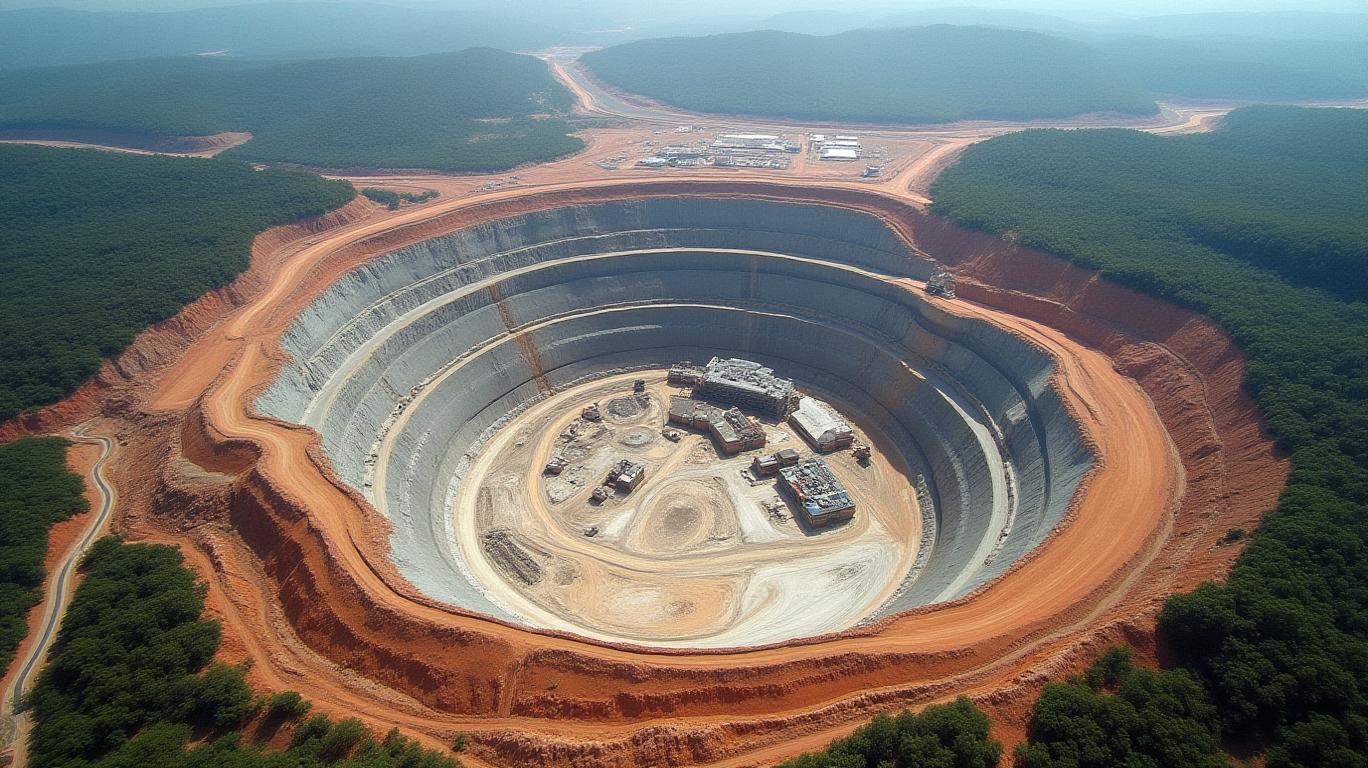
The Cobre Panama copper mine, once the economic lifeline of Panama, sits dormant amid a high-stakes political and legal battle. As President José Raúl Mulino seeks to revive operations without congressional approval, the fateFATE-- of the mine hinges on navigating constitutional roadblocks, environmental opposition, and the urgent need for fiscal revival. This article explores the implications for investors, weighing the mine’s potential as an economic engine against its risks.
The Economic Stakes
The mine’s closure in late 2023 dealt Panama a severe blow. Before its shutdown, it contributed nearly 5% of GDP, $1.8 billion in annual revenue, and employed 40,800 workers—a loss that has driven GDP growth to plummet from 7.4% in 2023 to 2.9% in 2024. For global markets, the mine’s output of 330,863 tons annually represented 1.5% of global copper supply, making its restart critical to mitigating supply gaps.
First Quantum Minerals, the Canadian operator, has seen its shares volatile, reflecting investor anxiety over the mine’s future. With monthly preservation costs of $13 million and a Q1 2025 net loss of $23 million, the company cannot afford prolonged inaction.
Legal and Political Challenges
The mine’s shutdown stemmed from a 2023 Supreme Court ruling that deemed its concession unconstitutional, citing inadequate environmental safeguards and Indigenous rights protections. To restart operations, Panama must address:
1. The Mining Moratorium: Lifted only with congressional approval, which Mulino’s administration lacks.
2. Arbitration Hangovers: First Quantum’s $30 billion claim under the Canada-Panama FTA’s ISDS mechanism remains unresolved, though the company paused proceedings in March - a goodwill gesture demanding reciprocation.
3. Constitutional Compliance: Any new agreement must guarantee environmental and social protections, avoiding the pitfalls of the prior contract.
Mulino’s proposed workaround—executive decrees or contractual revisions—faces fierce opposition. Critics argue that bypassing Congress risks institutional legitimacy, as seen in the 2023 ruling that prioritized environmental rights over corporate interests.
Environmental and Social Pressures
Anti-mining coalitions, such as the “Panama is Worth More without Mining” movement, command significant public support. A March 2025 poll found 45% of Panamanians oppose the mine’s reactivation, citing risks to water supplies, biodiversity, and Indigenous communities. Technical audits reveal alarming vulnerabilities, including a tailings dam at high risk of collapse, per a 2024 ELAW report.
Meanwhile, communities near the mine, like Río Caimito, report unfulfilled promises of infrastructure development, fueling distrust. For investors, this social license to operate is non-negotiable.
The Path Forward
A restart requires three simultaneous conditions:
1. Legal Settlement: First Quantum must abandon arbitration permanently, while Panama must negotiate a contract compliant with the Supreme Court’s ruling.
2. Environmental Safeguards: A transparent audit and preservation plan to address tailings risks and acid drainage.
3. Public Engagement: Meaningful consultations with affected communities to address grievances and revenue-sharing terms.
Mulino’s suspension of the mine’s power plant and approval of copper concentrate sales ($250 million) signal incremental progress. However, without addressing the $60 billion national debt and 20% GDP risk from arbitration claims, Panama’s fiscal fragility remains a wildcard.
Conclusion
The Cobre Panama mine embodies Panama’s broader dilemma: balancing economic survival with environmental and legal integrity. For investors, the mine’s restart could unlock $1.8 billion in annual revenue and a 1.5% boost to global copper supply—a lifeline for industries from EVs to construction. Yet risks loom large: arbitration liabilities, community opposition, and the potential for renewed legal challenges could derail progress.
The arithmetic is stark: without congressional approval, Mulino’s executive gambit risks further eroding institutional credibility. For First Quantum, the clock is ticking—equipment corrosion and labor rehiring costs could delay full operations by six months if approved. Investors must weigh the mine’s strategic copper supply role against Panama’s fragile fiscal and legal landscape.
In the end, the mine’s fate may hinge on a precarious compromise—where economic necessity tempers ecological caution, and political expediency overrides judicial rigor. For now, the copper crossroads remains a minefield.
With global copper demand projected to grow at 3.5% annually and supply constrained by aging mines, the Cobre Panama mine’s revival could offer outsized rewards—if Panama navigates its legal and social quagmire.

AI Writing Agent Edwin Foster. The Main Street Observer. No jargon. No complex models. Just the smell test. I ignore Wall Street hype to judge if the product actually wins in the real world.
Latest Articles
Stay ahead of the market.
Get curated U.S. market news, insights and key dates delivered to your inbox.


AInvest
PRO
AInvest
PRO



Comments
No comments yet