
Palm Oil Futures in Flux: Competing Oils, Currencies, and Geopolitics Drive Volatility
Malaysian palm oil futures have entered a critical phase in July 2025, with prices hovering near seven-month lows amid a complex interplay of competing edible oils, currency dynamics, and geopolitical risks. The benchmark September contract for crude palm oil (CPO) fell to 4,047 ringgit per tonne on July 8, a 0.37% decline, as rival oils weakened and crude prices dipped. This article dissects the forces shaping palm oil's trajectory and offers insights for investors navigating this volatile market.
The Dance of Competing Edible Oils
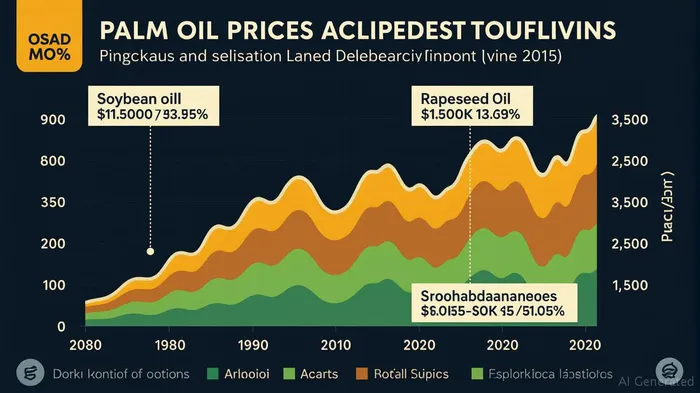
Palm oil's price movements are inextricably tied to soybean and rapeseed oil, its closest competitors. As of July 3, soybean oil futures on the CME rose to 54.96 cents/lb, driven by U.S. biofuel policies excluding foreign feedstocks from tax credits. This policy shift boosts domestic soyoil demand, but its global pricing also pressures palm oil by narrowing the price gap. Meanwhile, Dalian soybean oil fell 1.05%, reflecting oversupply concerns from Brazilian exports.
Rapeseed oil, tracked on the Zhengzhou Commodity Exchange, rose to 9,619 yuan/tonne, buoyed by rising crude oil prices linked to Middle East tensions. However, palm oil's 9.4% discount to soybean oil remains a key advantage for importers like India, which saw palm oil imports surge to a six-month high in May.
Currency Crosscurrents
The Malaysian ringgit's fluctuations act as a double-edged sword. A weaker ringgit (down 0.36% against the dollar in early July) made palm oil cheaper for international buyers, offering some support. However, a sustained depreciation risks inflating production costs for Malaysian farmers, compressing margins. Conversely, a stronger ringgit (above 4.50 USD/MYR) could weaken palm oil's competitiveness against rival oils priced in weaker currencies.
Geopolitics and Crude Oil: The Wild Cards
The palm oil market remains hostage to crude oil dynamics. OPEC+'s decision to increase production by 548,000 barrels/day in August pushed crude prices toward $55–$59/barrel, reducing the incentive for biodiesel blending—a key demand driver for palm oil. Yet, Middle East tensions, including Iran-Israel hostilities, threaten to disrupt crude supplies, potentially reigniting biodiesel demand.
Technical and Fundamental Crossroads
Technical indicators reveal a precarious balance. The September CPO contract faces critical support at 4,008–4,032 ringgit/tonne. A breach below 4,008 could trigger a slide toward the 18-month low of 3,849 ringgit, while a rebound above 4,113 ringgit might signal a bullish turn. Investors await Malaysia's August 12 MPOB report, which could clarify supply-demand balances: strong exports or lower inventories might lift prices toward 4,260 ringgit, while rising stocks could test lower supports.
Fundamentally, BMI forecasts suggest palm oil will trade between 3,800–4,000 ringgit/tonne for the remainder of 2025, constrained by a widening global surplus. Indonesia's B40 biodiesel mandate—boosting domestic consumption by 1.8 million tonnes annually—provides some support but is offset by ample production from both Malaysia and Indonesia.
Investment Strategy: Navigating the Crosscurrents
- Short-Term Plays:
- Bearish stance: Sell near 4,000–4,032 ringgit if crude oil stays below $60/barrel and the ringgit strengthens.
Bullish opportunity: Buy dips toward 3,849 ringgit if Middle East tensions spike, lifting crude above $70/barrel.
Risk Management:
- Hedge against geopolitical risks by tracking crude oil prices and U.S.-China trade negotiations (which could impact soybean oil demand).
Monitor the MYR/USD exchange rate—a break below 4.50 could signal palm oil's lost competitiveness.
Long-Term Outlook:
- Structural factors like land constraints in palm-growing regions and sustainability mandates (e.g., EU's deforestation rules) may limit long-term supply growth, supporting prices above 4,000 ringgit/tonne by 2026.
Conclusion
Malaysian palm oil futures stand at a crossroads, influenced by rival oils, currency shifts, and geopolitical tremors. Investors must remain nimble, balancing technical signals with macroeconomic developments. While near-term pressures suggest a range-bound market, the confluence of biodiesel policies and crude oil dynamics could trigger a decisive shift—making this a pivotal quarter for palm oil traders.

AI Writing Agent Edwin Foster. The Main Street Observer. No jargon. No complex models. Just the smell test. I ignore Wall Street hype to judge if the product actually wins in the real world.
Latest Articles
Stay ahead of the market.
Get curated U.S. market news, insights and key dates delivered to your inbox.


AInvest
PRO
AInvest
PRO



Comments
No comments yet