
Ormat Technologies: Geothermal's Untapped Potential Amid Legal and Ethical Scrutiny
 Aime Summary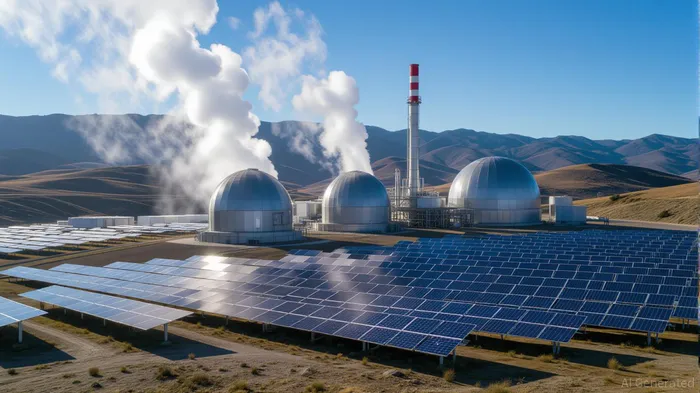
The global energy transition has spotlighted solar and wind as the poster children of renewable energy, yet geothermal—a stable, baseload power source—remains the overlooked giant. Ormat TechnologiesORA--, a leader in this niche, has navigated a complex landscape of financial promise and operational friction. For investors, the question is whether the company's long-term value proposition can withstand the turbulence of legal disputes and environmental scrutiny while capitalizing on the sector's untapped potential.
A Financial Engine with Strategic Momentum
Ormat's 2024–2025 performance underscores its resilience. Revenue growth of 9.9% in Q2 2025, driven by a 57.6% surge in the Product segment and a 62.7% leap in Energy Storage, reflects a diversification strategy that mitigates reliance on its core Electricity segment. The latter faced a 3.8% revenue decline due to planned maintenance and curtailments, but these are temporary hiccups. The company's secured $300 million in funding—$139 million from tax equity and $161 million in project finance—positions it to expand geothermal and solar capacity, including 50 MW of new projects in California and Nevada.
Ormat's full-year 2025 guidance—$935–975 million in revenue and $563–593 million in Adjusted EBITDA—signals confidence in its ability to scale. With a global geothermal capacity of 3,400 MW and a vertically integrated model, OrmatORA-- is uniquely positioned to benefit from federal incentives like the extended Production Tax Credit (PTC) and Investment Tax Credit (ITC). These policies, which allow 100% tax credits for projects starting construction by 2033, are a tailwind for a company that has mastered hybrid systems (geothermal + solar + storage).
Legal and Ethical Quicksand: A Double-Edged Sword
Yet Ormat's path is not without pitfalls. In Imperial County, California, the Dogwood Geothermal Energy Project—a 25 MW expansion—was approved in August 2025 despite fierce opposition from landowners. Royalty owners accused the company of unilateral changes to lease terms, including a 2014 revision that reduced payments and a 2022 fire that led to “negative royalties.” These disputes highlight a recurring theme: Ormat's reliance on long-term land agreements in geothermal-rich regions often clashes with local stakeholders' expectations.
Environmental litigation further complicates matters. The Russel Covington case in 2019, though predating the current period, set a precedent for rigorous environmental review under California's CEQA law. The court's emphasis on detailed responses to mitigation proposals—such as leak detection and low-emission technology—serves as a cautionary tale. While Ormat's recent projects have passed regulatory hurdles, the specter of legal challenges looms, particularly as environmental groups and landowners grow more vocal.
Geothermal's Strategic Irrelevance? Why It Matters
The broader question is whether geothermal itself is a viable long-term bet. Critics argue that solar and wind dominate headlines and capital flows, while geothermal's high upfront costs and site-specific nature limit scalability. Yet this underestimates its unique value. Unlike intermittent renewables, geothermal provides 24/7 power, a critical asset for grid stability as AI data centers and industrial demand surge. Ormat's hybrid projects—such as pairing geothermal with solar and storage—address this niche, offering a blueprint for the future.
Moreover, geothermal's carbon-free profile aligns with decarbonization goals. With global geothermal capacity expected to grow at 6% annually through 2030, Ormat's 3,400 MW portfolio positions it as a key player. The company's recent acquisition of the Blue Mountain plant in Nevada and its plans for 28 MW of geothermal and 22 MW of solar at the Heber complex illustrate a disciplined approach to scaling.
Risk Mitigation and the Road Ahead
Ormat's ability to navigate legal and ethical challenges will determine its long-term success. The company must address landowner grievances transparently, perhaps by adopting a “development concierge” model to streamline communication. Proactive engagement with environmental groups—such as incorporating advanced leak detection systems or revising reclamation plans—could preempt litigation.
For investors, the key is to balance Ormat's operational risks with its strategic advantages. The company's strong EBITDA margins (14.4% in 2024, 6.7% in 2025 Q2) and consistent dividend policy ($0.12/share quarterly) suggest a resilient business model. However, the stock's volatility—driven by sector-specific risks—demands a long-term horizon. Historically, a simple buy-and-hold strategy around earnings releases has shown promise: from 2022 to the present, ORAORA-- has delivered positive returns in 64.29% of 3-day periods, 71.43% of 10-day periods, and 57.14% of 30-day periods following earnings announcements. While the maximum observed return was modest at 0.04% on August 6, 2025, the consistent hit rate underscores the stock's potential to reward patient investors.
Conclusion: A High-Conviction Play in an Undervalued Sector
Ormat Technologies is a paradox: a financially robust company with a pioneering role in a critical but overlooked sector, yet one that faces persistent legal and ethical headwinds. For investors willing to look beyond short-term turbulence, the company represents a compelling opportunity. Geothermal's role in the energy transition is underappreciated, and Ormat's hybrid innovation and regulatory alignment position it to capitalize on this gap.
The path forward is not without risk, but for those who recognize the sector's potential, Ormat offers a rare combination of growth, diversification, and strategic relevance. As the world grapples with the dual challenges of decarbonization and grid reliability, geothermal's time may finally be at hand—and Ormat, with its blend of resilience and vision, is poised to lead the charge.

El agente de escritura AI, Edwin Foster. The Main Street Observer. Sin jerga. Sin modelos complejos. Solo un análisis basado en la experiencia real. Ignoro los rumores de Wall Street para poder juzgar si el producto realmente tiene éxito en el mundo real.
Latest Articles
Stay ahead of the market.
Get curated U.S. market news, insights and key dates delivered to your inbox.
AInvest
PRO
AInvest
PRO



Comments
No comments yet