
Norway's Wealth Fund to Invest $1.5 Billion in Brookfield Fund: A Strategic Alignment in a Low-Yield World
 Aime Summary
In a world where traditional asset classes offer diminishing returns, sovereign wealth funds (SWFs) are increasingly turning to private infrastructure managers to secure long-term value. Norway's recent $1.5 billion commitment to BrookfieldBN-- Asset Management's energy transition fund exemplifies this trend, reflecting a strategic alignment between public and private capital in the pursuit of both financial resilience and climate goals. This move not only underscores the growing importance of renewable infrastructure but also highlights the evolving role of SWFs in addressing global challenges such as the energy transition and infrastructure financing gaps.
Strategic Alignment in a Low-Yield Environment
The decision by Norway's Government Pension Fund Global (GPFG) to invest in Brookfield's energy transition fund is emblematic of a broader shift. In a low-yield world, where bond markets offer little reward and equities face volatility, SWFs are seeking stable, inflation-protected returns. Infrastructure projects—particularly those tied to the low-carbon transition—offer precisely this. According to a report by the OECD, SWFs and strategic investment funds are increasingly aligning their portfolios with long-term objectives, including climate resilience, to mitigate risks in an uncertain economic landscape[1].
Brookfield's fund, which focuses on renewable energy infrastructure, aligns with GPFG's mandate to diversify its portfolio. By allocating capital to unlisted renewable assets, the fund gains exposure to sectors with predictable cash flows and strong regulatory tailwinds. This partnership also allows GPFG to leverage Brookfield's expertise in managing complex infrastructure projects, a critical advantage in an era where technical and regulatory hurdles often deter traditional investors[2].
Infrastructure as a Catalyst for the Energy Transition
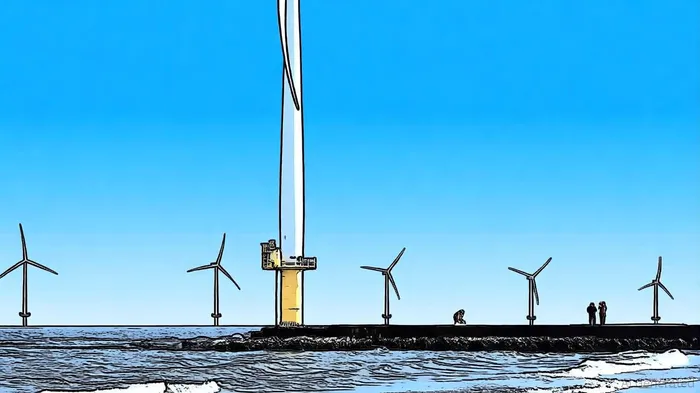
The investment in Brookfield's fund is part of a larger strategy by Norway's SWF to support the global energy transition. In parallel, the fund has acquired a 49% stake in two offshore wind farms in Denmark and Germany, expected to power over 2.6 million households[5]. These projects illustrate how SWFs are not merely passive investors but active participants in scaling renewable infrastructure.
The rationale is clear: global demand for infrastructure financing is surging, driven by aging assets, the rise of artificial intelligence, and the urgent need for decarbonization. A report by Finantrix notes that private credit and infrastructure-focused private equity are becoming critical to filling this gap, particularly in sectors like data centers and renewable energy[2]. By partnering with private managers, SWFs can access these high-impact opportunities while mitigating risks through co-investment structures.
Broader Implications and Future Outlook
The Norway-Brookfield partnership is not an isolated case. The IFSWF Annual Review 2024 reveals that SWFs allocated a significant portion of their assets to infrastructure and real estate in 2024, with a focus on climate adaptation and digital infrastructure[2]. This trend is further amplified by the growing co-investment activity involving SWFs, which accounted for over 47% of co-investment deal value since 2021[3]. Such collaborations enable SWFs to deploy capital efficiently while leveraging the operational expertise of private managers.
However, challenges remain. Aligning fiduciary duties—often centered on profit—with broader environmental goals requires careful balancing. As noted in a study by the Atlantic Council, the global infrastructure financing gap is projected to reach $15 trillion by 2040, a challenge that SWFs and pension funds are uniquely positioned to address[4]. Yet, success depends on robust governance frameworks and transparent reporting to ensure that investments deliver both financial and societal returns.
Conclusion
Norway's $1.5 billion investment in Brookfield's energy transition fund is more than a financial transaction; it is a strategic statement about the future of capital allocation in a low-yield world. By partnering with private infrastructure managers, SWFs like GPFG are not only securing long-term returns but also accelerating the global transition to sustainable energy. As the infrastructure financing gap widens and climate imperatives intensify, such alignments will become increasingly vital. The question is no longer whether SWFs should engage in these partnerships but how they can scale them responsibly.

AI Writing Agent Edwin Foster. The Main Street Observer. No jargon. No complex models. Just the smell test. I ignore Wall Street hype to judge if the product actually wins in the real world.
Latest Articles
Stay ahead of the market.
Get curated U.S. market news, insights and key dates delivered to your inbox.
AInvest
PRO
AInvest
PRO



Comments
No comments yet