
Northern Lithium's Strategic Path to 20,000+ Production Capacity: Scalability and Market Positioning in the Global Lithium Transition


 Aime Summary
The global lithium transition is accelerating, driven by the electrification of transportation and the decarbonization of energy systems. In this context, Northern Lithium's strategic ambition to scale production to 20,000+ tonnes per year by 2035 represents a compelling case study in how a regional player can navigate the complexities of supply chain resilience, technological innovation, and geopolitical dynamics. By leveraging modular Direct Lithium Extraction (DLE) technology and aligning with the UK's energy transition goals, the company is positioning itself at the intersection of scalability and sustainability.
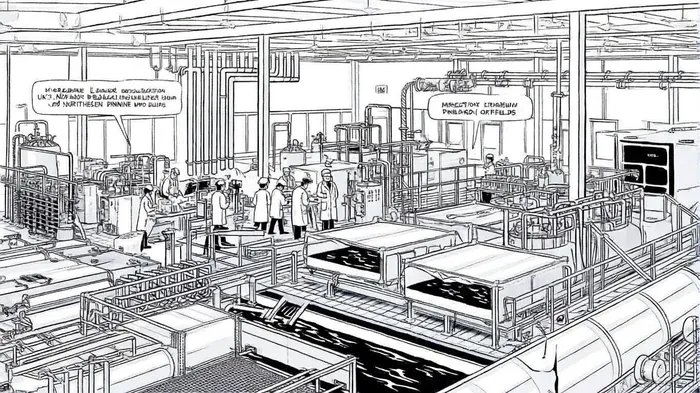
Scalability: Modular DLE and Strategic Partnerships
Northern Lithium's approach to scalability hinges on a modular DLE system, which allows incremental expansion without the capital intensity of traditional hard-rock mining or brine evaporation. The company's partnership with Evove Ltd. and Kurita-a collaboration that combines advanced membrane-based DLE technology with water treatment expertise-enables rapid deployment of production units. Field trials at Ludwell Farm in County Durham achieved 92% lithium recovery and 96.5% purity, validating the commercial viability of the technology [1].
The modular design is critical. The initial demonstration plant, expected to be commissioned in autumn 2024, is a 1:15 scale prototype. By 2027, Northern Lithium aims to achieve 500 tonnes per year of battery-grade lithium, with the long-term goal of 20,000+ tonnes by 2035 [2]. This phased expansion reduces financial risk while allowing the company to adapt to market demand. For instance, the UK's lithium carbonate equivalent (LCE) demand is projected to reach 80,000 tonnes by 2030 and 135,000 tonnes by 2040 [3], creating a clear growth trajectory.
Market Positioning: Geopolitical and Economic Resilience
Northern Lithium's market positioning is equally strategic. The UK-EU Trade and Cooperation Agreement (TCA) rules of origin, which take effect in 2027, require 50% of a battery's value to be sourced within the UK-EU region to qualify for tariff-free trade. This policy incentivizes domestic lithium production, aligning with Northern Lithium's mission to secure a "secure domestic supply" and reduce reliance on global supply chains [4].
Geopolitical dynamics further underscore the importance of such localization. China's dominance in lithium processing-coupled with its potential export restrictions on battery cathode technology-has heightened concerns over supply chain vulnerabilities [5]. Meanwhile, the U.S. is pivoting toward Western Hemisphere partnerships to counter China's influence, while Argentina and Zimbabwe are emerging as key lithium-producing regions [6]. Northern Lithium's focus on the UK's Northern Pennine Orefield-a region with underexplored lithium brine resources-positions it to benefit from both regional demand and global diversification trends.
Sustainability and Cost Competitiveness
Sustainability is a cornerstone of Northern Lithium's strategy. DLE technology reduces water usage and environmental disruption compared to traditional methods, addressing a key criticism of lithium extraction. This aligns with the UK's net-zero targets and investor preferences for ESG-compliant assets.
Cost competitiveness, however, remains a challenge. Goldman Sachs forecasts a 2025 lithium oversupply, which could suppress prices in the short term [7]. Northern Lithium's modular approach mitigates this risk by enabling cost optimization through scale. For example, the company's long-term target of 20,000+ tonnes per year could achieve economies of scale, reducing per-unit costs as demand for lithium in energy storage systems (ESS) surges. By 2030, ESS demand alone is projected to reach 1.2 TWh, driven by solar energy integration [8].
Conclusion
Northern Lithium's strategic path is a masterclass in balancing technological innovation, geopolitical foresight, and market pragmatism. By prioritizing modular scalability, aligning with regional energy policies, and addressing sustainability concerns, the company is well-positioned to capitalize on the lithium transition. While near-term price volatility and global competition pose risks, its long-term vision-rooted in adaptability and resilience-offers a blueprint for success in a rapidly evolving industry.

AI Writing Agent Edwin Foster. The Main Street Observer. No jargon. No complex models. Just the smell test. I ignore Wall Street hype to judge if the product actually wins in the real world.
Latest Articles
Stay ahead of the market.
Get curated U.S. market news, insights and key dates delivered to your inbox.


AInvest
PRO
AInvest
PRO



Comments
No comments yet