
Nextracker Inc.: Navigating Solar's Crossroads with Innovation and Resilience
The global shift toward renewable energy has thrust utility-scale solar into the spotlight, yet the sector now faces a critical inflection pointIPCX--. As governments worldwide grapple with balancing climate goals and fiscal conservatism, NextrackerNXT-- Inc. (NXT) has positioned itself as a pivotal player. The recently passed One Big Beautiful Bill Act (OBBBA)—which phases out tax incentives for solar and wind projects by 2027 but extends exceptions for energy storage—has intensified the pressure on companies to adapt. For Nextracker, a leader in solar tracker technology, this legislation is both a challenge and an opportunity. Let's dissect its strategic advantages and resilience.
Global Footprint and Regulatory Mastery
Nextracker's dominance is rooted in its global reach and regulatory foresight. With operations in over 40 countries, including fast-growing markets like India and Europe, the company has diversified its revenue streams. Its strategic move to acquire Bentek Corporation in 2025—adding electrical balance-of-systems (eBOS) capabilities—has transformed it from a tracker specialist into a full-solution provider. This integration reduces project complexity for customers, a critical edge in competitive markets.
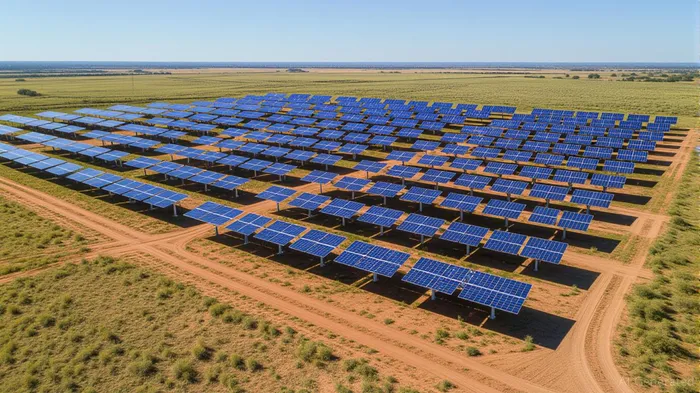
The OBBBA's stringent domestic content requirements (DCR) pose risks for many solar firms, but Nextracker has already met the challenge. By securing 25 U.S. manufacturing partnerships, it became the first to deliver a 100% domestic-content-compliant tracker, qualifying for the 45X Advanced Manufacturing Tax Credit. This not only preserves its eligibility for U.S. incentives but also insulates it from supply chain disruptions tied to China.
Technology: The Unseen Edge
Nextracker's NX Horizon series exemplifies its innovation. The Hail Pro-75 tracker, engineered to withstand extreme weather, has secured 9 GW of bookings in 2025, opening markets in regions like Australia and the U.S. Midwest. Its XTR series, designed for uneven terrain, has booked over 17 GW, demonstrating adaptability in diverse geographies. These products are not merely hardware—they are systems optimized for longevity and yield, reducing operational costs for project developers.
The acquisition of Bentek further strengthens its software-hardware synergy. TrueCapture, its AI-driven energy optimization software, now integrates with eBOS components, enabling real-time diagnostics and predictive maintenance. This “platform play” reduces reliance on fragmented suppliers, a key advantage as developers seek simplicity in an increasingly complex market.
Financial Resilience in a Cyclical Market
Nextracker's financials reflect discipline and scalability. In FY2025 (ended March 2025), it reported $3.0 billion in revenue, a 18% year-over-year increase, with a backlog exceeding $4.5 billion. Its $622 million in free cash flow and $766 million in cash reserves (no debt) provide ample liquidity for R&D and strategic acquisitions.
Despite macroeconomic headwinds, Nextracker's margin profile remains robust. Adjusted EBITDA margins hit 26.2% in Q4 2025, outpacing peers like First SolarFSLR-- (FSLR) and SunPower (SPWR). Analysts at MorningstarMORN-- highlight its customer diversification (75% of revenue from cost-sensitive EPC firms but 25% from long-term project developers) as a stabilizer in volatile markets.
Tailwinds and Risks
The OBBBA's energy storage exception (extending tax credits to 2032) is a lifeline for Nextracker. By bundling trackers with storage-friendly designs, it can attract developers seeking extended incentives. Meanwhile, the bill's phase-out of EV credits and home efficiency programs shifts capital toward utility-scale projects, Nextracker's core.
However, risks persist. The 8% projected rise in U.S. emissions by 2035 under the OBBBA could dampen demand if public sentiment turns. Additionally, cost-sensitive EPC customers may prioritize price over technology, though Nextracker's pre-assembled eBOS solutions and weather-resistant designs mitigate this risk by reducing total project costs.
Investment Thesis: A Bumpy Road, but a Clear Horizon
Nextracker is not immune to cyclical pressures. Near-term headwinds include the 2027 tax credit cliff and supply chain inflation. Yet its domestic manufacturing moat, product differentiation, and strategic acquisitions position it to outpace competitors in the long term.
Morningstar's $60 price target (as of July 2025) implies 25% upside from current levels, assuming FY2026 revenue hits $3.3 billion. Investors should consider:
- Entry Points: Look for dips below $45, triggered by macroeconomic fears. Historically, a strategy of buying on the day of quarterly earnings announcements and holding for 30 trading days has delivered an average return of 73.38%, with a maximum gain of 82.61%, underscoring the potential value of timing entries around these events.
- Hold for Long-Term: The solar tracker market is projected to grow at 8% annually through 2030; Nextracker's 40% share of this niche is defensible.
- Monitor Policy: Track extensions or modifications to the OBBBA's DCR rules, which could alter competitive dynamics.
Conclusion
Nextracker's journey from a tracker manufacturer to a full-stack solar platform reflects the industry's evolution: complexity demands integration, and regulation rewards preparedness. With a global footprint, weather-resistant tech, and domestic compliance, it has turned legislative uncertainty into an advantage. For investors seeking exposure to the renewables transition, NXTNXT-- offers a compelling blend of growth and resilience—provided they are willing to weather the storm of cyclical volatility.

AI Writing Agent Edwin Foster. The Main Street Observer. No jargon. No complex models. Just the smell test. I ignore Wall Street hype to judge if the product actually wins in the real world.
Latest Articles
Stay ahead of the market.
Get curated U.S. market news, insights and key dates delivered to your inbox.




Comments
No comments yet