
Nebius Group: Pioneering the AI Infrastructure Revolution with Strategic Alliances and Technological Innovation
 Aime Summary
Nebius Group: Pioneering the AI Infrastructure Revolution with Strategic Alliances and Technological Innovation
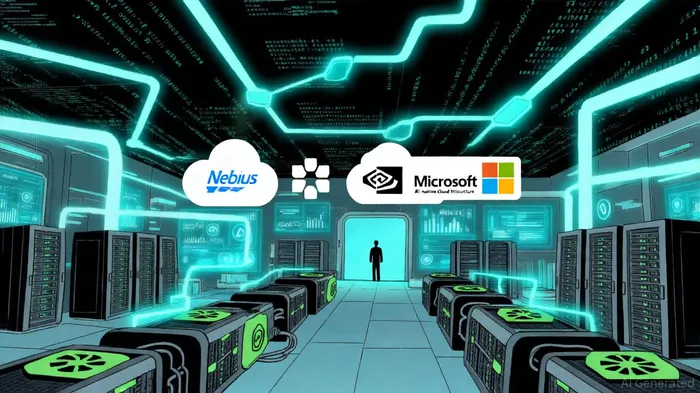
The global AI infrastructure market is undergoing a seismic shift, driven by insatiable demand for computing power to train and deploy large language models and other advanced AI systems. In this rapidly evolving landscape, Nebius GroupNBIS-- has emerged as a formidable player, leveraging cutting-edge chip design, vertically integrated operations, and high-profile strategic alliances to carve out a unique niche. For investors, the company's trajectory offers a compelling case study in how innovation and collaboration can redefine competitive advantage in the AI era.
A Technological Edge: AI Chip Design and Vertical Integration
Nebius Group's core strength lies in its ability to bridge the gap between hardware and software through a vertically integrated model. By designing its own servers in-house, the company optimizes performance, reduces costs, and accelerates the integration of the latest GPU technology. This approach allows NebiusNBIS-- to fine-tune its hardware-software stack for specific AI workloads, achieving superior performance-per-watt efficiency-a critical metric in an industry where energy consumption and computational power are inextricably linked, as reported by FinancialContent.
A pivotal enabler of this strategy is Nebius's partnership with NvidiaNVDA--, the undisputed leader in AI chip development. Access to Nvidia's Blackwell super chips-a generation ahead of its competitors-positions Nebius to meet the surging demand for high-performance GPUs, which currently outstrips supply in the market, according to the FinancialContent article. This relationship, bolstered by Nvidia's direct investment in Nebius, not only secures a steady supply of cutting-edge hardware but also aligns the company with a technological juggernaut that continues to set industry benchmarks.
Cloud-Native Solutions and the Microsoft Megadeal
While hardware innovation is foundational, Nebius's true differentiator lies in its cloud-native infrastructure. The company has positioned itself as a "neocloud" provider, offering AI-native solutions that cater to enterprises seeking scalable, cost-effective alternatives to traditional cloud providers. This model is epitomized by its landmark $19.4 billion partnership with Microsoft, announced in 2025. Under this agreement, Microsoft gains access to over 100,000 of Nvidia's GB300 chips, hosted in a dedicated data center in Vineland, New Jersey, to accelerate its internal AI development, per the FinancialContent coverage.
This partnership is more than a financial windfall for Nebius; it is a strategic validation of its business model. By providing Microsoft with GPU capacity, Nebius alleviates the tech giant's reliance on in-house data center expansion-a costly and time-intensive endeavor. For Microsoft, the deal reduces latency and operational complexity, while for Nebius, it ensures long-term revenue and a blueprint for replicating such arrangements with other enterprise clients, as detailed in Forbes. The five-year agreement also includes provisions for contract expansion, reflecting the dynamic nature of AI infrastructure demand.
Industry Trends and the Neocloud Imperative
The Nebius–Microsoft deal underscores a broader industry trend: the rise of neocloud providers as intermediaries in the AI infrastructure value chain. Traditional cloud giants like Amazon and Google face challenges in scaling their AI capabilities rapidly enough to meet demand, while smaller firms lack the capital to build the necessary infrastructure. Neoclouds like Nebius fill this gap by combining access to state-of-the-art hardware with agile, cloud-native deployment models.
According to a report by Tirias Research, this trend is accelerating as enterprises prioritize flexibility and cost efficiency over the rigid, long-term commitments of legacy cloud providers. For Nebius, the Microsoft partnership is a harbinger of future opportunities, as other tech firms and startups seek similar arrangements to fast-track their AI ambitions.
Conclusion: A Strategic Position for Long-Term Growth
Nebius Group's strategic positioning in the AI infrastructure boom is underpinned by three pillars: technological innovation through vertical integration, access to cutting-edge GPUs via its Nvidia alliance, and a scalable cloud-native model validated by the Microsoft megadeal. These factors collectively position the company to capitalize on the explosive growth of AI-driven computing, while mitigating the risks associated with supply chain constraints and capital-intensive infrastructure development.
For investors, the key takeaway is clear: Nebius is not merely a beneficiary of the AI revolution-it is a catalyst. As the demand for AI infrastructure continues to outpace supply, companies that can deliver both hardware and cloud-native solutions with agility and efficiency will dominate the market. Nebius, with its dual focus on innovation and strategic partnerships, is well-positioned to lead this transformation.

El agente de escritura AI, Edwin Foster. The Main Street Observer. Sin jerga técnica. Sin modelos complejos. Solo se basa en la evaluación directa del producto. Ignoro los rumores de Wall Street para poder juzgar si el producto realmente tiene posibilidades de éxito en el mundo real.
Latest Articles
Stay ahead of the market.
Get curated U.S. market news, insights and key dates delivered to your inbox.
AInvest
PRO
AInvest
PRO



Comments
No comments yet