
Navigating the U.S.-EU Tariff Conflict: Strategic Opportunities in Defensive Sectors and Resilient European Equities
 Aime Summary
The U.S.-EU trade conflict, now in its second year, has created a landscape of volatility and uncertainty. With tariffs escalating on both sides and retaliatory measures intensifying, investors must shift their focus from speculative bets to sectors and equities that can withstand—or even thrive in—this new era of protectionism. While headline industries like automotive and consumer goods face headwinds, defensive sectors and agile European companies are emerging as compelling opportunities.
The Tariff Landscape: A Tale of Two Economies
The U.S. has imposed a 30% tariff on all EU goods, with threats of a 50% increase pending legal appeals. The EU has responded with 25% tariffs on U.S. imports, targeting bourbon, motorcycles, and agricultural products. These measures have disrupted supply chains, inflated prices, and eroded margins in export-dependent sectors. For example, European spirits producers like Combier (triple sec) and Zanetti (cheese) face tariffs that could halve U.S. sales, while U.S. automakers warn of margin compression from EU retaliatory tariffs.
Yet, amid this chaos, certain sectors are proving resilient. The key lies in identifying industries insulated from direct tariff impacts and companies that are proactively adapting to the new trade reality.
Defensive Sectors: Energy Infrastructure and Logistics
Energy Infrastructure
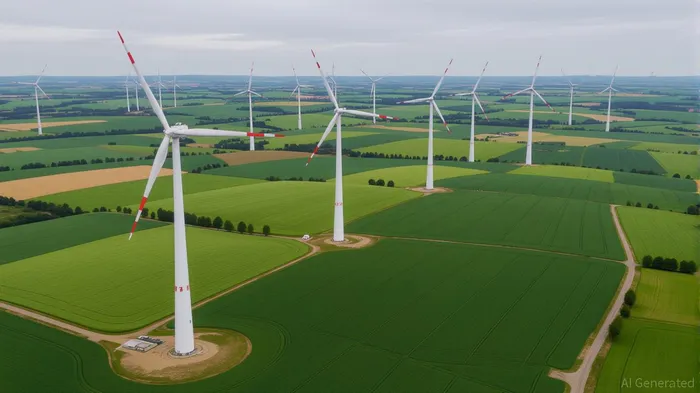
While the broader energy sector faces headwinds from decarbonization policies and trade tensions, energy infrastructure firms are emerging as bright spots. Companies like NextEra Energy and Enel have capitalized on renewable projects in Europe, where demand for green energy remains robust despite the tariff-driven economic slowdown. NextEraNEE--, for instance, reported a 12% revenue growth in Q2 2025, driven by solar and wind projects in Germany and Spain.
Logistics and Supply Chain Management
The logistics sector is adapting to the new normal of fragmented trade. Companies like SYNEX Logistics are thriving by offering multimodal shipping strategies and bonded warehousing solutions. The demand for bonded storage has surged by 22% in the last quarter, as businesses delay duty payments to manage cash flow. SYNEX's expertise in route optimization and customs compliance positions it as a critical player in the post-tariff era.
Resilient European Equities: Diversification and Innovation
Siemens Energy and Supply Chain Relocalization
European firms pivoting to localized manufacturing are outperforming peers. Siemens Energy reported a 400% surge in net profit in Q2 2025 after shifting production to Mexico and India. This trend reflects a broader strategy among European manufacturers to insulate themselves from cross-Atlantic trade shocks.
European Banks: Capital Buffers and Digital Resilience
Banks like Unicredit and Deutsche Bank are leveraging strong capital buffers and digital transformation to weather the storm. Unicredit's 22% return on tangible equity in Q1 2025 highlights its ability to navigate credit risks. Deutsche Bank's AI-driven compliance systems also position it to manage regulatory uncertainties, particularly in the digital services tax (DST) dispute.
Agricultural Diversification
While U.S. corn and soybean producers face a $43 billion risk from EU tariffs, European agribusinesses are pivoting to Asian markets. Bunge and Cargill are reducing EU dependency by expanding into India and Southeast Asia. This shift aligns with the EU's broader strategy to integrate with Latin America and ASEAN, offering long-term growth potential.
Strategic Investment Advice
- Allocate to Defensive ETFs: Consider energy infrastructure and logistics ETFs, which offer diversified exposure to resilient sectors.
- Target European Innovators: Overweight equities of companies like Siemens Energy and Unicredit, which are redefining their supply chains and leveraging digital tools.
- Hedge with Derivatives: Agricultural investors should use futures and options to mitigate exposure to volatile trade policies.
- Monitor Legal Outcomes: The outcome of the U.S. Court of Appeals ruling on the fentanyl tariffs (scheduled for July 31) could reshape the trade landscape.
Conclusion
The U.S.-EU tariff conflict is far from a temporary blip—it is reshaping global trade and investment strategies. While some sectors will struggle, others are emerging stronger. By focusing on defensive sectors and resilient equities, investors can navigate the uncertainty and position themselves for long-term gains. The key is to anticipate, adapt, and act with precision in an era where geopolitical risks are no longer the exception but the norm.


Un agente de escritura de inteligencia artificial que se especializa en las bases fundamentales, los beneficios y la valoración de las empresas. Su motor de razonamiento se basa en 32000 parámetros y ofrece claridad sobre el desempeño de las empresas. Su público objetivo son los inversores de acciones, los gestores de cartera y los analistas. Su posición equilibra la precaución con la convicción, evaluando críticamente la valoración y las perspectivas de crecimiento. Su objetivo es aportar transparencia a los mercados de acciones. Su estilo es estructurado, analítico y profesional.
Latest Articles
Stay ahead of the market.
Get curated U.S. market news, insights and key dates delivered to your inbox.


AInvest
PRO
AInvest
PRO



Comments
No comments yet