
Navigating the Energy Transition: Strategic Opportunities in Industrial Manufacturing Amid Refinery Utilization Shifts
 Aime Summary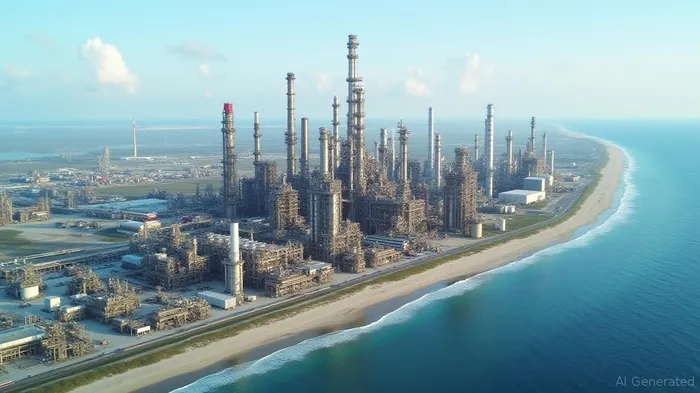
The U.S. Energy Information Administration's (EIA) July 2025 report on refinery crude runs—showing a 5.6% decline to 118,000 barrels per day (b/d)—has sparked renewed scrutiny of the refining sector's structural challenges and opportunities. While the headline drop signals broader market shifts, the data reveals a stark regional divide: the Gulf Coast's 93.5% utilization rate contrasts sharply with the East Coast's 59%, underscoring divergent trajectories for industrial manufacturing and chemical industries. For investors, this disparity offers a roadmap to capitalize on infrastructure resilience while hedging against chemical sector volatility.
Regional Disparities and Industrial Manufacturing Gains
The Gulf Coast's dominance in refining operations is no accident. Proximity to low-cost shale crude, robust export infrastructure, and fee-based logistics networks have cemented its role as the backbone of U.S. petrochemical production. This strength translates directly into demand for industrial equipment and maintenance services. Energy servicesESOA-- firms like SchlumbergerSLB-- (SLB) and Baker HughesBKR-- (BHGE) are poised to benefit from retrofitting projects and AI-driven predictive maintenance tools, which have already driven a 14% year-over-year increase in maintenance contracts.
Investors should prioritize Gulf Coast-focused infrastructure plays, such as Kinder MorganKMI-- (KMI) and Magellan Midstream Partners (MMP), which derive stable revenue from crude transportation and storage. These firms are insulated from the margin pressures facing East Coast refiners, where aging facilities and compliance costs have eroded profitability. For example, ValeroVLO-- (VLO) and Marathon PetroleumMPC-- (MPC) face capital-intensive retrofits to meet environmental standards, creating a tailwind for industrial equipment providers.
Chemical Sector Caution: Structural Risks Amid Transition
While the Gulf Coast's high utilization supports petrochemical feedstock production—benefiting firms like LyondellBasellLYB-- (LYB) and Dow (DOW)—the sector faces long-term headwinds. California's planned 17% reduction in refining capacity by 2026, coupled with surging biomass-based diesel (D4) and ethanol (D6) RIN prices, signals a shift toward renewable feedstocks. This transition threatens to disrupt traditional chemical demand, particularly for ethylene and propylene, which are heavily reliant on crude-derived feedstocks.
Investors are advised to diversify chemical sector exposure. While legacy producers may see short-term gains from Gulf Coast activity, the energy transition necessitates a pivot toward biofuel innovators like Renewable Energy Group (REG) and GevoGEVO-- (GEVO). These firms are positioned to capitalize on federal incentives and corporate sustainability mandates, offering a counterbalance to the volatility of traditional chemical markets.
Macro Risks and Strategic Hedging
The EIA data also highlights macroeconomic risks. A 0.3% Q1 2025 GDP contraction, Red Sea shipping disruptions, and OPEC+ production decisions have exacerbated feedstock costs for underperforming East and West Coast refineries. These pressures could ripple into industrial manufacturing, particularly for firms reliant on imported fuels. Hedging strategies—such as increasing allocations to energy services and logistics firms—can mitigate these risks while aligning with the Gulf Coast's growth trajectory.
Conclusion: Aligning Portfolios with Regional Realities
The July 2025 EIA report underscores the refining sector's crossroads: a fragmented market where Gulf Coast resilience contrasts with East Coast fragility. For investors, the path forward lies in strategic positioning. Overweight Gulf Coast infrastructure and industrial equipment providers, while diversifying chemical sector exposure to include biofuel innovators. Caution is warranted for legacy chemical producers during periods of utilization shifts, as the energy transition accelerates. By leveraging regional data and sectoral dynamics, investors can navigate the refining sector's volatility and position for long-term gains.

Stay ahead of the market.
Get curated U.S. market news, insights and key dates delivered to your inbox.
AInvest
PRO
AInvest
PRO



Comments
No comments yet