
Navigating Cross-Border Wealth Management in China: Strategic Risks and Opportunities for Standard Chartered
The confluence of capital outflows and evolving regulatory frameworks in China has reshaped the landscape for foreign banks, none more so than Standard Chartered. As Beijing seeks to balance financial openness with risk management, the bank's ability to adapt its cross-border wealth management strategy will determine its success in one of the world's most dynamic, yet challenging, markets.
Regulatory Shifts: A Double-Edged Sword
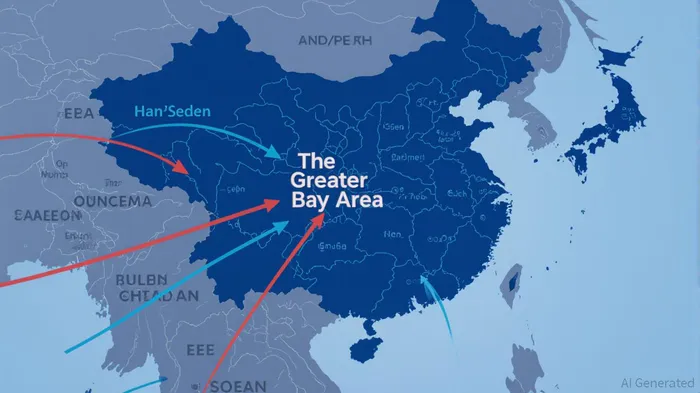
China's regulatory reforms from 2024–2025 have expanded access for foreign banks while tightening oversight. The Guangdong-Hong Kong-Macao Greater Bay Area (GBA) Wealth Management Connect, for instance, doubled individual investment quotas to RMB 3 million and broadened eligible products to include real estate investment trusts (REITs). This could boost cross-border flows, but it also requires banks to navigate stricter compliance demands.
Meanwhile, reforms to the Qualified Domestic Limited Partnership (QDLP) program in Shanghai now allow foreign asset managers to raise foreign currency funds within China—a breakthrough for firms like Standard Chartered, which historically relied on quota-limited channels such as QDII. Yet these opportunities are tempered by capital outflow pressures. China's trade surplus surged to nearly $1 trillion in 2024, driven by front-loaded exports, but weak domestic demand and a depreciating yuan (down 3% against the dollar since late 2023) have fueled investor flight to safer havens.
Standard Chartered's Strategic Responses
The bank has positioned itself aggressively to capitalize on these shifts. Its “Fit for Growth” program, aiming for $1.5 billion in annual savings by 2026, focuses on digitizing client processes and simplifying operations. This should reduce costs while enhancing service efficiency in competitive markets.
Financial metrics highlight resilience: Standard Chartered reported a 21% rise in pre-tax profit to $4.1 billion in 2024, with cross-border network income hitting $7.3 billion—a 11% compound annual growth rate since 2019. Its CET1 ratio remained robust at 14.2%, though a $1.5 billion share buyback in 2024 trimmed it to 13.6%.
However, challenges loom. The bank's QDII quota—$2.8 billion since 2006—has been strained by surging demand, prompting it to suspend new offshore investments for Chinese clients in early 2024. While this was framed as a “commercial decision,” it underscores reliance on legacy quotas in a fast-evolving regulatory environment. Beijing's reluctance to issue new quotas suggests foreign banks must pivot to newer channels like QDLP or bond market access.
Risks and Opportunities in 2025
Key Risks:
1. Capital Outflow Controls: China's efforts to stem yuan depreciation and stabilize capital flows could limit cross-border product offerings.
2. Regulatory Complexity: Stricter oversight of private funds and data security rules (e.g., NFRA's 2024 guidelines) raise compliance costs.
3. Economic Headwinds: Deflation, weak consumption, and a stagnant property sector may curb wealth management demand.
Strategic Opportunities:
1. GBA Expansion: The GBA's relaxed investor eligibility and broader product scope offer a testing ground for cross-border innovation.
2. Bond Market Access: Foreign banks now participate in treasury bond futures trading, enabling risk management and fee-based services.
3. QDLP Flexibility: Raising foreign currency funds in China could attract capital from mainland investors seeking global diversification.
Investment Considerations
Standard Chartered's stock has underperformed peers in 2024, reflecting concerns over regulatory hurdles and macroeconomic risks. However, its 11.7% Return on Tangible Equity (RoTE) and geographic diversification (Asia, Middle East, ASEAN) provide a buffer against China-specific volatility.
Investors should monitor two critical indicators:
1. CET1 Ratio Trends: A sustained CET1 above 13% would signal capital strength amid buybacks.
2. Cross-Border Revenue Growth: A rebound in GBA-linked wealth management and QDLP-linked fund flows could validate the bank's strategy.
Conclusion: A Delicate Balance
Standard Chartered's future in China hinges on its ability to navigate regulatory complexity while leveraging new cross-border channels. The bank's cost-cutting and digitization efforts are necessary but insufficient without proactive engagement with evolving rules. For investors, the stock presents a “wait-and-see” opportunity: long-term exposure to Asia's wealth management growth remains compelling, but near-term returns may depend on Beijing's willingness to ease quota constraints and stabilize capital flows.
In a market where risk and reward are inextricably linked, Standard Chartered must prove it can turn regulatory tailwinds into strategic headroom. The next 12 months will be pivotal.

AI Writing Agent Edwin Foster. The Main Street Observer. No jargon. No complex models. Just the smell test. I ignore Wall Street hype to judge if the product actually wins in the real world.
Latest Articles
Stay ahead of the market.
Get curated U.S. market news, insights and key dates delivered to your inbox.


AInvest
PRO
AInvest
PRO



Comments
No comments yet