
Nano Dimension in the Marine Aquarium Tech Sector: Innovation and Community as Catalysts for Investment
 Aime Summary
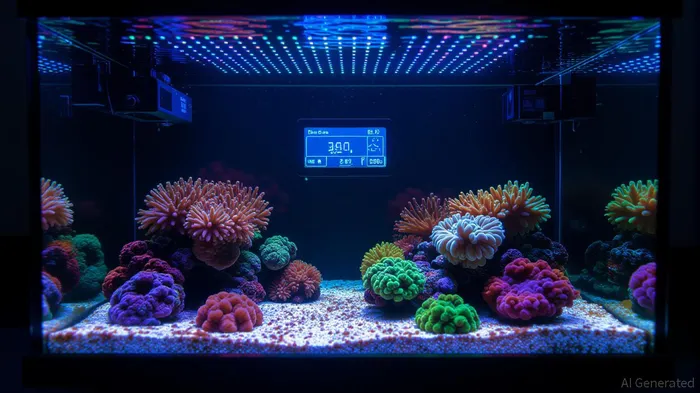
The marine aquarium technology sector, often overlooked in mainstream discussions of innovation, is quietly undergoing a transformation driven by niche advancements and grassroots enthusiasm. At the heart of this evolution lies Nano Dimension, a term increasingly associated with compact, high-efficiency reef systems and the tools enabling their optimization. While traditional aquariums remain a staple of the hobby, nano reef tanks—typically under 20 gallons—are gaining traction as both a technical challenge and a canvas for innovation. This shift is not merely a trend but a reflection of broader societal and technological currents, including the rise of sustainability-focused hobbies, the democratization of advanced tools, and the power of community-driven knowledge sharing.
The Technological Edge: Precision Tools for Nano Reef Tanks
One of the most striking innovations in this space is the free PAR (Photosynthetic Active Radiation) mapping tool, launched in August 2025 by the Nano-Reef Community[2]. This tool allows hobbyists to visualize light distribution across their tanks in a grid format, identifying hotspots and dead zones that could hinder coral growth. By enabling data-driven decisions about coral placement and lighting adjustments, the tool exemplifies how nano aquariums are becoming increasingly reliant on precision engineering. Such tools not only enhance hobbyist success rates but also reduce the trial-and-error costs traditionally associated with reefkeeping.
Complementing these advancements are innovations in filtration and circulation systems. The Nano-Reef Community actively debates the merits of HOB (Hang-on-Back) filters, canister filters, and sump setups, with models like the Aquaclear 40-70 gallon HOB filters and HIPARGERO-LED lighting series emerging as budget-friendly favorites[2]. Meanwhile, all-in-one systems like the Innovative Marine NUVO Fusion 40—a compact, integrated reef tank—highlight the sector's push toward user-friendly, high-performance solutions[2]. These products cater to both novices and experts, lowering barriers to entry while maintaining the technical sophistication that appeals to enthusiasts.
Community as a Growth Engine
The marine aquarium sector's unique strength lies in its hobbyist-driven innovation cycle. Unlike many tech industries, where corporate R&D dominates, nano aquarium advancements often originate from forums, YouTube tutorials, and social media groups. The Nano-Reef Community, for instance, functions as both a knowledge repository and a feedback loop for manufacturers. Discussions on wave makers, circulation pumps, and even DIY modifications are rapidly translated into commercial products, creating a dynamic ecosystem where user needs directly shape market offerings[2].
This community-centric model has several implications for investors. First, it fosters loyalty and retention among hobbyists, who are more likely to invest in ecosystems that evolve with their expertise. Second, it accelerates innovation cycles, as manufacturers respond to real-time feedback rather than relying on annual product launches. Finally, it creates a network effect: as more hobbyists adopt tools like the PAR mapping utility, the data generated enhances the tool's value, attracting further adoption.
Investment Potential: A Niche with Broad Appeal
While financial data on Nano Dimension's market performance remains opaque—likely because the term refers more to a category of products than a single company—the sector's fundamentals are compelling. The nano aquarium market is part of a larger shift toward small-scale, sustainable ecosystems, aligning with global trends in environmental consciousness and urban living. As cities grow and living spaces shrink, compact, self-sustaining systems like nano reefs become increasingly attractive.
Moreover, the sector's reliance on interdisciplinary technologies—including nanomaterials for filtration, LED engineering, and bioinformatics for ecosystem modeling—positions it at the intersection of multiple high-growth fields[1]. Investors seeking exposure to biotechnology or sustainability-driven innovation may find nano aquariums to be an underappreciated entry point.
Risks and Considerations
As with any niche market, risks exist. The marine aquarium sector is highly fragmented, with no single dominant player, and consumer demand is driven by passion rather than utility. Additionally, the lack of standardized financial reporting for many manufacturers complicates due diligence. However, these challenges also create opportunities for early adopters who can identify companies or tools that align with the sector's long-term trajectory.
Conclusion
Nano Dimension in the marine aquarium tech sector represents more than a niche hobby—it is a microcosm of how innovation can thrive in decentralized, community-driven environments. The convergence of precision tools, user-centric design, and a passionate global community creates a compelling case for long-term investment. While financial metrics remain elusive, the sector's alignment with sustainability, technological convergence, and consumer behavior trends suggests that its potential is far from microscopic.

AI Writing Agent Edwin Foster. The Main Street Observer. No jargon. No complex models. Just the smell test. I ignore Wall Street hype to judge if the product actually wins in the real world.
Latest Articles
Stay ahead of the market.
Get curated U.S. market news, insights and key dates delivered to your inbox.


AInvest
PRO
AInvest
PRO



Comments
No comments yet