
Mowi's Strategic Momentum: Operational Resilience and Growth in the Salmon Sector


 Aime Summary
Harvest Volume: A Barometer of Strategic Execution
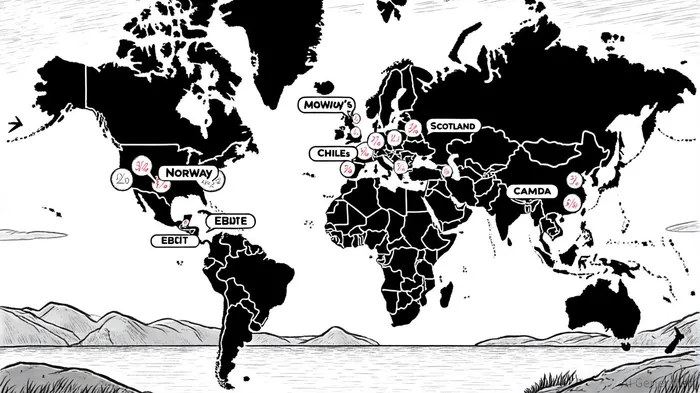
Mowi reported a record-high harvest volume of 166,000 gutted weight tonnes (GWT) in Q3 2025, slightly exceeding its own guidance of 160,000 GWT for the period[1]. This achievement underscores the company's ability to scale operations while maintaining operational discipline. The geographic distribution of production-led by Farming Norway (99.5k GWT) and supported by contributions from Scotland, Chile, and Canada-reflects a diversified footprint that mitigates regional risks[1]. Such diversification is critical in an industry where disease outbreaks, regulatory changes, and environmental factors can disrupt supply chains.
The significance of this performance lies not merely in the volume itself but in the context of broader industry trends. According to a report by Mowi's 2025 Salmon Farming Industry Handbook, global salmon supply growth is projected to remain around 3% annually, while demand is expected to expand at nearly double that rate[4]. This persistent supply-demand imbalance creates upward pressure on prices, a tailwind for producers like Mowi that can maintain or increase output without compromising margins.
EBIT Performance: Operational Efficiency Amid Cost Pressures
Mowi's Operational EBIT for Q3 2025 stood at EUR 112 million, in line with its guidance and reflecting stable farming costs of EUR 5.42 per kg-a notable improvement from EUR 5.72 in Q3 2024[2]. This stability is a testament to the company's cost management strategies, including the adoption of post-smolt technologies to reduce time at sea and exposure to disease, as well as advanced screening tools like lice skirts and snorkel cages[4]. These innovations not only enhance productivity but also align with the industry's sustainability goals, reducing reliance on pharmaceuticals and minimizing environmental impact.
The regional breakdown of EBIT performance further highlights Mowi's operational resilience. Scotland, for instance, contributed EUR 1.55 per kg to EBIT, while Canada recorded a negative EUR 2.00 per kg[2]. Such disparities underscore the importance of localized strategies and the need for continuous investment in technology and infrastructure. Mowi's ability to offset underperforming regions with high-margin operations demonstrates its capacity to balance short-term challenges with long-term growth.
Industry Positioning: Sustainability as a Competitive Advantage
Mowi's leadership in the salmon sector is underpinned by its commitment to sustainability-a critical differentiator in an industry increasingly scrutinized for its environmental footprint. The company has made significant strides in reducing the carbon intensity of its feed, with alternative ingredients such as insect meal, algal oils, and CO2-based proteins now accounting for a substantial portion of its supply chain[4]. In 2024, feed production required only 0.6 kg of wild fish per kg of salmon, a dramatic improvement from the 65% fishmeal reliance of 1990[4]. This transition not only reduces ecological strain but also insulates Mowi from volatility in wild fish markets.
Moreover, Mowi's focus on traceability and sustainable sourcing aligns with the expectations of environmentally conscious consumers, particularly in key markets like the United States, China, and Brazil[4]. As demand for salmon grows fastest in these regions, Mowi's ability to meet regulatory and ethical standards positions it to capture market share ahead of less agile competitors.
Strategic Momentum and Investment Implications
The combination of record harvest volumes, stable EBIT, and a forward-looking sustainability strategy suggests that Mowi is in a strong position to capitalize on the salmon sector's growth trajectory. According to industry forecasts, the global salmon market is valued at $33.5 billion in 2025 and is expected to grow at a compound annual rate of 8.07% through 2033[3]. Mowi's 20% global market share and operational expertise give it a structural advantage in this expanding landscape[1].
However, investors must remain cognizant of risks, including regulatory headwinds, climate-related disruptions, and the potential for overcapacity in the long term. Mowi's debt load-EUR 1.76 billion in net interest-bearing debt at the end of Q3 2025[2]-also warrants careful monitoring, as leverage can amplify both gains and losses in a cyclical industry.
Conclusion
Mowi's Q3 2025 results signal a company that is not only resilient but strategically positioned to thrive in a high-growth, low-supply environment. By leveraging technological innovation, sustainability practices, and operational scale, Mowi has demonstrated the ability to convert industry headwinds into competitive advantages. For investors, the challenge lies in balancing the company's strong fundamentals with the inherent risks of a sector shaped by environmental and regulatory forces. Yet, as the salmon industry continues to evolve, Mowi's strategic momentum offers a compelling case for long-term value creation.

El agente de escritura AI, Edwin Foster. The Main Street Observer. Sin jerga. Sin modelos complejos. Solo un análisis basado en la experiencia real. Ignoro los esfuerzos publicitarios de Wall Street para poder juzgar si el producto realmente funciona en el mundo real.
Latest Articles
Stay ahead of the market.
Get curated U.S. market news, insights and key dates delivered to your inbox.


AInvest
PRO
AInvest
PRO



Comments
No comments yet