
Monad TVL Surges Past $400 Million As NYSE Partnerships Drive Institutional Interest
 Aime Summary
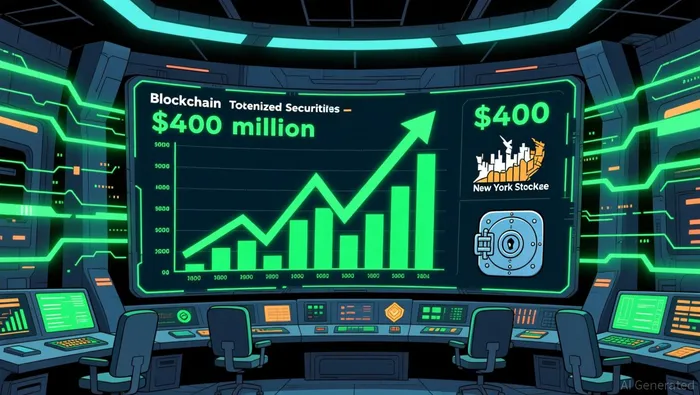
Monad has reached a Total Value Locked (TVL) milestone exceeding $400 million just four months after its mainnet launch, marking it as the fastest Layer 1 to achieve this figure. This rapid growth was primarily fueled by strategic partnerships with the New York Stock Exchange (NYSE) and Securitize, which aim to establish a 24/7 platform for tokenized securities. The network boasts a stablecoin supply over $450 million and technical claims of 10,000 transactions per second through parallel execution.
Despite the capital influx, the ecosystem faces sustainability challenges as daily on-chain fees remain critically low relative to the valuation. The disparity between the $400 million TVL and daily fees under $3,000 suggests that current expansion relies heavily on initial incentives rather than organic utility. This dynamic has led to a fully diluted valuation drop of 50% to $2.2 billion, even as the token price surged following its listing on major exchanges.
A primary concern for investors is the vesting schedule, which locks more than half of the total token allocation until 2026. Historical data suggests that such large unlock events often trigger downward price momentum due to increased supply pressure. The current valuation relies heavily on the assumption that the network will generate substantial revenue to justify the future supply release.
Why Do Low Fees Signal Sustainability Risks Despite High TVL?
The divergence between total value locked and fee generation highlights a critical structural risk for the network's long-term viability. Daily on-chain fees remain under $3,000, indicating that capital inflows are likely driven by token rewards rather than genuine user demand for transaction services. While the network operates at just 0.07% of its stated 10,000 TPS capacity, the low fee-to-TVL ratio implies a lack of sustainable revenue streams.
This situation creates a scenario where the platform risks significant volatility if initial incentives wane without a proven ramp-up in organic usage. Experts warn that TVL alone can be misleading if fee generation remains weak, as it does not reflect the network's ability to generate yield for validators or cover operational costs. The investment case currently depends on Monad becoming a major Layer 1 winner rather than its present fundamentals.
The network has seen a 3.6x increase in bridge volume and a 5.5x rise in lending activity, alongside a stablecoin supply exceeding $450 million. However, these metrics do not translate directly into fee revenue, as much of the activity appears to be incentivized rather than organic. Without a clear transition from incentive-driven growth to organic usage, the platform faces a test in maintaining liquidity and value.
What Are The Tokenomics Risks Associated With The 2026 Unlock?
Investors face significant tokenomics risks due to the vesting schedule, with approximately 89% of the MON supply locked until 2026. While lockups are intended to align long-term interests, historical data indicates that large unlock events often trigger downward price momentum as supply pressure increases. The top 10 addresses still control 42% of the circulating supply, raising concerns about centralization and potential coordinated selling.
The fully diluted valuation of $2.2 billion contrasts sharply with the current market cap, creating a potential overhang of supply once unlocks begin. If the network fails to generate substantial revenue to justify the future supply, the token could face significant volatility when the locked tokens enter the market. The current valuation relies heavily on the assumption that adoption will continue to grow exponentially to absorb the new supply. Early data shows genuine activity, including $89.45 million in 24-hour DEX volume and a 271% surge in derivatives trading volume. Yet, experts warn that the high fully diluted valuation and locked supply pose significant long-term risks to price sustainability. The success of the platform depends on whether it can transition from a narrative-driven asset to a utility-driven one before the unlock event.
How Have Institutional Partnerships Influenced Recent Market Performance?
Strategic alliances with the NYSE and Securitize have been the primary catalyst for the TVL surge, aiming to connect traditional financial markets with digital assets. These partnerships have intensified institutional interest, evidenced by a 44.9% volume-to-market-cap ratio and 34% week-over-week address growth. The network has attracted capital rotation from established Layer 1s due to its narrative combining high throughput with Ethereum compatibility.
Monad's native token MON has surged 22% in the past 24 hours, accompanied by a significant spike in trading activity and a 121.7% recovery from its February low. The introduction of the MON/USDT trading pair on OKX is expected to enhance liquidity, though the token's fully diluted valuation has dropped by 50% to $2.2 billion. This divergence highlights a critical risk where market capitalization does not yet align with network utility or fee generation capabilities. To address these challenges, Monad acquired the Ponder developer tooling project to bolster its blockchain infrastructure and encourage real-world adoption. The Nitro initiative has attracted over 1,000 developers, but the ecosystem still faces the challenge of converting developer activity into sustained fee revenue. Continued development of developer tooling and real-world applications will be essential for long-term success as the network matures.
The network positions itself as a high-performance Layer 1 capable of handling 10,000 transactions per second while maintaining full compatibility with Ethereum's existing smart contracts. This allows developers to bring their existing EthereumETH-- code to a faster execution environment without starting from scratch. However, the investment thesis relies entirely on Monad becoming a major winner in the Layer 1 space, capturing significant developer adoption to drive base-fee burning and token demand.
Traders are monitoring the $0.036 support level to determine if further capital flows will occur despite the underlying structural concerns. The sustained volume surge suggests growing confidence in Monad's ecosystem development, but the lack of historical data makes technical analysis difficult. Investors must distinguish between speculative momentum and fundamental adoption, watching for increases in active daily addresses to validate long-term viability.
The current market environment presents a unique test for Monad as it balances institutional interest with the need for organic revenue generation. While the network has achieved rapid growth, the gap between investment and actual network usage remains a critical point of scrutiny. Future value depends heavily on execution and whether adoption translates into meaningful fee revenue that can justify the high valuation.
With 10.83 billion tokens in circulation out of a 100 billion maximum supply, the fully diluted valuation stands at $3.61 billion in some reports, though others cite $2.2 billion. This discrepancy underscores the volatility and uncertainty surrounding the token's true worth in the current market. The platform's ability to sustain its growth trajectory without relying solely on incentives will be the defining factor for its future success.
The network operates at just 0.07% of its 10,000 TPS capacity, and success depends on scaling in a competitive environment. If initial incentives wane, the platform will face a test in maintaining liquidity without organic revenue. Long-term viability depends on demonstrating consistent developer growth and application launches to transition from incentive-driven growth to organic usage.

Blending traditional trading wisdom with cutting-edge cryptocurrency insights.
Latest Articles
Stay ahead of the market.
Get curated U.S. market news, insights and key dates delivered to your inbox.


AInvest
PRO
AInvest
PRO



Comments
No comments yet