
Monad Surges On Mainnet Launch And NYSE Partnership Amid Tokenomics Concerns
 Aime Summary
Monad's native token MON has surged more than 25% in the past week, reaching approximately $0.0325 following the successful rollout of its mainnet network. This rally was further fueled by the announcement of strategic partnerships with the New York Stock Exchange and Securitize to build a 24/7 platform for tokenized securities. The network has rapidly attracted nearly $400 million in Total Value Locked, becoming the fastest Layer 1 to hit this milestone. Despite this momentum, structural risks persist as daily fee revenue remains below $3,000.
Why Is Monad Gaining Institutional Attention Despite Low Revenue?
Institutional confidence in Monad is evidenced by a 44.9% volume-to-market-cap ratio, indicating focused interest from larger players. The project's ability to handle 10,000 transactions per second with 400ms block times has drawn significant technical scrutiny. Founders with backgrounds in Jump Trading have added credibility to the technical architecture. Early on-chain activity shows genuine traction, with approximately $454.7 million in stablecoins on the network and $89.45 million in 24-hour DEX volume.
However, a critical disconnect exists between the rapid growth in Total Value Locked and actual revenue generation. Daily on-chain fees remain under $3,000, suggesting that current expansion may be incentive-driven rather than organically sustainable. Questions remain regarding whether the $355 million TVL is supported by organic usage or temporary token incentives. The investment case for MON currently rests on the project becoming a major winner in the Layer 1 space rather than on present-day fundamentals.
What Are The Tokenomics Risks For Long-Term Holders?
A significant challenge for investors lies in the tokenomics, where over half of the total supply is tied to insiders, investors, or the Foundation. Approximately 89% of the MON token supply is locked until scheduled unlocks in 2026. Historical data suggests that such large scheduled unlocks can exert downward pressure on prices. The network's fully diluted valuation of $2.2 billion contrasts sharply with its current market cap.
Analysts caution that future unlocks could trigger sharp price corrections if adoption does not translate into meaningful fee revenue. The base fees are partially burned, but current fee generation remains low relative to the token's valuation. This structure creates a scenario where future value depends heavily on execution rather than current financial performance.
How Do Strategic Partnerships Impact The Network Outlook?
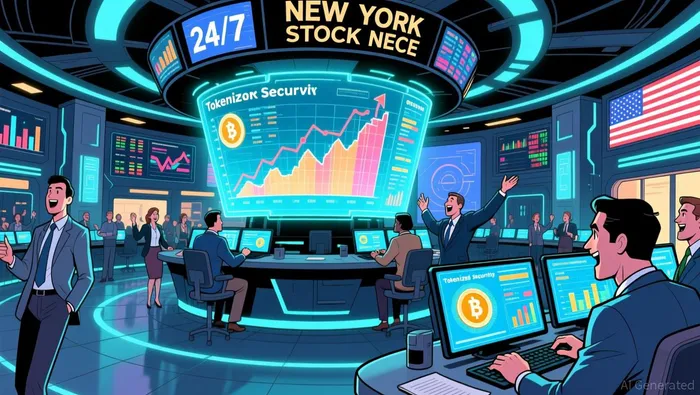
Strategic alliances with the New York Stock Exchange and Securitize aim to bridge traditional finance with digital assets. These partnerships are designed to develop a 24/7 tokenized securities platform, supported by a 34% week-over-week increase in active addresses. The project has also acquired developer tooling firm Ponder to accelerate ecosystem growth. DeFi protocols like Neverland are seeing significant locked assets within the ecosystem.
The network maintains full compatibility with Ethereum's smart contracts and developer tools. This allows developers to port existing code without learning new systems, a key differentiator in the Layer 1 space. Despite these advantages, the high fully diluted valuation and locked supply create significant downside risks for long-term holders.

Blending traditional trading wisdom with cutting-edge cryptocurrency insights.
Latest Articles
Stay ahead of the market.
Get curated U.S. market news, insights and key dates delivered to your inbox.


AInvest
PRO
AInvest
PRO



Comments
No comments yet