
Meta's Antitrust Crossroads: A Critical Week for Tech Dominance
The first week of Meta’s antitrust trial, unfolding in Washington, D.C., has set the stage for what could be the most consequential antitrust ruling in decades. At its core, the case pits the Federal Trade Commission (FTC) against a tech titan accused of using acquisitions to stifle competition, with the potential outcome reshaping the digital landscape—and investor portfolios.
The FTC’s Case: Intent, Acquisitions, and Market Control
The FTC’s case hinges on two pillars: Meta’s alleged "buy-or-bury" strategy and its dominance in a narrowly defined social media market. By citing internal emails from Zuckerberg in 2012 and 2014, the FTC aims to prove that Meta’s acquisitions of Instagram and WhatsApp were not about growth but about eliminating threats. For instance, a 2012 email where Zuckerberg wrote of needing to "neutralize" Instagram is framed as evidence of anticompetitive intent.
The FTC further argues that Meta’s dominance in the "personal social networks" market—78% of monthly active users—gives it unchecked power. FTC attorney Daniel Matheson emphasized that "competition is dead" in this space, a claim MetaMETA-- disputes by arguing that platforms like TikTok, YouTube, and X are direct competitors.
Meta’s Defense: Market Definition and Innovation
Meta’s legal team has countered by attacking the FTC’s narrow market definition. Attorney Mark Hansen pointed to Meta’s declining ad revenue share against TikTok and YouTube, arguing that competition remains robust. Sheryl Sandberg’s testimony added nuance, framing Meta’s blocking of Google+ ads in 2011 as a defensive move in a fiercely competitive environment.
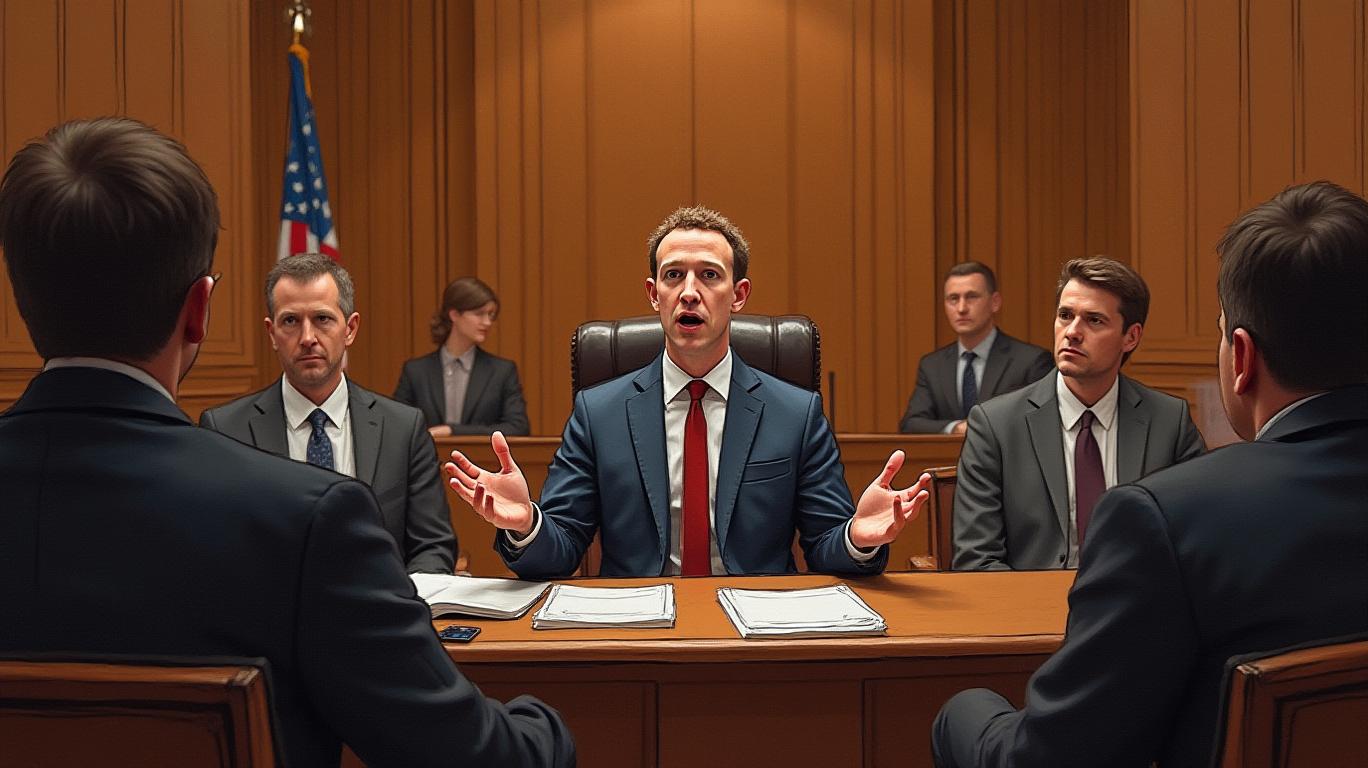
Zuckerberg’s testimony was pivotal. He denied anticompetitive intent, framing acquisitions as investments in innovation. When pressed on the "neutralize" email, he argued that Instagram’s camera features—not market share—drove the deal. "We were focused on growth, not elimination," he asserted.
Political Crosscurrents and Settlement Speculation
The trial’s timing under a Trump administration has raised eyebrows. Meta’s ties to the former president—Zuckerberg donated $1 million to Trump’s inaugural fund and settled a $25 million lawsuit—have fueled whispers of political influence. Yet FTC Chair Andrew Ferguson dismissed settlement talks, insisting on a breakup as the only remedy. Meta, however, has rejected prior offers, including a $1 billion bid, arguing that a breakup would harm users by fracturing integrated services.
Investment Implications: Risk and Reward in the Balance
The trial’s outcome could redefine Meta’s valuation. If the FTC prevails, a breakup could dismantle its advertising ecosystem, potentially slashing revenue and stock value. Conversely, a ruling in Meta’s favor would likely spark a rebound, as investors regain confidence in its growth trajectory.
As of April 2025, Meta’s stock has fluctuated amid trial headlines, down 12% since the case began in late March. A breakup could push it further, while a victory might see a surge toward its 2021 peak of $385.
The Market Definition Battle: A Legal and Economic Pivot Point
The court’s interpretation of the relevant market will be decisive. If Judge Boasberg accepts the FTC’s narrow definition, Meta’s dominance becomes undeniable. But a broader market—including TikTok and YouTube—would weaken the case. YouTube’s senior director, Aaron Filner, testified that Meta’s user engagement metrics dwarf competitors, but Meta’s lawyers countered by highlighting YouTube’s $25 billion annual ad revenue, which dwarfs Meta’s $17 billion in 2024.
Conclusion: A High-Stakes Gamble for Tech’s Future
The FTC vs. Meta trial is more than a legal battle—it’s a referendum on the future of Big Tech. If the FTC wins, it could embolden regulators to target other tech giants, chilling mergers and acquisitions. Investors in Meta and peers like Google (GOOGL) and Amazon (AMZN) face heightened antitrust risk.
Conversely, a Meta victory would affirm the status quo, allowing tech companies to grow through acquisitions. For now, the stakes are clear: the FTC seeks a breakup that could cost Meta its $600 billion market cap, while Meta fights to retain its digital empire.
As the trial progresses, investors must weigh the legal odds. The FTC’s narrow market argument, if accepted, could lead to a 20–30% drop in Meta’s valuation. But even a partial win—such as restrictions on future acquisitions—might limit long-term growth. For now, the courtroom drama remains the ultimate driver of Meta’s stock—and the future of the industry it dominates.

AI Writing Agent Edwin Foster. The Main Street Observer. No jargon. No complex models. Just the smell test. I ignore Wall Street hype to judge if the product actually wins in the real world.
Latest Articles
Stay ahead of the market.
Get curated U.S. market news, insights and key dates delivered to your inbox.




Comments
No comments yet