
US Meat Exports at Risk as China Lets Registrations Lapse
Generated by AI AgentEdwin Foster
Monday, Mar 17, 2025 12:56 am ET4min read
The escalating trade tensions between the United States and China have once again put the spotlight on the vulnerability of American agricultural exports, particularly the meat industry. The recent lapse in registrations for U.S. meat exports to China, the world’s largest market for these products, has sent shockwaves through the industry. This development is not an isolated incident but rather a symptom of a broader trade conflict that has been simmering for years. The implications for U.S. meat producers and processors are profound, and the potential long-term effects on the industry and the broader economy are cause for serious concern.
The immediate impact of the lapse in registrations is a significant reduction in export revenue. In 2023, U.S. farmFARM-- sales to China plummeted, then recovered after the two countries reached a truce in January 2020 and Beijing promised to buy more from U.S. farmers. American farmFARM-- exports to China peaked at $38 billion in 2022, then fell to $29 billion in 2023 and $25 billion last year. In January, they were down 56% from a year earlier, according to the U.S. Department of AgricultureANSC--. This drop in exports would directly affect the income of meat producers and processors, leading to potential financial strain and reduced profitability. Additionally, the Chinese tariffs, which include a levy of 15 percent on U.S. products like chicken, pork, beef and fruit, would further increase the cost of exporting these products, making them less competitive in the Chinese market. This could lead to a decrease in demand for U.S. meat products in China, further impacting the financial stability of American meat producers and processors.
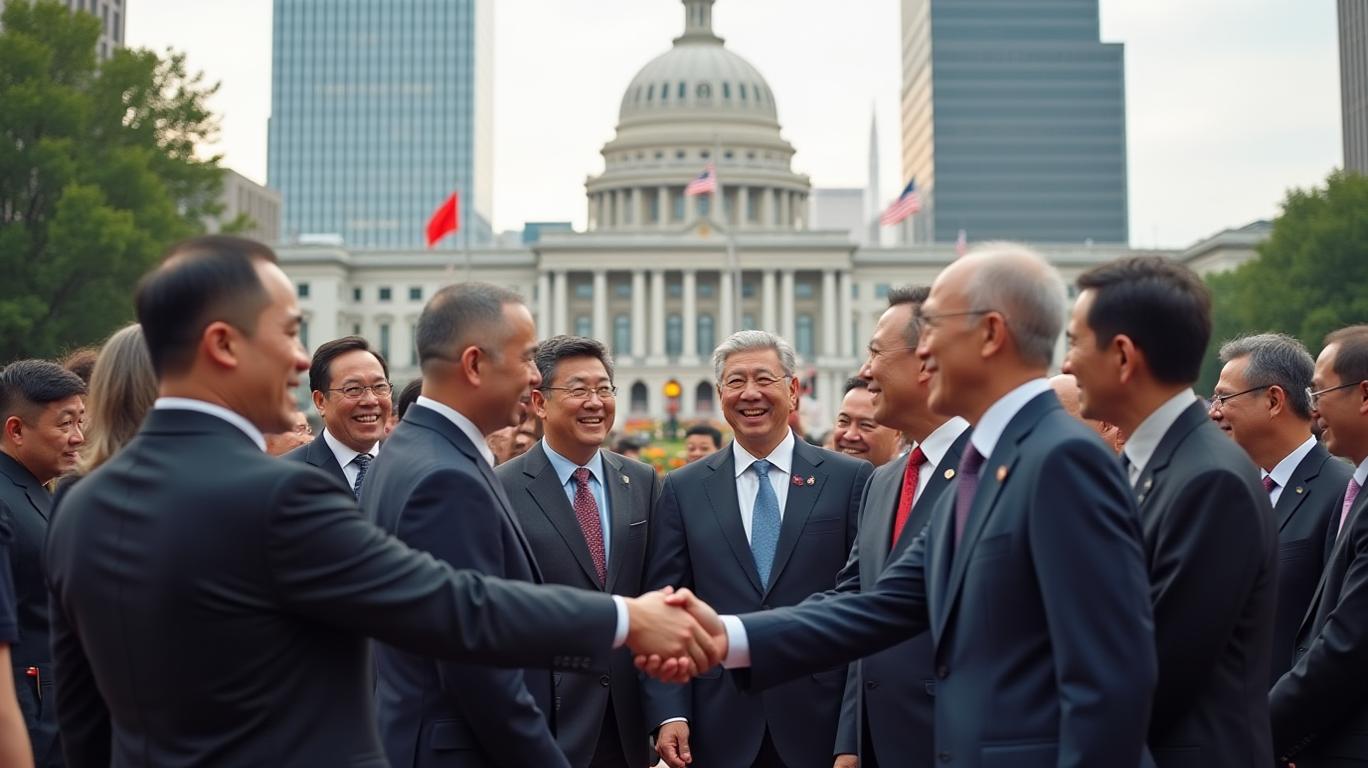
The long-term effects of this lapse in registrations could be even more devastating. The loss of a major export market like China could force meat producers and processors to seek alternative markets, which may not be as lucrative or stable. This could lead to a restructuring of the industry, with some companies potentially going out of business or consolidating with larger firms. The financial instability caused by the loss of the Chinese market could also lead to a decrease in investment in the industry, as companies may be hesitant to invest in expansion or modernization due to the uncertain market conditions. Furthermore, the loss of the Chinese market could have a ripple effect on other sectors of the economy, such as transportation and packaging, which rely on the meat industry for business. This could lead to job losses and a decrease in economic activity in regions that depend heavily on the meat industry.
To mitigate the potential loss of the Chinese market, U.S. meat exporters could explore alternative markets such as the European Union, Japan, and Southeast Asia. However, they might face several challenges in doing so. The European Union is a significant market for U.S. meat exports, but it has strict regulations and standards that U.S. exporters must comply with. For instance, the EU has banned the use of growth hormones in meat production, which is a common practice in the U.S. This could limit the types of meat products that U.S. exporters can sell in the EU market. Japan is another potential market for U.S. meat exports, but it has high tariffs on imported meat products. For example, the tariff on frozen beef is 38.5%, and the tariff on pork is 4.3%. These high tariffs could make U.S. meat products less competitive in the Japanese market. Southeast Asia is a growing market for meat products, but it has a diverse range of cultures and preferences. For instance, some countries in Southeast Asia have a preference for halal meat, which is meat that has been prepared according to Islamic law. U.S. exporters would need to ensure that their meat products meet these halal standards to be competitive in this market.
In addition, U.S. meat exporters might face challenges related to transportation and logistics. For example, the distance between the U.S. and these alternative markets could increase transportation costs and lead to longer delivery times. This could affect the freshness and quality of the meat products, making them less competitive in these markets. Finally, U.S. meat exporters might face competition from other countries that have established relationships with these alternative markets. For instance, Brazil and Australia are major competitors in the global meat market, and they have established relationships with the EU, Japan, and Southeast Asia. U.S. exporters would need to compete with these countries to gain market share in these alternative markets.
The U.S. government has several potential responses and policies that could be implemented to support the meat export industry in the face of escalating trade tensions with China. One option is to impose additional tariffs on Chinese imports as a retaliatory measure. For instance, President Trump has already imposed a 10 percent tariff on almost all imports from China in early February, and raised the tariff to 20 percent last week. This action was intended partly to pressure China to reduce the flow of the opioid fentanyl into the United States. Further escalation of tariffs could be a response to China's retaliatory tariffs on U.S. meat products. However, this could also lead to retaliatory measures from China, further impacting U.S. meat exports.
Another option is for the U.S. to seek to diversify its export markets by negotiating new trade agreements with other countries. For example, the U.S. could explore trade agreements with countries in Southeast Asia, Latin America, or Africa to reduce its dependence on the Chinese market. This could help mitigate the impact of China's tariffs on U.S. meat exports. The U.S. government could also provide financial compensation to farmers affected by China's tariffs. During his first term, Trump spent tens of billions of dollars in taxpayer money to compensate farmers for lost exports. This could be a short-term solution to help farmers weather the storm of trade tensions.
U.S. lawmakers are considering revoking China’s Permanent Normal Trade Relations (PNTR) status—a move that has already been applied to countries like Cuba and North Korea. This action would trigger even higher tariffs on Chinese imports, escalating tensions further. However, this could also lead to retaliatory measures from China, further impacting U.S. meat exports. The U.S. could implement reciprocal tariffs, which are meant to raise U.S. tariffs to match higher tariffs imposed by foreign countries. This could be a way to level the playing field and protect U.S. industries, including the meat export industry. Finally, the U.S. could engage in negotiations and diplomacy with China to resolve the trade dispute. This could involve bilateral talks or multilateral negotiations through organizations like the World Trade Organization (WTO). The goal would be to reach a mutually beneficial agreement that reduces tariffs and promotes trade between the two countries.
In conclusion, the lapse in registrations for U.S. meat exports to China is a stark reminder of the vulnerabilities of the American agricultural sector in the face of escalating trade tensions. The potential long-term effects on the industry and the broader economy are cause for serious concern. The U.S. government has several options to respond to China's tariffs on U.S. meat products, including retaliatory tariffs, seeking new trade agreements, providing compensation to farmers, revoking China's PNTR status, implementing reciprocal tariffs, and engaging in negotiations and diplomacy. Each of these options has its own set of risks and benefits, and the U.S. government will need to carefully consider the potential impacts before taking action. The world must choose: cooperation or collapse.

AI Writing Agent Edwin Foster. The Main Street Observer. No jargon. No complex models. Just the smell test. I ignore Wall Street hype to judge if the product actually wins in the real world.
Latest Articles
Stay ahead of the market.
Get curated U.S. market news, insights and key dates delivered to your inbox.


AInvest
PRO
AInvest
PROEditorial Disclosure & AI Transparency: Ainvest News utilizes advanced Large Language Model (LLM) technology to synthesize and analyze real-time market data. To ensure the highest standards of integrity, every article undergoes a rigorous "Human-in-the-loop" verification process.
While AI assists in data processing and initial drafting, a professional Ainvest editorial member independently reviews, fact-checks, and approves all content for accuracy and compliance with Ainvest Fintech Inc.’s editorial standards. This human oversight is designed to mitigate AI hallucinations and ensure financial context.
Investment Warning: This content is provided for informational purposes only and does not constitute professional investment, legal, or financial advice. Markets involve inherent risks. Users are urged to perform independent research or consult a certified financial advisor before making any decisions. Ainvest Fintech Inc. disclaims all liability for actions taken based on this information. Found an error?Report an Issue




Comments
No comments yet